

Written by Burcu Al
Burcu Al was born in Tokat in 1994. She completed her undergraduate education in the Department of Physics and Political Science and International Relations at Tokat Gaziosmanpaşa University between 2009-2014 and 2019-2023. She completed her master’s degree in Nuclear Physics at Tokat Gaziosmanpaşa University. She worked as a physics teacher in various courses and institutions. She is currently continuing her education in the field of Public Administration without a non -thesis master’s degree at Karadeniz Technical University. As of 2025, she started her doctorate in Nuclear Physics. She continues her academic studies in the fields of Energy Security, Turkic World and Sustainability, participates in conferences related to these fields and works as an expert in various think tanks.
‘Energy geopolitics is the often hidden undercurrent that drives most of all geopolitics in the modern world.’
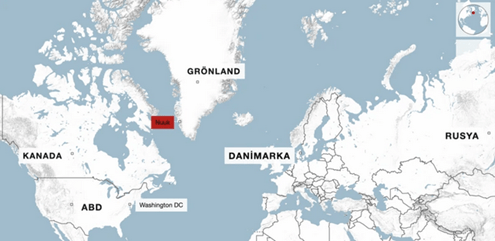
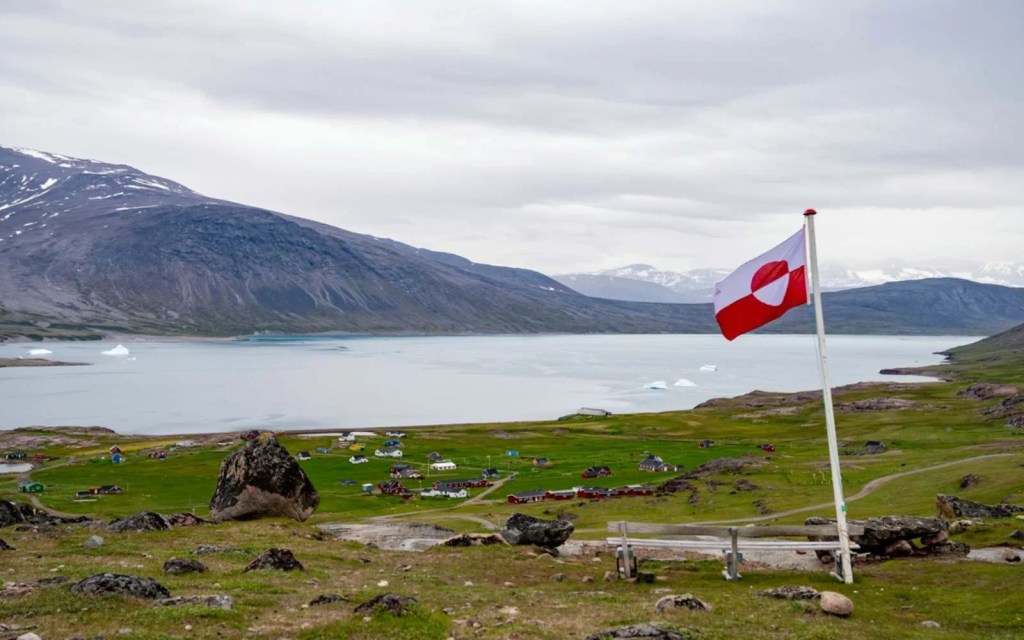
Trump’s explicit annexation claims for Greenland reveal a clear focus on national interest and geopolitical strategy from a realist perspective. The Arctic region has become increasingly important due to its strategic location and potential resources, making it a focal point of US foreign policy. By claiming that “Greenland must join America for our national defense and economy”, Trump emphasizes the realist idea that states act primarily in their own interests and seek to increase their power and security on the global stage. In addition to national interests, Trump’s rhetoric can also be seen through the lens of resource acquisition and economic motivations. Greenland is rich in natural resources such as rare earth minerals, oil and gas, which have become most important in the context of global supply chains and energy security. By showing interest in Greenland, Trump is positioning the US to benefit from these resources, aligning with the realist perspective that states pursue economic advantages to further increase their power. This economic motivation is particularly important in light of the ongoing energy transition, technology and growing demand for minerals needed for renewable energy. Moreover, Trump’s Greenland rhetoric brings to light the power dynamics present in international relations, particularly in the Arctic. The insistence on US control over Greenland raises questions about sovereignty, influence and the balance of power between states. The mechanism of Danish control over Greenland presents a challenge to US ambitions, emphasizing the rivalry that defines realist theory. Trump’s approach often includes direct and assertive language that reflects a broader strategy of power assertion in international relations. This assertiveness can be seen as an attempt to reshape the geopolitical landscape in favor of the US, aiming to reduce the influence of other states in the region. Such dynamics suggest that Trump’s rhetoric is not merely a capricious expression, but rather a calculated maneuver in the realm of international politics, with a realistic emphasis on state power and competition. It should be added that Trump’s administration saw the acquisition of Greenland as a way to secure those resources that could strengthen the US economy and reduce dependence on foreign resources. But this quest has raised questions about the autonomy and aspirations of the Greenlandic people, who have largely rejected the idea of joining the US despite promises of freedom and economic support. Denmark manages Greenland’s foreign policy and security. Greenland has been an autonomous region since 1979 and demands for independence have been growing. Greenland’s Prime Minister Mute Egede emphasized that the island is “not for sale” and that the future should be shaped by Greenlanders.
Danish Prime Minister Mette Frederiksen similarly stated that Greenland has an independent identity. They opposed Trump’s threats to use military or economic force, and all these developments have increased the tension in relations between Greenland and Denmark. (Turan, 2025) This illustrates the complexities of balancing national interests with the rights of local populations, a challenge that often arises in realist analyses of territorial disputes and resource competition.
Economic interests, Eldur Olafsson, CEO of Amaroq Minerals, calls the region a “golden belt” because of its mineral wealth. Moreover, as melting glaciers open new sea lanes in the Arctic, Greenland will increase its economic importance by becoming a major player in international shipping and trade. This prospect dovetails with Trump’s broader economic agenda, which emphasizes resource acquisition and trade expansion as key components of US growth.
Greenland’s military importance cannot be ignored, especially in the context of national security concerns. The Trump administration has emphasized the importance of securing strategic military bases and positioning US forces closer to potential adversaries. Greenland’s location allows for enhanced surveillance and rapid response capabilities in the Arctic, an area of heightened geopolitical tensions. The possibility of building or upgrading military facilities in Greenland could be presented as a way to counter threats from countries such as North Korea and Iran, which Trump has identified as significant risks to US security.
From the perspective of Russia and China, Napoleon Bonaparte’s statement “Every state makes the politics of its geography” is often used to emphasize the independence and sovereignty of states. However, it is important to keep in mind that the geography of states is shaped only by their historical designs and available human and economic resources; otherwise, one can fall into a geopolitical trap.
The Arctic has become an area where economics, oil and territory converge, especially in relation to Russia’s claims in this region. Global warming is increasing geopolitical rivalry in this region and the United States needs to counter Russian influence in the Arctic. Russia is pursuing various projects (Yamal LNG and the Northern Sea Route) to develop its energy reserves and increase its power in the region by shortening sea routes.
While the US remained passive in the post-Cold War Arctic, the growing influence of Russia and China has led Washington to change its strategy. In 2015, Obama’s visit to Alaska triggered a call to strengthen the icebreaker fleet in the region, with icebreakers under construction as of 2019.
Russia’s dominance over the Arctic conflicts with US strategic interests, complicating Russia’s geopolitical calculations. Russia is trying to counterbalance the US influence by cooperating with China, but there are differences and mistrust in the cooperation between the two countries. China does not share Russia’s desire for direct confrontation with the US and prioritizes its own economic interests. Therefore, China-Russia relations remain limited to pragmatic cooperation and are far from developing a long-term strategy. (Demet Şefika Mangır, 2023) How can the issue of Trump’s sovereignty rhetoric over Greenland be evaluated from the perspective of Russia and China? First of all, this may create a debate questioning Denmark’s national sovereignty and cause tension between the US and Denmark. Such a tension has the potential to lead to divisions within NATO.
Moreover, signals that Trump will adopt an expansionist policy may allow Russia and China to gain more legitimacy in the face of current international crises (Ukraine and Taiwan). This could help the two countries position themselves more strongly in the international arena (Üren, 2025).
The extent to which such strategic moves can affect the dynamics of international relations is an important issue. In particular, the relations between great powers can directly affect the independence and security policies of smaller countries. Therefore, Trump’s statements may not be limited to one country, but may have different consequences in a wide geography.
In conclusion, Trump’s rhetoric towards Greenland, when analyzed from a realist perspective, reflects an understanding in which national interests, geopolitical strategy and economic motivations are at the forefront. The strategic importance of the Arctic region and its wealth of natural resources have placed this region in a central position in US foreign policy. Trump’s desire to annex Greenland is shaped not only by military and economic security concerns but also by resource acquisition goals. This can be seen as a reflection of states’ efforts to increase their power in the international arena.
However, these discourses contradict the Greenlandic people’s demands for autonomy and independence. The fact that Greenland is an autonomous region under Denmark raises the problems of an approach that ignores the desires of the local population. Trump’s rhetoric is evaluated in a context that questions not only the geopolitical interests of the US but also the rights of local populations. This shows that in international relations, in addition to power dynamics, demands for local autonomy and independence should also be taken into account.
It is also important to consider how Trump’s policies are perceived by major powers such as Russia and China. Such an expansionist rhetoric has the potential to call into question the unity within NATO and could increase international tensions. Therefore, Trump’s rhetoric on Greenland has a dimension that affects not only the US-Denmark relations but also the global balance of power.

- Demet Şefika Mangır, F. B. (2023). The role of the Arctic region in Russian foreign policy. International Journal of Social and Humanities Sciences Research, 3033–3050.
- Turan, S. (2025, January 27). A geopolitical battlefield: Why does Donald Trump want to annex Greenland? Mashable Türkiye. Retrieved from https://tr.mashable.com/greenland/15734/jeopolitik-bir-savas-alani-donald-trump-neden-gronlandi-ilhak-etmek-istiyor
- Üren, C. (2025, January 9). What does Trump’s desire for Panama and Greenland mean for China and Russia? Euronews. Retrieved from https://tr.euronews.com/2025/01/09/trumpin-panama-ve-gronlandi-istemesi-cin-ve-rusya-icin-ne-anlama-geliyor

Leave a comment