
Written by Agâh Oktay Acar
Agah Oktay Acar is currently a final-year LLB student at Ankara Social Science University, Faculty of Law. He is eager to focus on International Humanitarian Law, International Criminal Law, and MENA Region Policy.
The Rapidly – Emerging of the Phenomena of the Constitutionalism in the Middle East Region
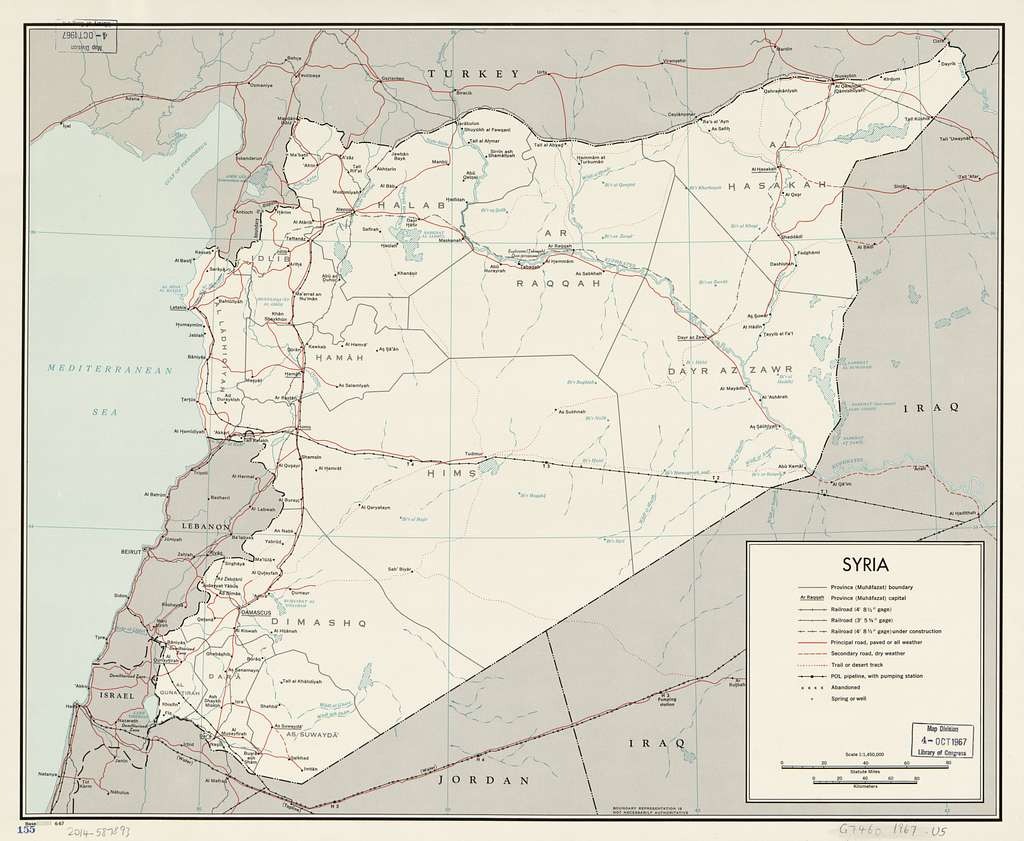
In our rapidly-evolving world, the proportion of the individuals professing that despite the fact that the territory is teemed with the opulence of black-oil which is depicted more valuable than even the human life by the potent politicians around the world, the region has been an inflammable by the virtue of the prevalent perceptions of the military coups, so-called puppet political figures, external military interventions and revolutions initials that have ultimately converted into far-reaching civil wars has ascended saliently across the globe. In a sense, for whoever centers on the MENA region is propelled into an inextricable quagmire. In spite of the teeth, the case of Syria, which has experienced the France Mandate (1922-1943) Management, the short-lasting and temporary constitution that thwart the political sustainability is not a different one. To be briefly expressing, it’s salient to dwell on the long-established roots of Syria with the Ottoman Empire dating back to the beginning of the 16th Century.
The History of Syria’s Entrenched Affiliation with the Classical Ottoman Empire Era [in the light of the Islahat Edict and the Kanuni Esasi (the first Constitution) in the Ottoman Empire]
The process of the Ottoman’s conquest of Syria’s territories have begun aftermath the victory of the Battle of Marj Dabiq, occurred in 1516, when Sultan Selim I, the east-oriented instruction of the Padishah of the Ottoman Empire was in power. Following the conquest, Sultan Selim I who was on the path to reach the pinnacle of his power had an aptness to set up a beylerbeylik. On the converse of his father, the Padisash Bayezıd 2, his political and militarily foresights were on a sturdy base base due to the fact that his heir training,which is deemed the training given to the Padishahs boys with the aim of being gathered , called as in Ottoman . When Syria was incorporated into Ottoman territory in 1516 after Sultan Selim I defeated the Mamluks , which was a Turkish State than the Ottoman Empire, in the Battle of Marj Dabiq. Following the conquest, Syria was established as a ‘’Beylerbeylik’’ known as Arab/Damascus.1 As a subsequent step to The sovereignty of the Ottomans for the Syria’s Territory lasted 402 years until having signed the Armistice of Mudros in 1918.2 Even though, the Nationalism and nationalist movements, which were unleashed by the 1789’s French Revolution that had an apt to wreak a havoc on the multinational construction of the Ottoman Empire, the Arabs and the Arab-majority regions in the Middle East have been not considered any separatist action , uprising or nationalist movement owing to the strong ties in the pace of the Islamic Unification. The Declaration of the Reform Edict (18 February 1856 , originally known as the Islahat Edict), which was proclaimed on the eve of the Paris Peace Treaty (30 March 1856) and expanded the rights of non-Muslims, are deemed as the second pioneering step toward modernization was marked by the “Islahat Fermanı” (18 February 1856)3. It is thought-provoking that the declaration of the Reform Edict was proclaimed prior to 18 days of the ending of the Crimean War. Thereby, the decree was fundamentally issued as a form of recompense by England and France for their unwavering supports and subsidies of the Ottoman Empire against Russia during the Crimean War (1853-1856). To examine as a general overview contextually and in terms of articles that are filled with discrepancies for the on-the verge- quandary Ottoman Empire , the Edict was published as 35 articles under the name “Khaththy Humain Ou Carte Impériale Ottomane Du 18 Fevrier 1856”. However, the underlying causes and priorities of having framed the edict poses a source of latent and perilous source of vagueness. It is concerned to utter that the inward reason was to ensure complete equality between Muslim and non-Muslim Ottoman subjects by abolishing the handicapped situation of the non-Muslim Ottoman subjects of the Empire. This has caused to the prevailing turbulence across the Lebanon and Damascus.
The Path of the Constitutionalism of Syria
Following Syria’s promise to secede from the Ottoman Empire following the Great Arab Revolt, the Kingdom of Syria was established in 1920. The establishment and declaration of independence of the Syrian Arab Kingdom resulted in the first constitution in Syrian history, the 1920 Constitution of the Syrian Arab Kingdom. However, a constitutional committee was soon established to suspend and annul the 1920 Constitution and replace it with a new constitution known as the 1928 Constitution.
The new constitution of 1928 was not accepted by France. As a result of intense pressure from France, the 1928 Constitution of the Syrian Arab Empire was replaced by the 1930 Constitution of the Syrian Arab Kingdom. The new 1930 Constitution granted broad powers to the Syrian House of Representatives and envisaged the separation of powers and the guarantee of fundamental rights and freedoms. France was forced to withdraw from Syria after World War II. In 1950 , a draft constitution was prepared under the title “Independence Constitution,” the first civilian constitution adopted in Syria . The Committee tasked with drafting the constitution examined 15 European and Asian constitutions to arrive at the “highest possible standard.”
The 1950 Constitution restricted the President’s powers, increased the powers of Parliament by prohibiting it from delegating legislative power to the government, even temporarily, and strengthened the authority of the judiciary by establishing the Supreme Constitutional Court. It guaranteed freedom of the press, freedom of assembly and demonstration, a fair trial, prohibited arbitrary liberties and prolonged detention without trial, protected freedom of property and the right to participate in economic life, regulated state property, and particularly protected farmers and their deductions.
The 1950 Constitution, which was suspended multiple times due to renewed military coups, was suspended until 1961, the unification period, with the unification of Syria and Egypt in 1958. It remained in effect until the Baath Party revived its power on March 8, 1963, abolishing the constitution and public freedoms and closing down newspapers. With this , a new page was opened in Syria that will continue to this day. 4However, on November 16, 1970, Hafez al-Assad put an end to this entire course of power by carrying out a military coup. In 1973, a committee was appointed to draft a permanent constitution for the country . Article 3 (religion of the state) of the 1973 Constitution of the Syrian Arab Republic stipulates the transfer of power temperatures and the ruling Baath Party ‘s ‘ religion’ in Article 8. The role sparked a wave of protests at the time, leading to widespread protests across Syria.
1973 Constitution was adopted by the people that same year. There are many important differences between the 1973 Constitution and the 1950 Constitution. The 1973 Constitution established the Baath Party, to which Hafez al-Assad belonged , as the head of the state and society , and it stated that a socialist policy would be pursued in the country’s economy. Furthermore, the 1973 Constitution granted the Presidency many broad powers, including the right to declare a state of emergency, a state of war, a state of general mobilization, and the ability to dissolve the People’s Assembly. The 1973 Constitution of the Syrian Arab Republic survived until 2012. Unlike the 1973 Constitution, the 2012 Constitution of the Syrian Arab Republic respects all religions and guarantees freedom of worship, provided that it does not disrupt public order. Article 8 of the 2012 Constitution The article stated that the transition from the absolute power “monopoly” of the Baath party to “political pluralism” would be made and stated as follows: “The political power of the state shall be based on the principle of political pluralism and shall be exercised democratically through voting.” 5 The 2012 Constitution lifted the suspension of power after the opposition took control of Damascus, which was previously shared by Ahmad al- Shara.
| 1973 the State of the Syrian Arab Republic | 1950 the State of the Syrian Arab Republic | 1920 Constitution of the Syrian Arab Kingdom | Evaluation in Terms of Subject/Content |
| He was appointed by the President “Hafez al-Assad ” . | The coup support committee was tasked with. | Prepared by President Emir Faisal. | Draft Committee |
| Syrian Arab Republic | Syrian Arab Republic | Syrian Arab Kingdom | Official Name of the State |
| The official religion of the state is Islam . | The official religion of the State is Islam . | The official religion of the state is Islam . | Official State Religion |
| Official language of the state It is Arabic . | The official language of the state is Arabic . | The official language of the state is Arabic | Official Language of the State |
| Central Government based on unitary management | Central Government based on unitary management | Regional administration based on federation administration | Management Style |
| Women were given the right to vote and be elected . | Women were given the right to vote and be elected . | Women were not granted any rights . | Giving Women Their Rights |
| Compulsory military service is included. | Compulsory military service is included. | Compulsory military service is not included. | Compulsory Military Service |
| Socialist Politics | Liberal Politics | There is no clear policy specifically stated. | Adopted Economic Policy |
The Preparation Process of the Interim Constitutional Declaration in Syria
A few days after the Syrian opposition forces entered Damascus, the new Syrian administration under the leadership of “Ahmad al- Shara “, said the Official Spokesperson of the Political Affairs Department, ” Ubeyde Through Arnaut , he announced the suspension of the constitution and parliament for a three-month transition period.6
With the suspension of the current ” Constitution of the Syrian Arab Republic” (the 2012 constitution ) and the long period required for the preparation of the new constitution, which is three years for the new Syrian administration leader Ahmed al- Shara , two fundamental questions arise in terms of the legitimacy of the government’s actions within the transition period.
First, how will the administration be managed during the transition period, the renewable nature of the foundations to be adopted for the unification of governments, and the legal framework on which new methods of change will be based in the absence of a new and permanent constitution, secondly, the new Syrian policy is the acceptance of the 1950 constitution and its new implementation activities in order to continue the transition period as well as the implementation of the new constitution, and the creation of the framework of the general provisions and principles of the 1950 constitution.
Regarding this matter, Dr. Ismail Al-Halfan, Dean of the Faculty of Law at Aleppo University, stated that such exceptional records, because they were made in a manner that was detached from the political regime and ethnic group of the transitional period , were not a better solution than the 1950 Constitution7. In this context, the most important feature that distinguishes the 1950 Constitution is that it was prepared by a commission chaired by Nazim al- Qudsi , who received his doctorate in Public International Law from the University of Geneva . However, during this sensitive transition period , one of the jurists advocating for the implementation of the 1950 Constitution, lawyer Zaid Al- Azm , stated that the 1950 Constitution cannot be amended, while Syria’s parliamentary system of government is being altered.8
Ahmed al- Shara’s statement that the preparation of a new and comprehensive constitution could take approximately three years, some groups viewed this time period as excessive, while others found this period appropriate given that the Assad reign, which began in 1973 and lasted more than half a century, had just ended.
Deposed leader Bashar The political landscape that emerged in Syria after Assad’s departure from his country and the subsequent transition process that was attempted to be established have been likened to the “Arab Spring” that broke out in Tunisia in 2011 and has been compared to many places such as Bahrain, Libya , Egypt, and Iraq . Behchet’s last term resulted in mass protests against the current government, resulting in numerous constitutional reforms. For example, in Tunisia, the public rose up against corruption and the rising cost of living, resulting in the adoption of a new constitution. In Egypt, following the overthrow of Hosni Mubarak’s regime, the military council that came to power under Abdel Fattah el-Sisi drafted a new constitution in 2014.9 In other words, in both countries, the existing constitutions were not reinstated; rather, the drafting of interim constitutions continued to establish a permanent constitution.
A “Syrian National Dialogue Conference” is being held in Damascus in February to prepare a draft interim constitution for Syria, and Syria’s short-and medium-term road map is being announced to the public . Among the issues discussed at the conference , the modernization of the parliament, its regime, elections, the political and economic functioning of the state, the structure of the government system, and the provisions for its orderly dissolution were decided upon in the “Interim Constitutional Draft.”10
Following the conference’s failure , a final report was prepared. According to this final report, a series of principles were agreed upon, including the protection of posterity, the adoption of an interim constitution, equal citizenship, and the guaranteeing of rights and freedoms, to bring together the country’s religiously and ethnically diverse citizens and guide their freedom of movement. 11Last March , the Syrian Presidency issued a statement regarding these matters . The section specifies the number of seven members on the commission, two of whom are women. These names are: Abdul Hamid Al- Awak , Yasser Al- Huwaish , Ismail Al- Khalfan , Riyan Kahilan , and Muhammad. Reda Jalkhi , Bahiya Mardini and Ahmad Kur.12
The Commission to Prepare the Draft Interim Syrian Constitution completed it on March 13, 2025 , and submitted it to President Ahmed al- Shara for approval . On March 14, a ceremony was held at the People’s Palace in Damascus, chaired by President Ahmed al- Shara , and the public declaration of the “Interim Constitution” was announced. The Interim Syrian Constitution consists of 53 articles and has a five-year term.13

- [1] https://dergipark.org.tr/tr/download/article-file/653223
- [2] https://dergipark.org.tr/en/download/article-file/2435287
- [3] https://www.harmoon.org/researches/جيوبوليتيكا-الدوائر-المتقاطعة،-سوري
- [4] http://khaleej.online/x8nWnZ
- [5]https://constitutionnet.org/sites/default/files/syrian_constitution_-1950-arabic.pdf
- [6] https://www.alaraby.co.uk/siyaset/
- [7] https://www.aljazeera.net/politics/2025/1/13/هل-يصلح-دستور-1950-لإدارة-المرحلة
- [8] https://www.aljazeera.net/politics/2025/1/13/هل-يصلح-دستور-1950-لإدارة-المرحلة
- [9] https://www.alhurra.com/syria/2025/03/13/%D8%A7%D9%84%D8%B4%D8%B1%D8%B 9-%D9%8A%D8%B5%D8%A7%D8%AF%D9%82-%D8%A7%D9%84%D8%A5%D8%B9%D9%84%D8%A7%D 9%86-%D8%A7%D9%84%D8%AF%D8%B3%D8%AA%D9%88%D8%B1%D9%8A-%D8%A8%D8%B3%D9% 88%D8%B1%D9%8A%D8%A7-%D9%85%D8%A7-%D9%86%D8%B5-%D8%B9%D9%84%D9%8A%D9%87
- [10] https://www.kurdistan24.net/ar/hikaye/829595
- [11] https://www.setav.org/suriyede-yeni-asama-gecici-anayasal-bildirge
- [12] https://www.swissinfo.ch/spa/siria-forma-un-comit%C3%A9-de-expertos-para-redactar-su-nueva-constituci%C3%B3n/88951702
- [13] https://www.bbc.com/news/articles/c70ely2p6e4o

Leave a comment