
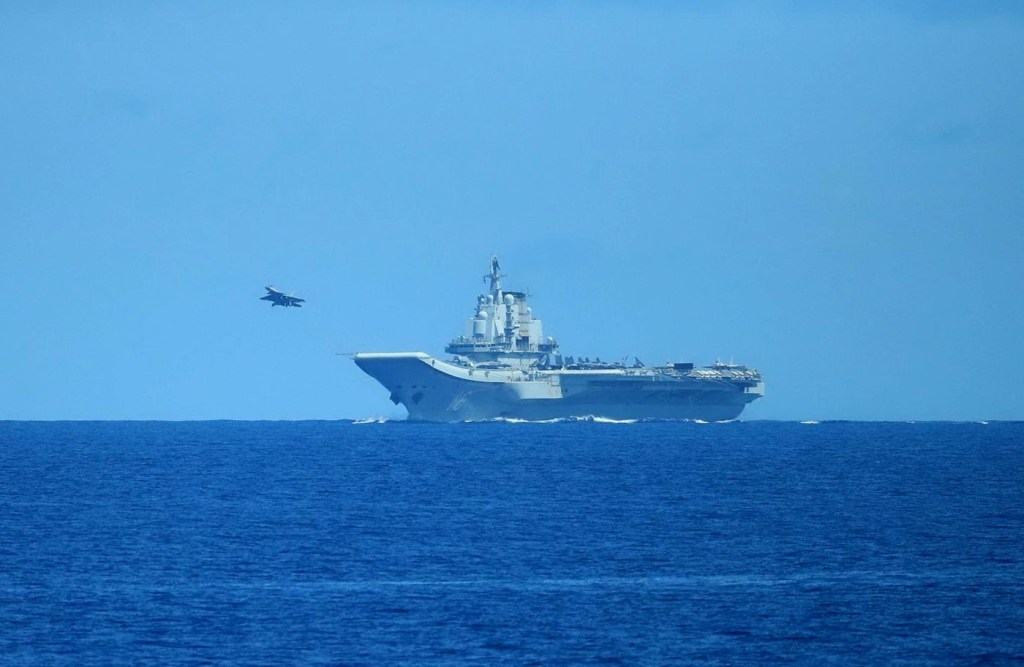
- Japan protests after Chinese fighter jets lock radar on Japanese planes – 07.12.2025
Recent bilateral tensions between Japan and China escalated after Tokyo protested two incidents in which Chinese J-15 fighter jets locked their fire-control radars onto Japanese aircraft near Okinawa, an act Japan considers a potential threat signal. Japan scrambled jets in response and stated that its aircraft had not engaged in any provocative behaviour, while Prime Minister Sanae Takaichi condemned the radar lock-ons and demanded measures to prevent recurrence. Beijing rejected the allegations as inconsistent with the facts, accusing Japan of harassment during a previously announced naval training exercise. The episode follows a series of confrontations linked to renewed political friction after Takaichi’s remark that Japan might intervene militarily if China attacked Taiwan. This broader deterioration in relations has been reflected in disputes over East China Sea activities, restrictions on Japanese cultural exports and seafood imports by China, and increased Japanese security measures around Yonaguni Island.
- China’s trade surplus hits $1 trillon in just 11 months despite plunge in shipments to US – 07.12.2025
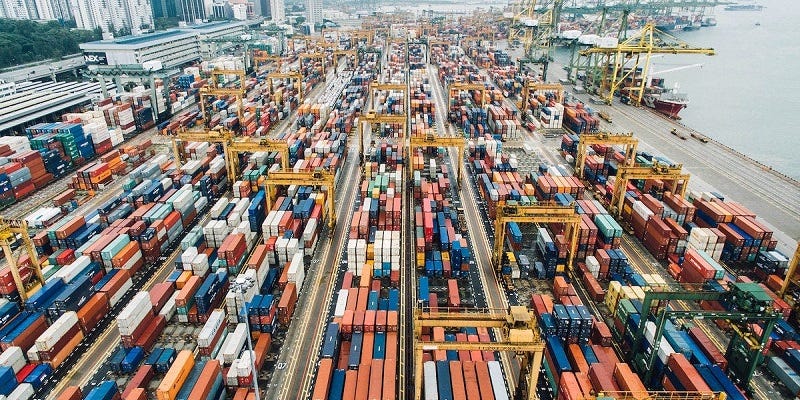
China’s exports returned to growth in November, rising 5.9% year-on-year to $330.3 billion after an unexpected contraction in October, although shipments to the United States fell nearly 29% amid an eighth consecutive month of double-digit declines. Customs data showed that China’s trade surplus for the first 11 months reached a record $1.08 trillion, reflecting faster export growth compared to imports, which increased 1.9% despite continued weakness in the property sector. The rebound in exports occurred shortly after a year-long US–China trade truce was agreed, with Washington lowering tariffs and Beijing pledging to halt rare-earth export controls, though analysts noted that November figures may not yet fully reflect these changes. Economists also highlighted ongoing challenges, including an eighth month of contracting factory activity, yet many expect China to meet its 5% growth target for the year, supported by policy emphasis on advanced manufacturing. While some analysts warned that stable trade conditions may be short-lived given the structural stalemate in US–China relations, others projected that China would continue expanding its global export market share—potentially reaching 16.5% by 2030 driven by competitiveness in sectors such as electric vehicles, robotics, and batteries.
- Hamas and Israel move towards phase two of US-backed Gaza plan – 07.12.2025
As Israel and Hamas prepare to enter the second phase of a US-led plan to end the war in Gaza, tensions have risen over the proposed international stabilisation force, whose mandate remains undefined. Hamas official Basem Naim said the group is open to discussing temporary weapons storage but rejects any foreign force overseeing disarmament or operating inside Gaza, while Israel insists that full demilitarisation is essential. The US plan outlines broad goals, including a stabilisation force and a technocratic Palestinian administration, but lacks concrete timelines, structures, and participating countries. Phase one has already faced obstacles, with Israeli strikes continuing during the truce and disputes over captive releases, as Israel maintains control over more than half of Gaza and has designated a new “yellow line” as a defensive border. Regional actors, including Qatar, warn that the fragile truce could collapse without rapid progress toward a lasting agreement and a full Israeli withdrawal.
- A fire at a popular nightclub in India’s Goa state kills at least 25, officials say – 07.12.2025
At least 25 people, including several tourists, died in a nightclub fire in Arpora, North Goa, after a gas cylinder explosion ignited the blaze shortly after midnight, according to state officials. Goa Chief Minister Pramod Sawant reported that most victims were kitchen staff, while six injured individuals remain in stable condition. Local authorities stated that approximately 100 people were on the dance floor when the fire broke out, prompting many to flee toward the lower-level kitchen, where they became trapped. Firefighting efforts were delayed due to the nightclub’s narrow access route, forcing fire trucks to stop hundreds of meters away. The club had previously received a demolition notice for lacking construction permits, although the order was later reversed. The state government has launched an inquiry into the incident to assess the precise cause and determine whether fire safety rules and building regulations were followed. Prime Minister Narendra Modi expressed condolences, while the tragedy highlights ongoing safety challenges in India, where regulatory enforcement is often weak and gas cylinder accidents remain common.
- Powerful 7.5-magnitude earthquake strikes Japan’s northeast – 08.12.2025
A 7.5-magnitude earthquake struck off Aomori prefecture in northeastern Japan on December 8, triggering evacuation orders for about 90,000 residents and initial tsunami warnings, later downgraded to advisories as waves of 20–70 cm were observed. The tremor, registering “upper 6” on Japan’s seismic intensity scale, caused damage to buildings and furniture, and seven injuries were reported, with no major casualties or nuclear incidents. Authorities warned of possible additional strong quakes in the coming days and issued a one-week regional “megaquake” advisory. Japan’s location in the Pacific “Ring of Fire” makes it highly earthquake-prone, with the region having experienced catastrophic events such as the 2011 9.0-magnitude quake and tsunami that damaged the Fukushima Daiichi nuclear plant.
- Thailand launches airstrikes on Cambodia as Trump’s peace agreement hangs in balance – 08.12.2025
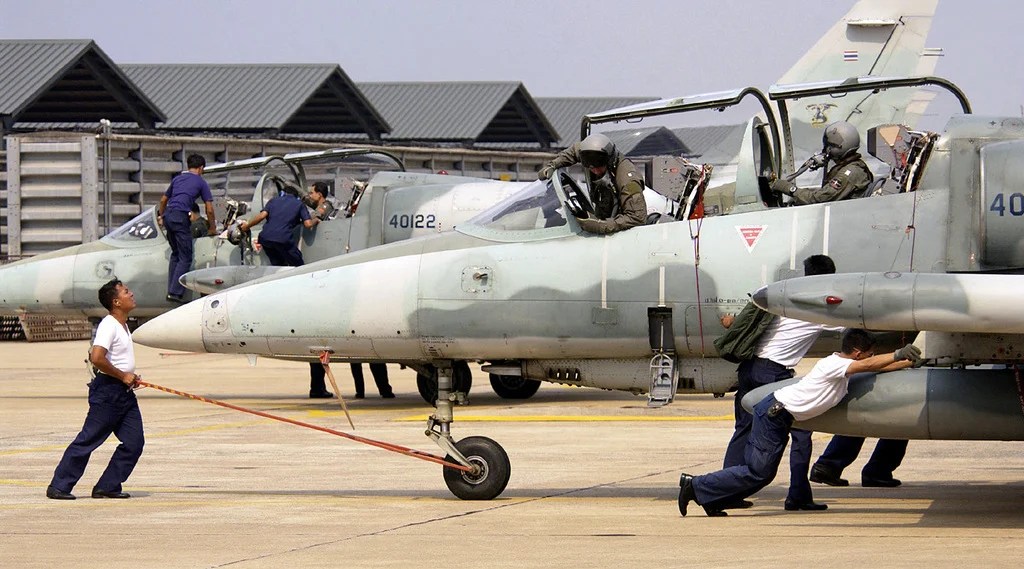
On Monday, renewed fighting erupted between Thailand and Cambodia, with Thailand conducting airstrikes along the disputed border in retaliation for an earlier attack that killed a Thai soldier and injured seven others. Both nations accused each other of initiating the strikes, and at least four Cambodian civilians were reported killed, with tens of thousands displaced. Thailand has evacuated approximately 70% of residents from affected border towns, while Cambodia denied Thai allegations of provocation and accused Thai forces of causing civilian harm. The flare-up threatens the ceasefire and expanded peace declaration brokered in July and October 2025, with US President Donald Trump and Malaysian Prime Minister Anwar Ibrahim involved in mediation efforts. The longstanding territorial dispute spans an 800-kilometer border, rooted in colonial-era maps, and previous clashes have repeatedly escalated into brief armed conflicts. UN Secretary-General Antonio Guterres and regional actors have called for de-escalation and a return to dialogue.
- Meta commits to ‘hybrid’ ad model to settle EU digital rules probe – 08.12.2025
Meta has committed to offering EU users a “third alternative” for advertising on Facebook and Instagram, introducing a “hybrid approach” that allows users to access a free service driven by less personalized data, as part of ongoing discussions with the European Commission under the Digital Markets Act. The new model, intended to provide an option between full tracking consent and paid subscriptions, is scheduled for rollout in January 2026. This follows a €200 million fine imposed on Meta in April for non-compliance with the Act, and the Commission emphasized that it will closely monitor the implementation of the changes. While Commission officials described the development as positive for consumers, EU consumer groups have expressed caution, noting that Meta has previously failed to provide a legally compliant choice on advertising.

- Bomb explosion kills over 30 in eastern Congo after army clashes with pro-government militia – 08.12.2025
A bomb explosion in Sange, South Kivu, eastern Congo, killed over 30 people and wounded 20 others following clashes between the Congolese army (FARDC) and the pro-government Wazalendo militia, despite a recently signed U.S.-brokered peace agreement aimed at ending hostilities with the Rwanda-backed M23 rebel group. The incident occurred as FARDC units reportedly disagreed over movements into the town, leading to internal firing before the blast. The region remains affected by a complex conflict involving more than 100 armed groups, contributing to a significant humanitarian crisis with over seven million displaced. Congolese President Felix Tshisekedi accused Rwanda of violating the peace agreement and supporting attacks on civilians, while Burundi’s government also condemned Rwandan actions. Despite the June and Washington agreements, residents and analysts report ongoing fighting, with both FARDC and M23 previously accused of ceasefire violations, highlighting the fragility of peace efforts in eastern Congo.

- https://www.bbc.com/news/articles/c5yqe197ypno
- https://edition.cnn.com/2025/12/08/business/china-exports-growth-november-intl-hnk
- https://www.aljazeera.com/news/2025/12/7/hamas-and-israel-move-towards-phase-two-of-us-backed-gaza-plan
- https://www.npr.org/2025/12/07/nx-s1-5636547/fire-nightclub-india-goa
- https://www.reuters.com/business/environment/japan-warns-3-metre-high-tsunami-after-magnitude-72-earthquake-2025-12-08/
- https://edition.cnn.com/2025/12/07/asia/thailand-cambodia-border-clashes-december-intl-hnk
- https://www.politico.eu/article/meta-commits-to-hybrid-ad-model-to-settle-eu-digital-rules-probe/
- https://apnews.com/article/congo-m23-rwanda-trump-minerals-fighting-a9084c0a5c8968ca40cbdd8aced75255

Leave a comment