

Written by Agâh Oktay Acar
Agah Oktay Acar is currently a final-year LLB student at Ankara Social Science University, Faculty of Law. He is eager to focus on International Humanitarian Law, International Criminal Law, and MENA Region Policy.
Abstract
The following era of the Arab Spring, which has brought along profound outcomes as regards the Middle East and North Africa policy, has coerced scores of states to undertake orthodox police ways. In this sense, in the wake of the overthrow of the long-lasting leader of Libya, Muammar Gaddafi, a brutal civil war had happened that had caused the country divided into two different and sharp regions. Notwithstanding that the efforts exerted by the UN by paving the way for an agreement with the aim of the unification between the internationally recognised parliament in eastern Tobruk-based Libya and the Tripoli-based General National Congress (GNC) in Tunisia, 2015 . Within the scope of the planned calendar, it was being expected to be hold an election within two years; conversely, the crisis has deepened more. The situation has yielded the whole Mediterranean Sea area converted into the struggle for the other Mediterranean countries’ power. The Mediterranean has literally turned into a chessboard. The most significant of these is the 2019 Maritime Jurisdiction Delimitation Agreement between Turkey and the Tripoli-based Libyan Government, which is legitimated by the United Nations. In response, a Maritime Jurisdiction Delimitation Agreement was signed between Egypt and Greece in 2020. Consequently, the NAVTEX tensions and naval military exercises that erupted in the Mediterranean in 2020 have continued until 2025. Furthermore, the Greek Cypriot Administration of Southern Cyprus (GCASC) signed an Exclusive Economic Zone (EEZ) delimitation agreement with Israel in Nicosia on December 17, 2010. Italy is observed to be seeking to fill the authority vacuum in the region following France’s withdrawal of its last North African military unit from Mali under the Mattei Plan. In this context, a trilateral summit was organized in Istanbul on August 1st between Italy, Turkey, and the Libyan National Unity Government. This analysis report will reveal the struggle for dominance in the Mediterranean, particularly in Libya.
The Significance of Istanbul Corporation Summit for the future of the Mediterrenian Sea
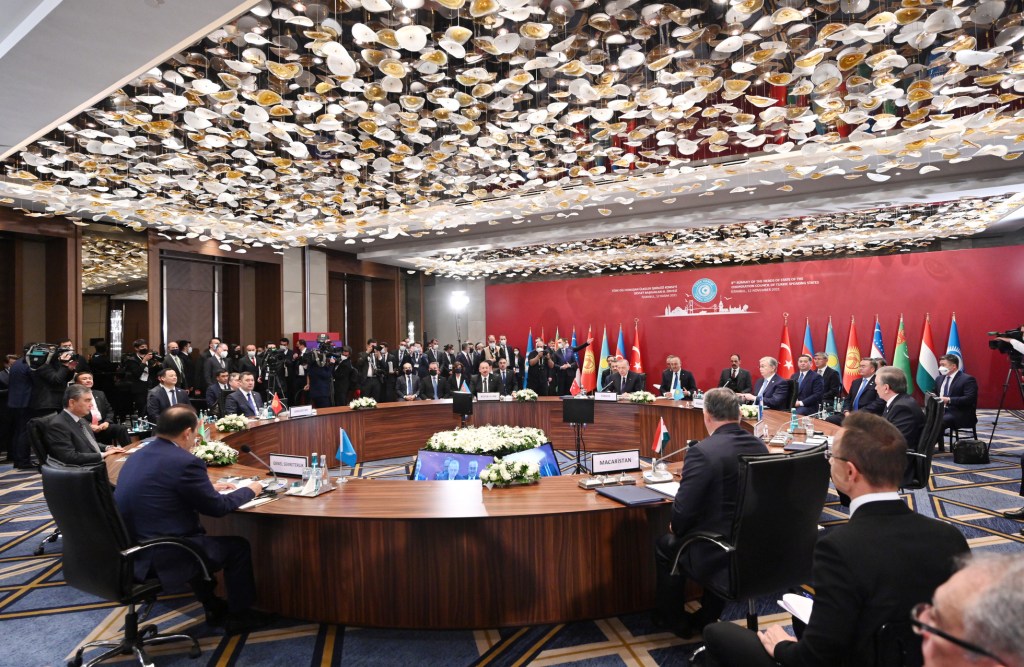
On August 1, 2025, Istanbul hosted an extraordinary summit between Türkiye, Libya, and Italy. The summit was hosted by the Dolmabahçe Palace, which has a historical significance for the Ottoman Empire, and was attended by the President Recep Tayyip Erdoğan, representing the Republic of Türkiye, Abdulhamid Dibeybe, Prime Minister of the Libyan National Unity Government, representing the Libyan Arab Republic, and Georgia Meloni, Prime Minister of the Republic of Italy, representing the Republic of Italy.1 It is noteworthy that the Istanbul Summit, which was attended by 3 Mediterranean neighboring countries, took place less than a month after the signing of the cooperation agreement between the Libyan National Oil Corporation (NOC) and Turkish Petroleum Corporation (TPAO) on 29 June.2
It is also significant that the day before the three-state summit in Istanbul, Italian Prime Minister Georgia Meloni held a bilateral meeting with the Tunisian Prime Minister in the capital Tunis on July 31, 2025. The fact that Prime Minister Georgia Meloni made foreign contacts with Tunisia and Libya, Italy’s geographically closest Mediterranean neighbours, reveals that Italy wants to take advantage of a possible authority vacuum in North and Central Africa after France’s declining influence in the region.3 In order to properly comprehend the main aims and objectives of the Istanbul Cooperation Summit, it is necessary to examine the current policies of Türkiye and Italy in North and Central Africa, as well as the attitudes and policies of other countries active in the region. In this context, the “Arab Spring” process, which erupted in Tunisia in 2011 and led to radical changes in many North African, Middle Eastern and Gulf countries, was also effective in Libya, and the process, which started with the peaceful protests of the Libyan people against the regime, led to the division of the Libyan people into Gaddafi supporters and Gaddafi opponents. This situation reached the level of a comprehensive civil war within Libyan borders, and many countries evacuated their citizens from Libya. As a result of the Libyan civil war, the 42-year reign of Muammar Gaddafi, who came to power in 1969 through a military coup, came to an end. However, national unity and solidarity could not be achieved in the country from 2013 until 2025. At this point, two different administrations have emerged in Libya since 2015, one centred in Dobruk (Eastern Libya) and one centred in Tripoli (Western Libya).4 The Tripoli-based Government of Western Libya (later to become the Government of National Accord of Libya) took over the Tripoli-based administration by establishing the Presidential Council of the Government of National Accord after the Libyan
Political Agreement signed in Suheyrat, Morocco on December 17, 2015.5 The Tripoli-based Government of Western Libya, called the Libyan Government of National Accord, was also recognized as a state by the United Nations and was directly addressed. On the other hand, the Tobruk-based House of Representatives administration has been provided with money, weapons, foreign troops and logistical support by Russia, France, and the United Arab Emirates, although it has no recognition by the United Nations. In addition, it controls a large part of the country’s territory in terms of Libya’s surface area.
The Political Rapprochement between Türkiye and the Libyan Government of National Accord and The Changing Balance in Mediterrenian Sea
At this point, since 2018, Türkiye and the Libyan Government of National Accord, the only legitimate government of Libya, have signed international agreements to increase cooperation between the two countries in many fields such as military, oil and education. In this framework, a cooperation agreement was signed on June 29 between the Libyan National Oil Corporation (NOC) and Turkish Petroleum Corporation (TPAO) in order to increase economic and trade volume. This agreement is based on the Memorandum of Understanding on the Delimitation of Maritime Jurisdiction in the Mediterranean Sea signed between Türkiye and the Libyan Government of National Accord on November 27, 2019. Furthermore, on September 27, 2020, the aforementioned memorandum was ratified by the then United Nations Secretary-General in accordance with Article 102 of the United Nations Charter, in other words, the Convention on the Delimitation of Maritime Jurisdiction signed between Türkiye and Libya in 2019 was officially registered by the United Nations.6
There are many examples of such maritime delimitation agreements between two countries in the Mediterranean basin. Among these, the Exclusive Economic Zone signed between the Greek Cypriot Administration of Southern Cyprus and Egypt in 2003 and the maritime delimitation agreement signed between Israel and the Greek Cypriot Administration of Southern Cyprus on December, 17, 2010 stand out. In 2010, Israel and the Greek Cypriot Administration of Southern Cyprus agreed on a power plant project that would extend from Israel to the Greek Cypriot Administration of Southern Cyprus.7 This project also gave rise to the idea of a natural gas pipeline project from Israel to Europe, and as a result, a project known as “EastMed” was developed to distribute Israeli gas first to the Greek Cypriot Administration of Southern Cyprus, then to Crete, which is part of Greece, and from Crete to the European Continent. These natural gas projects have put Greek Cyprus in a much more privileged position in the Mediterranean.8 The Greek Cypriot Administration of Southern Cyprus has NATO and European Union warships of the US and British Navies anchored in Limassol Port and Larnaca Ports.9 However, in 2015, there was a dispute between Israel and Southern Cyprus over the development of the “Aphrodite” deposit in the 12th parcel on the Southern Cyprus side, but the situation was restored after Greece intervened in the crisis. This agreement, which is of exceptional importance, has increased Turkey’s military and commercial effectiveness in the Mediterranean area. In line with this objective, Türkiye’s recent steps can be observed as follows: On July 7, 2025, Turkish Petroleum Corporation acquired the 2014 West Draco and its sister, the 2015 West Dorado drillships from the fleet of Norwegian Eldorado Drilling. It was announced that the two latest drillships will be used in Libya and Mersin Taşucu. Türkiye has previously purchased four drillships, renamed Fatih, Yavuz, Kanuni and Abdülhamid Han, in order to explore domestic hydrocarbon resources and bring them into the economy. However, Türkiye’s activity in the Mediterranean is not limited to natural gas exploration activities with drillships.10 In this context, TPAO’s fleet also includes two seismic research vessels, Barbaros Hayrettin Pasha and Oruç Reis. However, Türkiye’s gain with this maritime jurisdiction agreement does not only aim to explore for oil or natural gas in the Mediterranean basin. With the aforementioned maritime jurisdiction agreement, Türkiye has also significantly increased its military presence in the Mediterranean. In this context, Türkiye has agreed with Libya to conduct a series of military training exercises in the Mediterranean in 2020 and 2021 by the Turkish Navy in accordance with the Convention on the Delimitation of Reciprocal Maritime Jurisdiction.11
In this context, Türkiye has conducted a series of military training exercises in the Mediterranean Sea in 2020 and 2021 by the Turkish Navy as a result of the Reciprocal Maritime Jurisdiction Delimitation Agreement with Libya. This is perceived as a challenge not only for Türkiye’s valuable underground resources such as oil and natural gas in the Mediterranean area, but also against other local powers in the region such as Greece, Israel, and Egypt. The most prominent example of this is that the then Greek Prime Minister Kiryakos Mitsotakis (who is also the current Prime Minister of Greece) complained to the European Union on June 29th, claiming that the contract signed between the Turkish Petroleum Corporation (TPAO) and the Libyan National Oil Corporation (NOC) violated the international law of the sea. In 2021, Prime Minister Mitsotakis met with the President of the Libyan Government of National Accord, Abdelhamid Dibeybe, in Tripoli, the capital of the Government of National Accord, and demanded that Libya cancel its existing contract with Türkiye. As it will be remembered, Prime Minister Mitsotakis stated that the Memorandum of Understanding on the Delimitation of Maritime Jurisdictions signed between Türkiye and Libya in 2019 disregarded the sovereign rights of third states and claimed that it had no legal consequences for third states.12 On the other hand, Greece states that one of the problems it has expressed about this agreement is that the island of Crete, which belongs to Greece, has been ignored. Greek foreign policy affected its domestic politics and the Syriza Party (Radical Left Alliance), the main opposition party in Greece, made a statement on the Istanbul Summit. In its statement on August 2, 2025, the Syriza Party stated that the Istanbul Summit was a big defeat for Athens and that Greece was not taken as a direct interlocutor.13 The main reason for the Greek side to keep the maritime delimitation agreement signed by Türkiye with Libya on the agenda is that the Tobruk-based Government of Eastern Libya, which it has supported in the past, is most likely to ratify the text of the Memorandum on the Delimitation of Maritime Jurisdiction, just like the Tripoli-based Libyan Government of National Accord. The main reason for this conclusion is the recent political rapprochement between Türkiye and the House of Representatives, which is considered as the Tobruk-based Government of Eastern Libya. This is because Saddam Haftar, the son of Major General Khalifa Bilkasim Haftar, who is the main power behind the Libyan House of Representatives, paid high-level visits to Türkiye in April, 2025, with Yaşar Güler, the Minister of National Defense.14 Considering the fact that Saddam Haftar is also the commander of the Libyan National Army Forces, it can be said that Türkiye’s main goal is to unite all ethnic, religious, and political groups in Libya under a single roof. Prior to the August 1, 2025, Istanbul Summit, Italy’s political, military, and logistical contacts in the Mediterranean region were as follows: Italian Prime Minister Georgia Meloni met with President Qais Said in Tunis, Tunisia on July 31, 2025, just before the trilateral summit in Istanbul. This was Georgia Meloni’s 6th official visit to Tunisia in her political career and her 2nd official visit during her premiership which started in 2022. The main agenda items of the talks were the recent increase in irregular migration in the Mediterranean and energy cooperation. Through the “Mattei Plan”15 announced by Prime Minister Giorgia Meloni at the end of 2023, it is planned to develop projects with Italy to strengthen development in 5 main areas: education, training, agriculture, health, energy and water, to be implemented in Algeria, Democratic Republic of Congo, Egypt, Ethiopia, Kenya, Morocco, Mozambique, and Tunisia. However, the main objective of the project is to reduce migration from African countries to Europe. As a natural consequence, Italy announced that it would hire 12,000 skilled workers from Tunisia and signed a bilateral agreement on the mutual validity of driving licenses. In the specific context of the Istanbul Summit, a natural gas production agreement worth 8 billion dollars was signed between the Italian Energy Company “Eni” and the Libyan National Oil Authority in 2023. According to the agreement, daily natural gas production is planned to be 21 million cubic meters of gas in 2026.16 As can be understood from this, European countries are looking for alternative routes for natural gas due to strained diplomatic relations with Russia.
To summarize, the Cooperation Summit held in Istanbul on August 1, 2025, provided an opportunity for simultaneous and direct dialogue between the three Mediterranean neighbors. After France withdrew its last military presence in Africa from Mali and lost its dominance over North Africa and the Mediterranean basin day by day, it is a matter of curiosity who and how will fill a possible authority vacuum in the Mediterranean. However, in the process so far, Greece and Egypt signed a maritime delimitation agreement in 2020, just as Türkiye and Libya did in 2019, but both countries failed to see the expected benefit from this agreement.17 On the contrary, Italy and Türkiye have reaffirmed their Mediterranean presence through bilateral defence and military agreements with Libya and Tunisia.
- 1 https://www.agenzianova.com/de/news/a-istanbul-il-vertice-turchia-libia-italia-con-erdogan-dabaiba-e-meloni-focus-su-cooperazione-e-migranti/
- 2 https://trt.global/deutsch/article/3c31977bbd7b
- 3 https://www.africanews.com/2025/07/31/meloni-and-saied-discuss-migration-and-development-during-tunis-meeting/
- 4 https://www.aa.com.tr/tr/dunya/fastaki-libya-gorusmelerinde-yeni-bir-suheyrat-anlasmasi-saglanir-mi/1965450
- 5 https://arabicpost.net/%D8%AA%D9%82%D8%A7%D8%B1%D9%8A%D8%B1-%D8%AE%D8%A7%D8%B5%D8%A9/2025/07/11/%D8%A8%D8%B1%D9%84%D9%85%D8%A7%D9%86-%D8%B7%D8%A8%D8%B1%D9%82-%D9%8A%D8%AA%D8%AC%D9%87%D8%B2-%D9%84%D8%A5%D9%82%D8%B1%D8%A7%D8%B1-%D8%A7%D8%AA%D9%81%D8%A7%D9%82%D9%8A%D8%A9-%D8%A7%D9%84%D8%AA%D8%B1
- 6 https://truestudies.org/2175/
- 7 https://www.reuters.com/article/world/egypt-and-greece-sign-agreement-on-exclusive-economic-zone-idUSKCN25222G/
- 8 https://udiad.org/turkiyesiz-dogu-akdeniz-tahayyulu-eastmed-projesi/
- 9 https://www.defenceturk.net/guney-kibristaki-askeri-uslerin-sayisi-artiyor
- 10 https://www.ekathimerini.com/economy/energy/1274684/turkeys-tpao-buys-two-drillship-from-norway/
- 11 https://www.bbc.com/turkce/haberler-turkiye-58879247
- 12 https://www.bbc.com/turkce/articles/cqjq40vde44o
- 13 https://www.milletnews.com/greece/syriza-turkiye-italy-libya-cooperation-summit-a-diplomatic-defeat-for-athens
- 14 https://www.defensenews.com/global/mideast-africa/2025/04/15/saddam-haftars-visit-to-ankara-marks-shift-in-turkeys-libya-policy/
- 15 https://www.megatrends-afrika.de/publikation/mta-spotlight-34-italiens-mattei-plan-illusion-oder-realitaet
- 16 https://www.africanews.com/2023/01/29/italys-eni-signs-8-billion-gas-deal-as-meloni-visits-libya/#:~:text=Italian%20energy%20giant%20Eni%20signed,Minister%20Giorgia%20Meloni%20visited%20Tripoli.
- 17 https://www.ekathimerini.com/politics/foreign-policy/1277455/egypts-note-verbale-on-greek-maritime-map-is-an-expected-reaction-says-ministry/

Leave a comment