
Written by Jeff Zhou
Jeff Zhou is currently pursuing a Master in Public Policy at Harvard Kennedy School, with a focus on international and global affairs. His background spans venture capital, civic innovation, and global advocacy. At Untapped Ventures, an early-stage fund investing in agentic AI, Jeff led investor relations and portfolio operations for a network of startups, while managing public-private partnerships to support inclusive economic growth.
Outside of work, Jeff serves as Regional Director at The Borgen Project, mobilizing support to fight global poverty and meeting with congressional offices to advocate for U.S. leadership in international development. He also supports campaign finance reform through AI-driven outreach at American Promise and contributes foreign policy analysis as the MENA Correspondent for the Young Diplomats Society. An active member of the United Nations Association and Foreign Policy for America, Jeff aims to use both policy and entrepreneurship to tackle complex global challenges.
Abstract
University admissions systems worldwide, whether exam-based or holistic, play a crucial role in deciding educational and career pathways. This article examines the intense academic pressure associated with the Chinese Gaokao and Korean Suneung. While these systems were historically designed to promote merit, unequal access to resources can grant unique advantages to prosperous students. Conversely, the U.S. holistic model, though more comprehensive, has faced its own issues, including documented biases and high-profile scandals like “Varsity Blues.” For many students, the ultimate goal is acceptance into elite universities, which remain deeply entrenched as pipelines to political influence and economic gains – from Tsinghua’s representation in Chinese leadership to the outsized earnings of Ivy League graduates in the U.S. Even in nations with less stratified higher education, global trends toward prestige are exacerbating class divides. The piece concludes by exploring how political leaders may weaponize anti-elite sentiment while preserving the structural power of selective institutions, ensuring the cycle of privilege continues turning.
Introduction
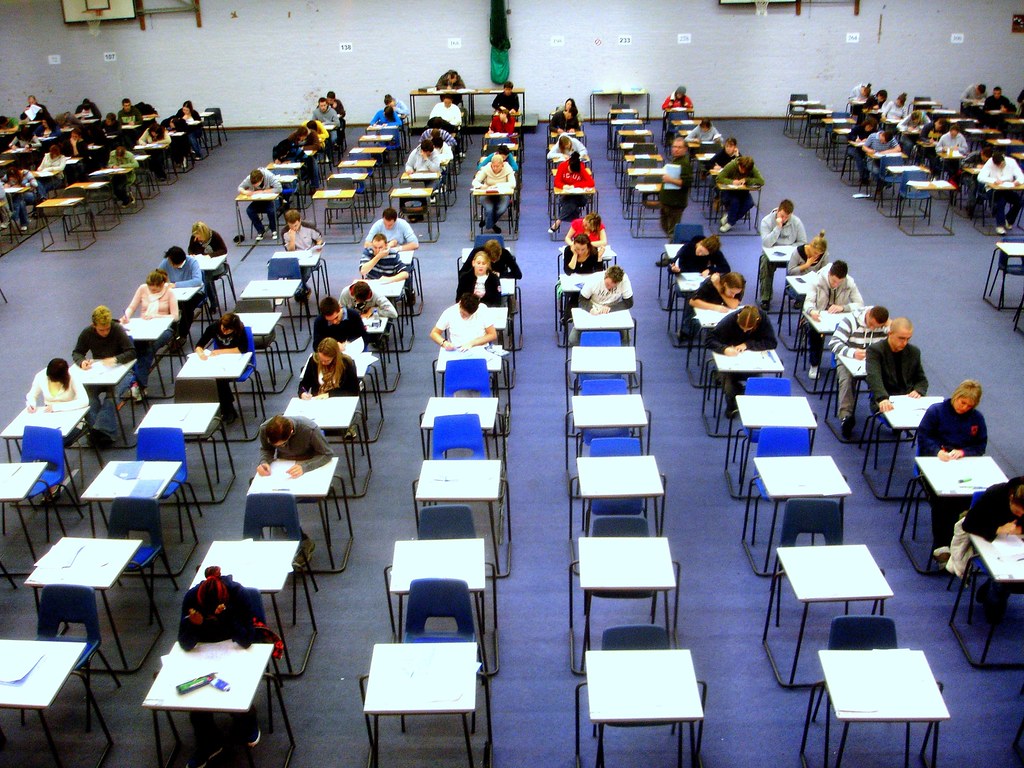
As the results of this year’s Chinese National College Entrance Examination, the Gaokao, were released, students across the country experienced a wide range of emotions, from disappointment to happiness. One of these students, identified only by his surname of Meng, achieved a score of 204 in the three elective subjects – just six points shy of a perfect score, which is rarely achieved. However, Meng believed that falling short of the maximum score had ruined his chances of getting accepted into China’s two most prestigious educational institutions, Peking University and Tsinghua University. While many of his classmates were out celebrating their results, Meng jumped from his 17th-floor apartment. By the time ambulances arrived, he had passed away at the scene at just 19 (NetEase, 2025).
Meng’s suicide is one of many linked to the Gaokao and to other high-pressure examinations in countries such as India and South Korea. However, this phenomenon isn’t necessarily new; it has persisted for decades. What’s changed is the growing debate over whether this type of educational system truly creates a more meritocratic society or merely exacerbates existing inequalities. In other words, is the sacrifice and hardship worth it for lower-class students striving for top scores if they’re still overtaken by peers from affluent backgrounds?
There also exists a contrast with the American college admissions process, which is more holistic and assesses a variety of factors, including extracurriculars and letters of recommendation. Although the Varsity Blues scandal exposed the U.S.’s own unique flaws, the clash between test-based admissions and holistic evaluations is intensifying. Amid these comparisons, questions are emerging about the true purpose of higher education and whether it now serves elites over broader society (Lawson, 2023).
Test-based admissions and the class ceiling
To understand the cultural significance of famous exams, such as the Gaokao and the Korean Suneung, it’s important to consider their historical context. For instance, the origin of the Gaokao traces back to the Chinese imperial civil service exams, known as the Keju, which were used for over a thousand years to appoint government officials based on merit instead of status or wealth (Huang, 2023). The contemporary Gaokao was first introduced in 1952, and it became viewed as an opportunity to move up the social ladder during a period when China faced high illiteracy rates and sought to establish a skilled workforce for modernization.
The Suneung is similar to the Gaokao in that its roots lie in the civil service exams from 10th-century Korea (Diamond, 2016). Those who passed enjoyed immense social status. In 1994, the modern Suneung replaced earlier college entrance tests that varied by institution, standardizing the process nationwide. Both exams are grounded in principles of merit, but they’re now accused of widening the achievement gap. In China, there’s a marked disparity in rural and urban children’s access to social resources. Specifically, the former “lack the embodied cultural capital” to excel in the Gaokao, which reflects the country’s aspirations for globalization and favors knowledge tied to industrial lifestyles (Lu, 2023). Additionally, urban children have the opportunity to visit libraries and museums and attend private tutoring lessons to expand knowledge beyond school requirements (the Chinese government banned private tutoring in 2021, but the move has fueled a substantial unregulated market for these services).
Meanwhile, the Suneung has been criticized for engendering the proliferation of cram schools in Korea, with 78.3% of Korean children attending these institutions, known as hagwons. Yet approximately 16.5% of poor households overspend on them, investing around 30% of their income – compared to just 5% among higher-income households (Howell, 2021). In 2023, the average amount per month spent on private education per student soared to a record high of ₩434,000 (US$300). The COVID-19 pandemic worsened the situation, as a survey conducted by Uway in the year of the outbreak found that 63.5% of high school seniors felt disadvantaged in preparing for the Suneung (Yeung & Seo, 2023).
Widespread calls to tackle the unequal nature of the Gaokao and Suneung, along with their impact on children’s mental health, have prompted the respective governments to make changes to the examinations. In 2014, the Chinese Communist Party rolled out reforms requiring candidates to take three nationally standardized subjects (Chinese, mathematics, and a foreign language) along with one primary elective subject, either physics or history, and two additional electives selected from chemistry, geography, political science, and biology (Shangyi, 2025). Professor Xiong Bingqi, Director of the 21st Century Education Research Institute, claimed the reforms have “provided students with greater flexibility in subject selection and aim to place more emphasis on students’ individuality and personal interests”. Meanwhile, in 2023, Korean government officials removed “killer questions” from the Suneung (Yang-hyeok, 2025). The goal was to absorb private education into the public school system. By eliminating questions deemed ‘too difficult’ for public school students, the government hopes to reduce reliance on cram schools.
Despite these reforms, many remain skeptical about the extent of their impact. One Korean user posted on instagram, “From the standpoint of a current high school senior, I don’t think private tutoring will decrease just because killer questions are eliminated”. Some critics even suggested the Korean government made only surface-level changes to the Suneung primarily to address public perception ahead of the general election (Jeong-yoon, 2023). Similarly, the Gaokao reforms seem to have done little to shift the status quo. In fact, after this year’s new math exam, numerous netizens took to social media to complain about the difficulty level of the questions. They argued that the Gaokao has become too focused on filtering top-performing students rather than analyzing their true abilities. A few even joked that the testmakers had a “personal vendetta against them” (Weibo, 2025).
The good, the bad, and the ugly of holistic admissions
For those not in the know, bumping into William “Rick” Singer might lead them to assume he’s a quiet, reserved elderly man currently living in California and working for ID Future Stars, an admissions consulting company. However, to most American’s, he’s the central figure behind “Operation Varsity Blues”, a college admissions scam that led to civil lawsuits and criminal proceedings. For about a decade before his 2019 arrest, Singer owned a college counseling and prep business called “The Key” and served as CEO of its affiliated foundation, the Key Worldwide Foundation (Levenson, 2025).
Through these organizations, he helped children of wealthy families get into top universities by facilitating cheating on standardized tests, falsifying their college applications, and bribing coaches and administrators to accept them as recruited athletes. One widely publicized case is actress Lori Loughlin and her husband, Mossimo Giannulli, who reportedly paid $500,000 in bribes to have their two daughters admitted to the University of Southern California as rowing team recruits – even though neither had ever held an oar (Burke, 2021). According to prosecutors, Singer earned more than $25 million from his clients as part of the ruse, offered over $7 million in bribes, and spent more than $15 million for his own enjoyment.
With each new cheating revelation, public outrage swelled, prompting debate over the potential shortcomings of holistic admissions. Putting aside the worst-case scenario of outright fraud, holistic admissions rely on subjective assessments of non-academic factors such as extracurriculars and personal background, which invites bias (Murray, 2021). In 2023, the U.S. Supreme Court ruled against the use of race-based affirmative action in college admissions. Evidence considered included Harvard admissions files from 2014 to 2019, which revealed that Asian American applicants consistently received lower ratings on subjective “personal traits” like courage and kindness compared to other racial groups (Anderson, 2023). Interestingly, they ranked higher on objective measures like test scores and grades.
Proponents of holistic evaluations argue that, when done correctly, they’re the most equitable way to select students. However, this overlooks the concern that wealthy families understand their children must “stand out” in some way to be picked from an incredibly crowded and talented applicant pool. Thus, they hire private counselors to craft compelling narratives that appeal to admissions officers, while high-achieving students from lower-income backgrounds lack equivalent access to such services (Deming, 2023). In some U.S. states, most notably Arkansas, the situation has worsened to the point that politicians have passed legislation limiting how much families using the LEARNS Act Education Freedom Account (EFA) funds can spend on extracurricular activities and transportation (Mobley, 2025). The bill ensures that most funds are directed toward core educational tools instead of sports activities.
When higher education leaves the public behind
As the debate over which university admissions process is best carries on, it’s important to recognize what’s at stake and why the matter extends beyond education. Tsinghua University, the alma mater of Chinese President Xi Jinping, maintains a prominent presence within China’s administrative and political systems. As of 2023, 30.2% of full-bureau-level young cadres were reported to be Tsinghua alumni. In recent years, graduates from the university have also experienced relatively rapid career advancement throughout the government. (Wu, 2025).
China is among many countries that favor prestigious academic institutions. Compared to peers from non-Ivy universities, Ivy League graduates typically earn much higher mid-career salaries, around $161,000 on average versus $101,000 for others. Jeff Strohl, Director of research at the Georgetown University Center on Education and the Workforce, summed up the Ivy advantage best: “privilege begets privilege” (Claybourn, 2023). The U.K. is no different; although less than 1% of the adult population graduated from Oxford or Cambridge, the two universities have produced most of its prime ministers, the majority of its senior judges and civil servants, and many people in the media (Richardson, 2017).
In some parts of the world, such as the Nordics, higher education is less elitist, with minimal gaps between “elite” and standard universities. Additionally, countries like Germany and Iceland often provide free or heavily subsidized university education to large numbers of students (Marcus, 2016). However, in the world’s top economies, universities, particularly elite ones, are no longer centers of pure learning. As tuition rises and acceptance rates fall, they’re becoming professional gatekeeping mechanisms that are increasingly politicized. With a fifth of young people unemployed and half of young workers trapped in informal, short-term jobs, public opinion has grown more critical of ivory towers (North, 2024). In response, U.S. President Donald Trump issued executive orders requiring top universities, including Harvard and Columbia, to submit comprehensive admissions data to the federal government. To encourage compliance, he has withheld billions of dollars in federal grants and research funding. Coincidentally, Trump graduated from the University of Pennsylvania, an Ivy League school.
Ultimately, the rich and powerful are likely to continue sending their children to highly selective universities, where influential alumni connections and networking opportunities remain invaluable (Johnson, 2024). However, public scrutiny of these institutions has escalated, with certain political figures portraying themselves as opponents of perceived elitism in higher education. While these criticisms feed on populist sentiment, the social and professional benefits conferred by admission to elite institutions linger, reinforcing their role in shaping future leadership.
- NetEase. (2025). A senior high school student from Shanghai Qibao Middle School committed suicide after falling short of a perfect score and jumping from a building due to his lack of hope of getting into Peking University or Tsinghua University.
- Lawson, C. (2023). Elite Universities and The Making of Privilege – review.
- Huang, J. (2023). The exam that broke society.
- Diamond, A. (2016). South Korea’s Testing Fixation.
- Lu, T. (2023). The influence of cultural capital and educational milestones in Gaokao.
- Howell, M. (2021). Educational Inequality in South Korea.
- Yeung, J. (2023). South Korea is cutting ‘killer questions’ from an 8-hour exam some blame for a fertility rate crisis.
- Shangyi, L. (2025). Major reforms rolled out ahead of gaokao.
- Yang-hyeok, K. (2025). Suneung to omit killer questions, maintain EBS connection at 50% for 2026 exam.
- Jeong-yoon, C. (2023). Suneung without ‘killer questions’ still not easy, results show.
- Weibo. (2025). Gaokao Math Exam Sparks Debate Over Difficulty and Reform.
- Levenson, E. (2025). Mastermind behind college admissions scam is back advising students — now with a court-ordered disclaimer.
- Burke, M. (2021). Lori Loughlin pays $500K for college tuition of 2 students after admissions scandal.
- Murray, T. (2021). Holistic Admissions: Could You Be Biased?.
- Anderson, A. (2023). The Supreme Court Strikes Down Affirmative Action at Harvard and the University of North Carolina.
- Wu, G. (2025). The Rise of CCP Young Elites and Xi Jinping’s “Tsinghua New Army”.
- Deming, D. (2023). The trouble with holistic admissions.
- Mobley, A. (2025). Bill proposes caps on extracurricular spending with LEARNS EFA vouchers to prevent misuse
- Claybourn, C. (2023). How Much Is an Ivy League Degree Worth?
- Richardson, H. (2017). Oxbridge uncovered: More elitist than we thought.
- Marcus, J. (2016). How free college tuition in one country exposes unexpected pros and cons.
- North, M. (2024). 5 charts that show the state of global youth employment in 2024.
- Johnson, L. (2024). JOHNSON: Ivy League institutions help rich get richer.

Leave a comment