
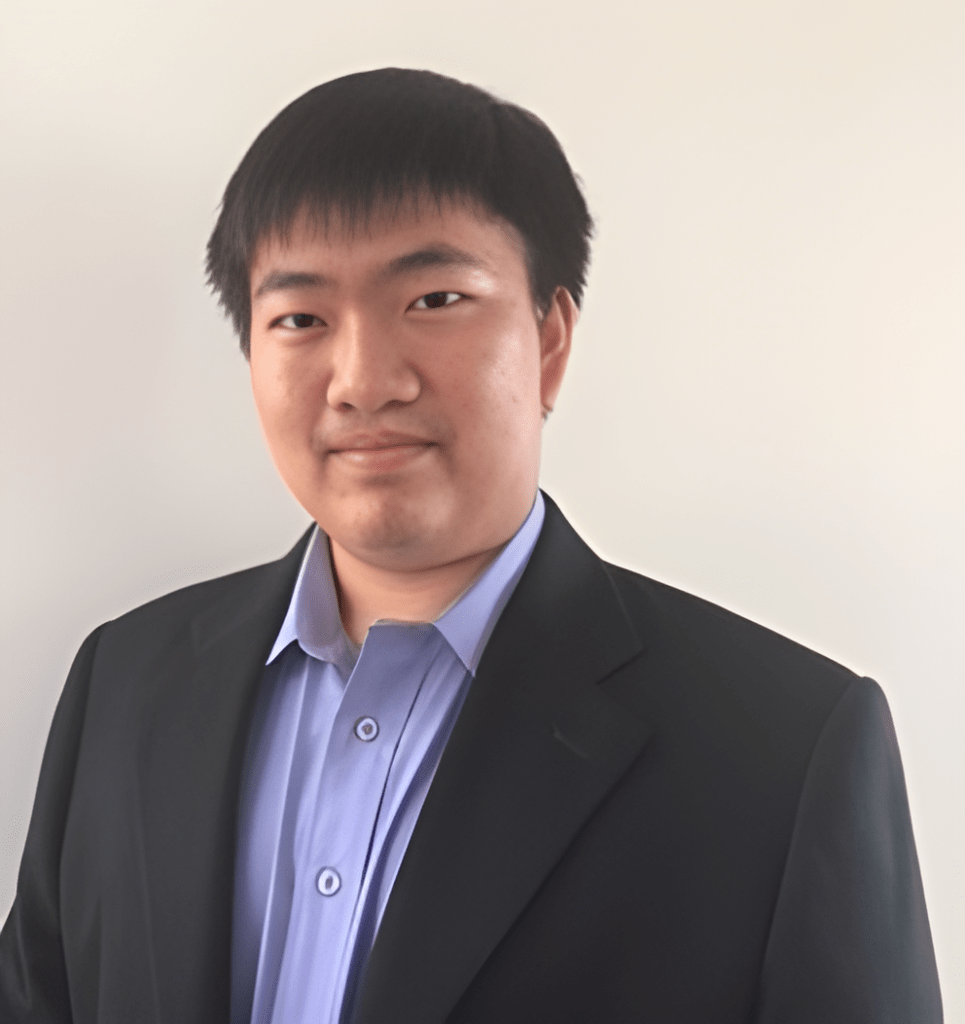
Written by Jeff Zhou
Jeff Zhou is currently pursuing a Master in Public Policy at Harvard Kennedy School, with a focus on international and global affairs. His background spans venture capital, civic innovation, and global advocacy. At Untapped Ventures, an early-stage fund investing in agentic AI, Jeff led investor relations and portfolio operations for a network of startups, while managing public-private partnerships to support inclusive economic growth.
Outside of work, Jeff serves as Regional Director at The Borgen Project, mobilizing support to fight global poverty and meeting with congressional offices to advocate for U.S. leadership in international development. He also supports campaign finance reform through AI-driven outreach at American Promise and contributes foreign policy analysis as the MENA Correspondent for the Young Diplomats Society. An active member of the United Nations Association and Foreign Policy for America, Jeff aims to use both policy and entrepreneurship to tackle complex global challenges.
Abstract
The U.S. Democratic Party continues to debate its future direction, with progressives supporting a shift to the left and moderates favoring a more centrist approach. Zohran Mamdani’s recent victory over establishment candidate Andrew Cuomo in the New York City Democratic mayoral primary has been viewed by many people as a critical development within the progressive wing. The article examines the diverging trajectories of two current progressive mayors: Brandon Johnson of Chicago and Michelle Wu of Boston. Specifically, it analyzes the political setbacks and successes of their respective administrations, while exploring how these lessons apply to the broader political sphere. Additionally, the analysis explores the link between ideological commitments and practical constraints. It concludes by considering how such experiences may inform deeper discussions within the Democratic Party regarding the viability and nature of progressive leadership.
Introduction
Zohran Mamdani has drawn national attention by defeating former Governor Andrew Cuomo to become the Democratic nominee for mayor of New York City in the 2025 election. His policies, such as establishing city-owned grocery stores and imposing a rent freeze on rent-stabilized units, have earned him endorsements from progressive heavyweights like Bernie Sanders and Alexandria Ocasio-Cortez (Fitzsimmons, 2025). Unfortunately, his candidacy has also been the subject of Islamophobic and racist attacks from far-right factions, with President Donald Trump going so far as to accuse him of allegedly “being an illegal alien” (Cameron, 2025). Despite these partisan remarks, Mamdani currently holds a 74% probability of beating incumbent NYC Mayor Eric Adams, according to prediction market Kalshi (Jacobs, 2025).
Should he pull off the victory, it would be a notable electoral outcome. However, the implications for the progressive movement will depend on his ability to translate campaign proposals into actionable policy. Literature on urban governance argues that “winning an election is just the beginning for a rising political star, it’s what they accomplish in office that influences the long-term evaluation of their tenure” (Lang & Schudy, 2023).
The recent experiences of Chicago Mayor Brandon Johnson and Boston Mayor Michelle Wu underscore the diverse outcomes that can emerge once in office. They both entered the political arena much like Mamdani: young, passionate, and determined to advance their ideals. However, their paths eventually split: one saw their approval ratings plummet, while the other managed to maintain solid public support. Understanding the lessons of what happened is critical not only for Mamdani’s future success, but for the broader outlook of the progressive cause (Creitz, 2025).
Policy Ambition and Implementation Challenges in Progressivism
On April 4, 2023, Brandon Johnson told supporters in his victory speech, “Today, we celebrate the revival and the resurrection of the city of Chicago” (Neveau & Fisher, 2023). At the time, he rode positive momentum, holding off moderate rival Paul Vallas, who ran a tough-on-crime campaign. This was a pivotal result for progressives, as two years earlier in New York, Eric Adams won his party’s nomination and, later, the general election by running to the right of his fellow Democrats on key issues like criminal justice. Some skeptics did point out that voter turnout in the Chicago mayoral runoff election was fairly low, with about 38.7% of registered voters participating (González & Wilson, 2023). Still, many remained hopeful that Brandon Johnson’s claim “the dream is still alive” would come true.
Johnson suffered his first policy defeat in March 2024, when his Bring Chicago Home ballot measure failed. Numerous voters, especially homeowners and small businesses, feared that the new transfer tax on million-dollar homes to finance homelessness programs might stifle real-estate development and lead to higher residential property taxes (Eng, 2024). Additionally, growing concerns emerged that the administration would struggle to responsibly allocate the projected $100 million in revenue.
Seven months later, Johnson’s attempts to overhaul the school board caused seven board members to resign in protest. Shortly after, his proposal for a $300 million property tax increase to balance the budget was unanimously rejected 50-0 by City Council. By that point, Johnson’s approval rating dropped to ~14% with ~80% unfavorable (Andriesen, 2025). Even Chicago’s former mayor Lori Lightfoot managed to hover around 25-30% before losing her re-election bid.
Johnson is currently battling a federal investigation into whether his emphasis on hiring Black staff violated civil rights laws. In addition to the current challenges, Chicago is expected to face a nearly $1.2 billion budget deficit in 2026, according to the city’s latest budget forecast (Illers & Castillo, 2025). Unfortunately, media coverage has focused more on the negative developments than Johnson’s policy achievements, such as allocating $830 million to repair the city’s crumbling infrastructure and ensuring that Chicago workers got at least 10 days of paid time off. Even the violent crime rate has improved under Johnson’s tenure, with homicides decreasing by 24% during his first two years in office. Shootings are also down 33% during the first four months of 2025, as compared with the same period a year ago (Cherone, 2025).
Johnson’s administration has endured difficulties in fulfilling campaign commitments. For instance, he has yet to fulfill a promise to eliminate what he called “literal sacrifice zones”: neighborhoods inhabited by Black and Latino Chicagoans where industrial firms are allowed to pollute the air, water and soil with impunity, endangering residents’ health and quality of life (Cherone, 2023). These aspirational goals remain in progress, with some proving more onerous to advance within the constraints of municipal governance.
A common tension in progressive governance is balancing ambitious ideas with social and political realities. Kevin Alexander Gray, a Black progressive from South Carolina, noted that the majority of African Americans backed Hillary Clinton over Bernie Sanders during the 2016 presidential election, saying, “Black folks like some of what Bernie says about Wall Street and tuition-free public colleges, but it’s clear he’s not really thinking about historically black colleges and universities.” He pointed out that “most historically black colleges and universities are heavily in debt and many of their students wouldn’t be accepted to public universities because of their test scores or grades,” highlighting the risks these institutions could face under a free public university plan (Gray, 2016). Overall, Johnson’s administration has encountered obstacles in enacting its policy agenda, and when combined with voter expectations set during his mayoral campaign, these factors may have contributed to a decline in public support.
The Role of Pragmatism in Progressive Leadership
Michelle Wu made history in 2021 when she became the first woman, person of color, and Asian American mayor of Boston. Like Brandon Johnson, she ran on a progressive platform, from housing affordability to climate justice. However, a key difference in their governing styles is that Wu has pursued a pragmatic approach focused on broad political appeal(Kim, 2024). By the end of her first official day in office, she had already signed an ordinance divesting city funds from fossil fuels, private prisons, and the tobacco industry. Wu then convinced the City Council to approve a pilot making three Boston bus lines fare-free for two years, serving predominantly African American and Latino neighborhoods.
As the years go by, she has continued to build a track record of accomplishments, notably issuing an executive order to halve the approval process time for income-restricted housing and launching comprehensive climate resiliency initiatives. Wu holds a reputation for collaborative leadership and a willingness to take calculated risks (United States Conference of Mayors, 2024). One example of her negotiation skills was a compromise to temporarily hike commercial property taxes, thereby avoiding a “dramatic spike” for residents in the coming years. This has led to a 65% approval rating, placing Wu in a strong position for reelection (Cristantiello, 2025).
Despite Wu’s many achievements and relatively high approval ratings, she has received less attention and some criticism from segments of the progressive movement. The primary criticism is that she has shifted her political positioning to navigate a complex landscape and avoid alienating moderate voters and the business community. Detractors argue that doing so has limited the scope of reforms (McDonald, 2024). For instance, Wu has been called out for not fully embracing certain progressive demands, such as an elected school committee or more radical police reforms. Her approach to public safety has attracted particular scrutiny. While she initially advocated steps to demilitarize the police, such as abolishing Boston’s gang registry, she has not yet implemented these measures fully (Platoff & Grisworld, 2025).
Some centrists argue that progressives are less willing to compromise on wedge issues. New York Rep. Tom Suozzi, who was reelected in a suburban Long Island district that supported Trump with 51.4 percent of the vote, summed it up by saying, “If you ask American voters what the top five issues they’re most concerned about are, they say: the economy, immigration, taxes, crime, and health care. If you ask the same people what they think Democrats are focused on, they say: choice, LGBT protections, health care – there is a little bit of a crossover there – saving democracy, and climate change.” He added, “Those are all very important issues, but they’re not the issues we’re going to win a national campaign on” (Drucker, 2025). Similarly, Michelle Wu didn’t necessarily abandon progressive ideals – she just recognized that constituents rank certain issues over others, and these priorities, expressed through voting trends, can impact policy agendas.
Conclusion
If Zohran Mamdani were to win the NYC mayoral election, he may draw lessons from the divergent paths taken by Brandon Johnson and Michelle Wu. Although Chicago and Boston are two different cities – with the former tackling a more volatile tax base and deeper fiscal challenges – their journeys highlight broader dynamics faced by progressive leaders. The Democratic Party may need to address these dynamics as it reassesses its electoral and governance strategies following losses in the House, Senate, and presidential races in 2024.
Some far-left members have advocated moving away from the center. Even a poll from SurveyUSA, which surveyed 859 Republicans and 885 Democrats, discovered that among Democrats, 50% wanted the party to “become more progressive”, compared to only 18% who preferred it “become more moderate” (Draeger, 2025). However, analysts warn that conflating popular sentiment with measurable policy outcomes can lead to unfavorable results, as observed in the disparate political arcs of two U.S. progressive mayors.
- Fitzsimmons, E. (2025). Bernie Sanders Endorses Zohran Mamdani for N.Y.C. Mayor.
- Cameron, C. (2025). Trump Escalates Attacks on Mamdani.
- Jacobs, T. (2013). New York City Mayoral Election Odds: Zohran Mamdani, Eric Adams Lead the Way.
- Lang, M. (2023). (Dis)honesty and the value of transparency for campaign promises.
- Creitz, C. (2025). Mamdani studies ‘America’s Worst Mayor’ Brandon Johnson to avoid his political pitfalls: report.
- Neveau, J. (2023). ‘The Dream is Alive’: Brandon Johnson Pays Tribute to Martin Luther King Jr. in Victory Speech.
- González, J. (2023). Chicago’s 2023 Mayoral Race: A Progressive Victory Amidst Shocking Low Turnout by Black and Latino Voters.
- Eng, M. (2024). Why the Bring Chicago Home ballot measure failed.
- Eun Gong, S. (2024). Elections reveal a growing gender divide across South Korea.
- Andriesen, A. (2025). Chicago Mayor Brandon Johnson’s approval drops to 14%, unfavorable reaches 80%.
- Illers, E. (2025). ‘We’re going to create a budget that reflects our values:’ Mayor Brandon Johnson rules out property tax increase in budget.
- Cherone, H. (2025). Analyzing Chicago Mayor Brandon Johnson at the Midpoint: Lurching from Crisis to Crisis While Working to ‘Disrupt Status Quo’.
- Cherone, H. (2023). Health Mayor Brandon Johnson Vows to Pass New Law Protecting South, West Sides from Pollution.
- Gray, K. (2016). Why Black Voters Aren’t ‘Feeling the Bern’.
- Kim, E. (2024). Boston’s Mayor Makes Friends—and Enemies—with Her Focus on Housing.
- United States Conference of Mayors. (2024). What’s Working: Mayor Michelle Wu’s Collaborative Vision for a Safer City and Boston’s Violence Reduction Efforts.
- Cristantiello, R. (2025). Wu has comfortable lead over Kraft, new poll shows.
- McDonald, D. (2024). For Boston Mayor’s Wu, criticism from perhaps a surprising place: the left.
- Platoff, E. (2025). As Mayor Wu seeks a second term, some fear her commitment to progressive causes has dimmed
- Drucker, D. (2025). Centrist Democrats Take Progressives to the Woodshed.
- Draeger, J. (2025). Polls Find Democrats Want a More Progressive Party.

Leave a comment