
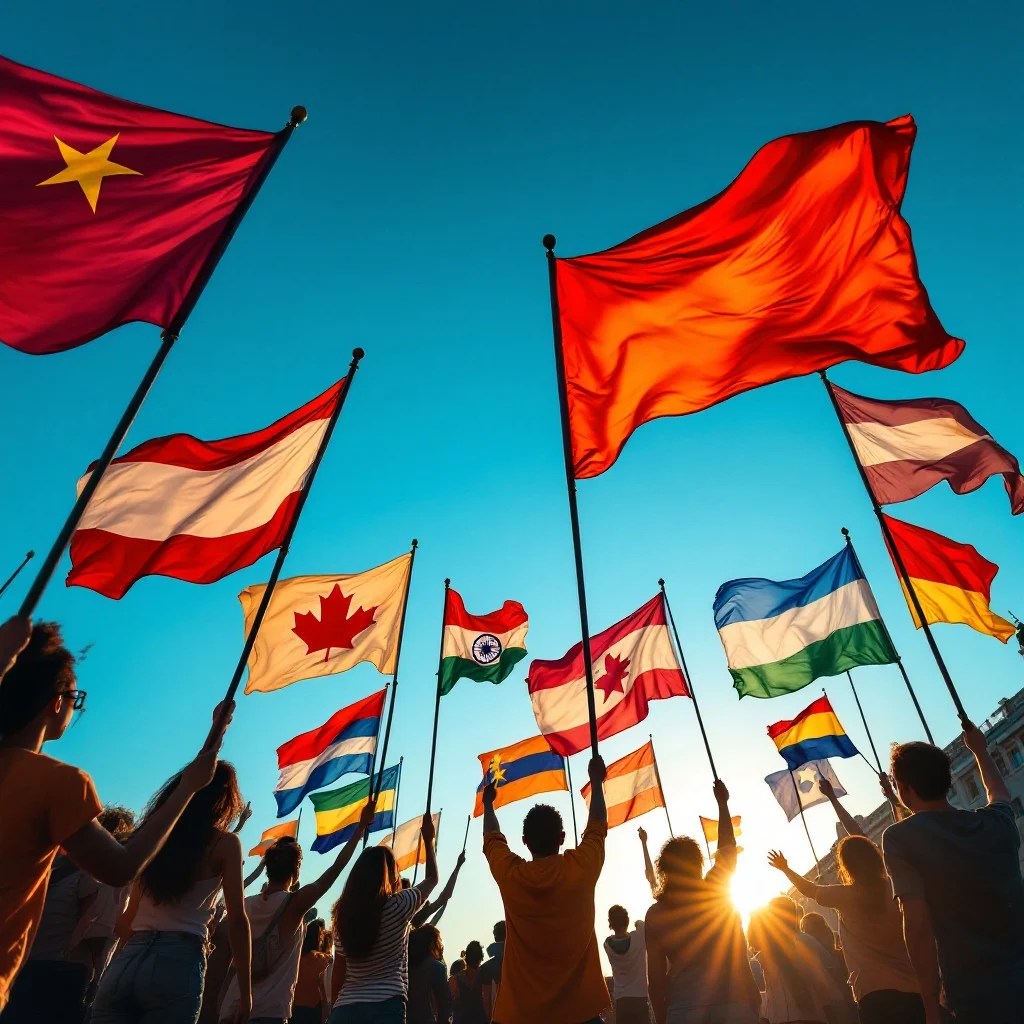
Multipolarity refers to an international system characterized by the presence of multiple significant powers competing for influence. Historically, multipolarity was the prevailing structure until the end of World War II, after which the global order shifted to a bipolar system dominated by the United States and the Soviet Union. In the contemporary era, multipolarity extends beyond just competing states to include international organizations such as the United Nations, which play a role in global governance and can limit state sovereignty. This reflects a more complex and interconnected global system where power is diffused among various actors.
- E-International Relations. (2022, March 27). Introducing Bipolarity, Tripolarity, Unipolarity, Multipolarity and Multiplexity in International Relations. Retrieved June 8, 2025, from https://www.e-ir.info/2022/03/27/introducing-bipolarity-tripolarity-unipolarity-multipolarity-and-multiplexity-in-international-relations/#google_vignette
- Waltz, K. N. (1979). Theory of International Politics. Addison-Wesley.
- Ikenberry, G. J. (2014). The Future of the Liberal World Order: Internationalism After America. Foreign Affairs, 93(3), 56–68.

Leave a comment