


Written by Oscar Bermudez
Oscar Bermudez was born in El Paso, Texas, and earned a degree in Economics with a minor in International Relations from Saint Louis University Madrid. He is currently pursuing a master’s degree in World Politics and International Relations at the University of Pavia and is set to graduate in April 2025. His thesis, titled; The Impact of the Turkish Language on Syrian Refugee Integration: Perceptions, Lived Experiences, and the Implications for Conflict Management, reflects his strong focus on migration and conflict studies. In 2024, he spent six months in Istanbul, conducting research on Syrian refugees, interning at the Istanbul Policy Center, and actively participating in workshops at Istanbul University on social cohesion and refugee integration. His academic and professional interests center on conflict management and migration in the Middle East. Proficient in Levantine Arabic, he closely follows regional developments.
The ongoing crisis in Gaza remains dire, with over 52,000 people killed since October 7, 2023, according to the Gazan Ministry of Health. Thousands more are believed to be missing, likely buried beneath the rubble. Since March 2, Gaza has been under a total Israeli blockade, severely restricting the flow of aid and essential supplies. The humanitarian situation continues to deteriorate, with the International Committee of the Red Cross (ICRC) warning that Gaza is near “total collapse,” as Palestinians face daily struggles for survival amid continued airstrikes, conflict, and blockade. On May 2, the ICRC issued a warning, joining urgent requests from international aid organizations for a solution in which Israel would agree to a truce and reopen humanitarian corridors in exchange for the release of hostages held by Hamas.
Amid the ongoing conflict, there has been speculation and discussion about a potential U.S. takeover of Gaza and the potential relocation of Gaza’s population to neighbouring countries. In February, President Trump had proposed a U.S. takeover of Gaza and the displacement of Palestinians to neighbouring countries. However, he later backtracked on these statements amid growing international criticism of a U.S. takeover and expulsion of Gaza’s population.
As President Trump prepares for visits to Saudi Arabia, the UAE, and Qatar, some Gulf sources say he will announce U.S. recognition of a Palestinian state, while Israeli media reports that President Trump may announce a draft ceasefire agreement to end the Gaza conflict, with U.S. involvement in reconstruction and aid. The agreement would involve U.S. leadership in Gaza’s reconstruction and administration, with initial steps including restoring humanitarian aid through logistical centers built by Israel. Hamas’s disarmament remains a key obstacle, but they may be offered guarantees such as participation in Gaza’s civil administration or integration into Palestinian forces, an idea, however, that would be adamantly opposed by Israel. As President Trump travels through the Middle East, he has a historic opportunity to press for a cease-fire and seek international assistance in rebuilding Gaza; if Israel cooperates in facilitating humanitarian access and supporting diplomatic initiatives, this could lay the groundwork for long-term stability, economic recovery, and sustainable peace in the region.
The U.S.-Israeli Relationship
Historical Background –The United States was the first country to recognize the state of Israel in 1948 and has since been a staunch supporter of the nation. Since its founding, Israel has received over $340 billion in foreign aid, making it the largest recipient, nearly twice as much as Egypt, the second-largest recipient. This aid, which includes both military and economic assistance, highlights the strong U.S. commitment to Israel’s security and its shared foreign policy interests.
Strategic Interests: Security, Influence, and Stability- The United States’ support for Israel is often based on strategic and security considerations. Israel is regarded as a key democratic partner in a region characterized by instability and plays a role in U.S. efforts to address regional challenges, including concerns related to Iran. Proponents of support for Israel argue that Israel’s military dominance and security is closely related to the United States’ objectives in regional stability and counterterrorism efforts. Gaza, which Hamas administers, is viewed as a security risk in this context. Since 1997, the United States State Department has designated Hamas as a terrorist organization. The Hamas attack on October 7, which resulted in American casualties and hostages, is seen as having direct security concerns for U.S. citizens and national interests, stressing the need for U.S. involvement in the region.
Military and Intelligence Cooperation-The U.S. provides significant military aid to Israel, including advanced missile defense systems such as the Iron Dome, which was developed in Israel but produced in the U.S. Today, nearly 75% of this aid is in the form of U.S.-made weaponry and equipment, reflecting a close collaboration between the two countries. Through intelligence sharing and joint technology development, such as the Iron Dome, both countries have a history of security cooperation.
Proponents of aid to Israel contend that military assistance can have economic benefits for the U.S. This aid, they argue, helps sustain over 20,000 jobs directly within the U.S., while also supporting thousands of additional jobs indirectly. More than 1,000 American companies have secured contracts worth billions of dollars through the U.S. commitment to support Israel, indicating that aid to Israel can also contribute to economic activity within the United States.
Domestic Political Pressures-U.S. policymakers are heavily influenced by pro-Israel lobbying groups. The origins of the U.S.-Israel lobby date back to Isaiah L. Kenen, a Canadian Zionist who became active in promoting Israel in the U.S. in the 1940s and 1950s. Kenen established the American Zionist Committee for Public Affairs (AZPAC) in 1954, which later became known as AIPAC (American Israel Public Affairs Committee).
AIPAC today holds a strong influence in U.S. politics, actively supporting pro-Israel candidates and opposing critics. The organization promotes Israeli interests by working with both political parties, although it tends to lean Republican, particularly under President Trump. AIPAC’s tactics include heavy electoral spending—over 80% of races—and reliance on wealthy donors. AIPAC mainly targets Congress, demanding loyalty to Israel and threatening candidates who oppose Israeli policies, including those advocating for Palestinian rights.
Critics of AIPAC argue that it prioritizes Israel’s regional dominance over American interests and works to suppress Palestinian rights and activism. As the most powerful lobby representing a foreign country and one of the most influential overall, approximately 90% of candidates supported by AIPAC win their races. However, AIPAC’s dominance may be challenged as public opinion shifts, particularly as more people become aware of Israel’s actions in Gaza, prompting some politicians and citizens to oppose Israeli policies and advocate for Palestinian human rights. This changing feeling represents a slow but monumental shift in American political attitudes.
Humanitarian Impact of the Proposed Relocation of Palestinians
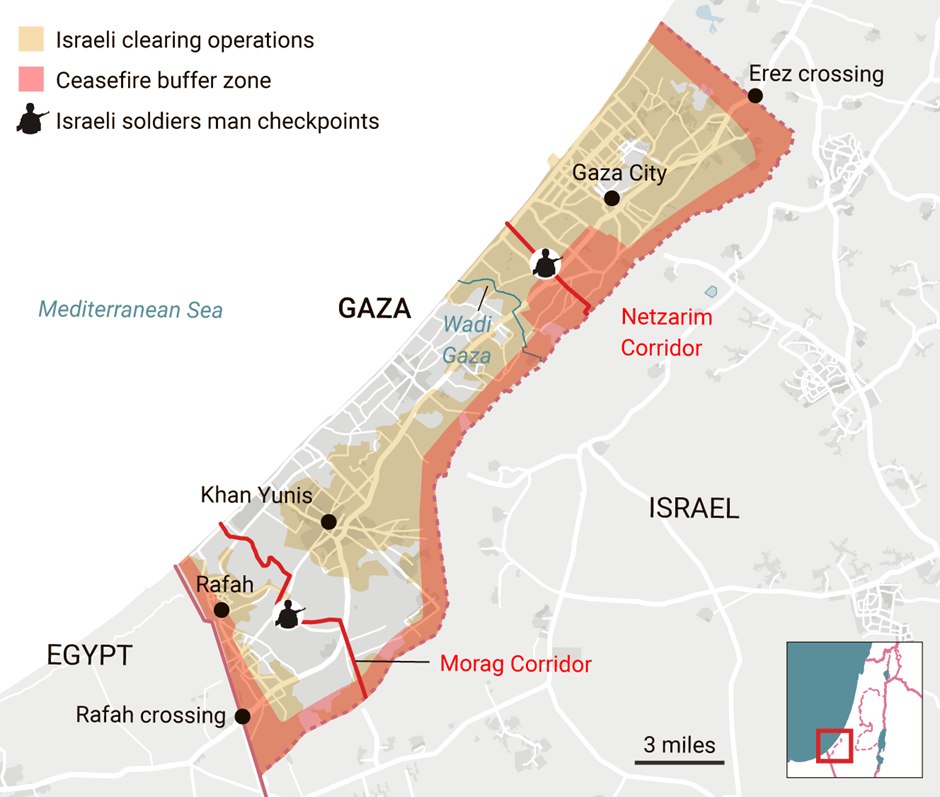
Current Humanitarian Crisis in Gaza- After nearly 19 months of fighting, Gaza is facing serious shortages of food, water, medicine, and basic necessities, with over 90% of the population being displaced. An Israeli siege, which is now two months old, has disrupted humanitarian and commercial deliveries, worsening hunger, malnutrition, and health concerns. The healthcare system is overburdened, and residents live in constant fear as daily bombings continue. A brief ceasefire from January to March improved things temporarily, but hostilities resumed as Israel violated the ceasefire, blocking crossings and suspending aid again. The conflict, sparked by a Hamas attack in October 2023, has claimed over 52,000 lives and displaced countless others. Aid groups accuse Israel of using humanitarian aid as a political weapon, highlighting concerns about violations of international law and the worsening humanitarian crisis for Gaza’s 2.2 million residents.
Proposed Relocation of Palestinians—According to reports, the US and Israel are in preliminary discussions about Washington potentially seizing control of Gaza, with preparations for a transitional administration until security is restored. These negotiations, which involve proposals similar to Iraq’s 2003 interim authority, are in their early stages, with no intentions for a long-term US involvement. President Trump has hinted at a major announcement before visiting the Middle East next week, which could include plans for U.S. administration of Gaza without Hamas or the Palestinian Authority. During a news conference with Netanyahu on February 4th, President Trump expressed support for a U.S. takeover of Gaza, stating that, “The US will take over the Gaza Strip.” President Trump then went on to say that neighbouring countries would take in the displaced Palestinians and pay for Gaza’s reconstruction. Amid international criticism, he, however, backtracked on his comments about displacing Palestinians, saying in March, “nobody is expelling any Palestinians.”
On Monday, May 5, the Israeli Security Cabinet approved a plan to capture and hold Gaza, with Prime Minister Benjamin Netanyahu announcing that Gaza’s population “will be moved to protect it.” An Israeli security official said the takeover would not happen until President Trump’s Middle East visit concluded on May 16. This announcement comes two months after a controversial proposal by the Israeli security cabinet, which would enable voluntary Palestinian emigration from Gaza, prompting allegations that it could amount to ethnic cleansing. Israeli Finance Minister Bezalel Smotrich revealed that the plan would facilitate the transfer of Gaza inhabitants interested in transferring to third countries, in compliance with Israeli and international law. Smotrich also warned that in six months, Gaza would be “totally destroyed” and that Palestinians would be left with no other choice than “relocation.”
Potential Humanitarian Consequences-The complete closure of border crossings has halted vital humanitarian aid, medical supplies, and food, leading to the near-total paralysis of essential sectors. The Gazan healthcare system is on the brink of collapse, with many hospitals and clinics shut down due to direct targeting or shortages of fuel and medical supplies. There is a critical shortage of medications and food, placing the population at extreme risk of famine, especially among the over a million displaced people living in overcrowded and unsanitary conditions with little access to clean water or sanitation.
Any attempt to uproot Palestinians living in Gaza would only further escalate the humanitarian crisis. While Jordan, Egypt, and Lebanon, already overwhelmed with Syrian and Palestinian refugees, are adamantly opposed to receiving Palestinians, viewing it as a violation of international law and Palestinian sovereignty, if these countries took in large numbers of Palestinians, their resources and infrastructure would be overwhelmed, leading to increased social tensions, economic strain, and further regional instability.
Gaza Settlements and International Law–In Israel, there is a growing movement for the settlement of Gaza; one group, the Nachala Israel Movement, a settler group which works towards the establishment of Jewish settlements in Gaza and the West Bank, has been actively recruiting thousands of Israelis for their envisioned settlements. With a right-leaning Israeli government and a supportive American administration, the Nachala Israel Movement sees an opportune moment for the settlement of Gaza.
However, any plans to resettle Palestinians are seen as a major violation of international law. Amnesty International stated on Wednesday, May 7, that the forced displacement of Palestinians in the Gaza Strip amounts to a crime against humanity. Israeli plans to resettle Palestinians in Egypt or Jordan have been denounced by both countries as ethnic cleansing. Currently, the International Court of Justice (ICJ) is actively investigating Israel for the crime of genocide, while the International Criminal Court (ICC) has an arrest warrant for Prime Minister Benjamin Netanyahu and Israeli leaders for war crimes.
Regional Geopolitical Reactions of a U.S. takeover of Gaza
Potential Diplomatic Responses–Egypt and Jordan, two of the U.S.’s closest allies in the region, have been adamantly opposed to any U.S. plans of relocating Palestinians. In response to President Trump’s February plan, the Arab League launched a counterproposal that envisions an independent committee of technocrats overseeing Gaza for six months before turning over responsibility to the Palestinian Authority. Unlike President Trump’s February proposal to remove the entire population, the Arab League plan allows Palestinians to remain in Gaza while it is rebuilt. Any attempts by the U.S. to assume control over Gaza without the approval and cooperation of Arab countries would be met with strong opposition and would alienate the U.S. from its Middle Eastern allies and the international community.
Security and Stability Concerns-Confusing military means with political ends has repeatedly led the U.S. into prolonged, unsuccessful conflicts, such as Vietnam, Iraq, and Afghanistan. The U.S. lacks the sustained military, political, and diplomatic cohesion required for long-term stability missions, and any military presence in Gaza could entangle American forces in prolonged conflict. A U.S.-led provisional authority in Gaza would mark the biggest U.S. intervention in the Middle East since Iraq, risking backlash from both regional allies and adversaries if the U.S. were seen as an occupying power. Any U.S. presence in Gaza would need to rely on diplomacy and alliances from its Middle Eastern partners, as opposed to unilateral military actions.
Political Responses–A March poll by the Brookings Institution found that fewer than 1 in 5 Americans support a U.S. takeover of Gaza or a displacement of Palestinians. Any forced displacement of Palestinians would constitute a crime against humanity according to international law, risk sanctions, and possible ICC prosecution of U.S. personnel. A takeover of Gaza would go against President Trump’s America “first” policy and his strong criticism of America’s “forever wars.”
President Trump’s Gulf Trip and Potential U.S.-Israel Tensions-As President Trump prepares for his first official trip abroad, aside from attending Pope Francis’s funeral in Rome, he will meet with Saudi Arabia, Qatar, and the UAE. Reuters reported on Friday, May 9, that the U.S. will withdraw its previous demands for Saudi Arabia to normalize relations with Israel as a precondition for progress in civil nuclear cooperation discussions ahead of President Trump’s visit to Riyadh. This marks a surprising shift, considering both President Trump during his previous term and President Biden had set normalization with Israel as a precondition to talks on nuclear cooperation.
On the same day, Yanir Cozin, a reporter for Israeli Army Radio, stated on his X account that President Trump has cut off direct contact with Prime Minister Netanyahu, claiming that President Trump believed “Netanyahu was manipulating him.” This post comes days after the Trump administration reached a deal with the Houthis to cease U.S. strikes in Yemen, an agreement made without the knowledge or consent of the Israeli government. Additionally, Gulf diplomatic officials have reported that President Trump plans to announce U.S. recognition of Palestine during his upcoming Gulf trip, a move strongly opposed by the Netanyahu administration.
International Community’s and Hamas’s Role-The UAE has proposed an international coalition overseeing Gaza’s post-war governance, conditional on including the Palestinian Authority and pursuing Palestinian statehood. Over the past week, Greece and Egypt came together to sign a “strategic partnership” , with Greece backing an Egyptian-backed reconstruction plan for Gaza once a ceasefire is agreed upon. Just days later, Russian Ambassador to Egypt, Georgiy Borisenko, announced Moscow’s support for Egypt’s reconstruction plan, a plan supported by all members of the Arab League.
While it was previously stated that a U.S.-led authority in Gaza would exclude Hamas, the Trump administration has reportedly shifted its stance by no longer insisting that Hamas disarm as a condition for a Gaza ceasefire, signaling a major policy change amid ongoing Egypt-mediated negotiations. U.S. negotiators have indicated that disarmament could be addressed later. Ismail al-Thawabta, head of the Gaza government media office under Hamas, has rejected the idea of a U.S. or any foreign-led administration. However, a U.S. recognition of Palestine and the U.S. no longer insisting that Hamas disarm could see Hamas accept a joint U.S.-Arab reconstruction effort.
Prime Minister Netanyahu firmly opposes Palestinian sovereignty and Hamas’s role in Gaza. However, U.S. recognition of Palestine would mark a historic moment in U.S. foreign affairs, potentially serving as a strategic shift that could expand the Abraham Accords, which normalized Israel’s relations with several Arab countries during President Trump’s first term. The U.S. has been trying for years to normalize relations between Saudi Arabia and Israel, and a U.S. recognition of Palestine could pave the way for normalization between the two. According to Gulf diplomatic sources, one of Riyadh’s key prerequisites for resuming normalization talks with Israel is a sustained ceasefire in Gaza. In this context, U.S. recognition of Palestinian statehood could serve as a diplomatic breakthrough, balancing Israeli concerns with Arab demands and positioning the U.S. as a central broker in a new regional framework.
Opportunities and Risks
Opportunities
- Ceasefire and Reconstruction of Gaza: President Trump may use his visit to the Gulf to present a U.S. framework to end the 18-month war, according to Gulf sources, who are frustrated by the prolonged crisis in Gaza. The plan could create a new security arrangement and a transitional government overseen with Gulf and U.S. coordination and backing. Establishing a transitional administration and new security arrangements for post-war Gaza could reshape regional diplomacy and pave the way for future normalization between Gulf states and Israel.
- U.S./ Gulf Investments: Earlier this year, Saudi Arabia pledged a $600 billion investment over the next four years in the U.S., which President Trump now hopes to extend to $1 trillion, while the UAE has pledged over $1.4 trillion in investments in the U.S. over the next decade. President Trump, eager to strengthen ties with the Gulf, could follow a Gulf framework for the reconstruction of Gaza, driven not only by humanitarian concerns but also in the interest of economic development. Investments in Gaza could be seen as serving both the Palestinian cause and national investment diversification. By linking Gaza’s reconstruction to their broader strategy of economic statecraft, the Gulf states could present their vision to President Trump as a financial opportunity, one that the U.S. could benefit from if they support Gulf efforts and recognize Palestinian sovereignty.
Risks
- Continued Israeli Aggression: On May 5, the Israeli security cabinet approved a plan to take over Gaza. The plan has been strongly condemned by the UN and other aid agencies as a breach of basic humanitarian principles. An Israeli takeover of Gaza would be met by the international community as a violation of international law; it would further escalate the humanitarian crisis and would likely be at odds with U.S. plans for Gaza, especially following President Trump’s visit to the Middle East.
- Displacement of Palestinian: Jewish People Policy Institute Israel Index survey found that 8 in 10 Israelis supported President Trump’s February proposal of relocating Palestinians. Among ideologically right-leaning Israelis, 57%, according to a PEW Research Study, believe that Israel should control Gaza following the war. Groups like the Nachala Israel Movement have been extremely active in lobbying the Israeli government for approval of a Jewish occupation of and settlement of Gaza following the war. A transitional government overseen by the U.S. and other Arab countries could be met with resistance by Israeli hardliners and settlers who wish to see a complete Israeli takeover of Gaza. However, a complete Israeli takeover of Gaza would see the further displacement and suffering of Palestinians in Gaza, with the possibility of their permanent expulsion.

Conclusion
A unilateral U.S. takeover of Gaza would trigger explosive regional reactions, strain alliances, and risk dragging Washington into a long-term entanglement. Any unilateral American intervention would be strongly opposed by the international community, particularly by Middle Eastern allies. Such a measure would damage American credibility, violate international law, inflame anti-American sentiment, and alienate Middle Eastern allies.
Trump’s previous approach to the region, highlighted by the Abraham Accords and unconditional support for Israeli policies, which excluded the Palestinian issue, may now be showing signs of strain. A renewed focus on Gaza and Palestinian statehood could offer a chance to reshape his foreign policy legacy. However, this would require carefully balancing steadfast support for Israel with meaningful cooperation with Arab partners, who have already voiced strong opposition to unilateral or exclusionary moves. A more practical and sustainable path lies in diplomacy. Gulf nations like Saudi Arabia and the UAE have expressed willingness to invest in Gaza’s post-war reconstruction. A U.S. and Arab-led transitional administration could help secure a ceasefire, support reconstruction and humanitarian recovery, and reopen dialogue on Palestinian statehood.
Ultimately, a collaborative, multilateral approach that prioritizes diplomacy, regional cooperation, and Palestinian sovereignty offers a more viable path forward for promoting lasting peace and stability in Gaza and the broader Middle East.

- 5 things you need to know about Israel’s Iron Dome Defense System. AJC. (2024, January 19). https://www.ajc.org/news/5-things-you-need-to-know-about-israels-iron-dome-defense-system
- Al Jazeera. (2025, May 4). Dozens of Palestinians starved to death under Israel’s blockade of Gaza. https://www.aljazeera.com/news/2025/5/3/57-palestinians-starved-to-death-under-israels-blockade-of-gaza
- Al Jazeera. (2025, May 2). Red Cross warns Gaza aid effort on “verge of collapse” amid Israel blockade. https://www.aljazeera.com/news/2025/5/2/red-cross-warns-gaza-aid-effort-on-verge-of-collapse-amid-israel-blockade
- Amnesty International says forcibly moving Palestinians to south of Gaza would be a “war crime.” Middle East Eye. (2025a, May 7). https://www.middleeasteye.net/live-blog/live-blog-update/amnesty-international-says-forcibly-moving-palestinians-south-gaza-would
- Anadolu Agency. (2024, November 4). US election: How AIPAC shapes American politics. Middle East Monitor. https://www.middleeastmonitor.com/20241104-us-election-how-aipac-shapes-american-politics/
- Approx. 80% of Israelis support Trump’s plan to relocate Gazans – survey. The Jerusalem Post | JPost.com. (2025, February 3). https://www.jpost.com/international/article-840500
- Bowen, J. (2025, May 6). Netanyahu’s plan for Gaza risks dividing israel, killing Palestinians and horrifying world. BBC News. https://www.bbc.com/news/articles/cd020j97l79o
- Cornwell, A. (2025, May 7). Exclusive: US, Israel discuss possible US-led administration for Gaza, sources say | Reuters. https://www.reuters.com/world/middle-east/us-israel-discuss-possible-us-led-administration-gaza-sources-say-2025-05-07/
- Crisis in Gaza. American Friends Service Committee. (n.d.). https://afsc.org/crisis-gaza
- Dag, B., & Cebi, G. N. (2025, May 9). Trump may announce Gaza ceasefire deal this weekend: Israeli media. Anadolu Ajansı. https://www.aa.com.tr/en/americas/trump-may-announce-gaza-ceasefire-deal-this-weekend-israeli-media/3561724
- Dawber, A. (2025, May 7). US “in talks” with Israel over taking control of Gaza. The Times & The Sunday Times. https://www.thetimes.com/us/news-today/article/us-administration-in-gaza-israel-2vk2tnnpv
- Decoupling saudi nuclear programme from Normalisation Signals US Mideast reset | | AW. (2025, May 9). https://thearabweekly.com/decoupling-saudi-nuclear-programme-normalisation-signals-us-mideast-reset
- Deal, S. (2025, February 10). Trump’s Gaza Vision would be us counterinsurgency failure 2025. Responsible Statecraft. https://responsiblestatecraft.org/trump-gaza-us-military/
- Ebrahim, N., Lister, T., & Karni, D. (2025, March 24). Israel approves controversial proposal to facilitate emigration of Palestinians from Gaza. CNN. https://www.cnn.com/2025/03/24/middleeast/israel-approves-proposal-to-facilitate-emigration-of-palestinians-from-gaza-intl
- Greece, Egypt agree to boost ties, back gaza reconstruction plan | The Times of Israel. The Times of Israel. (2025, May 7). https://www.timesofisrael.com/liveblog_entry/greece-egypt-agree-to-boost-ties-back-gaza-reconstruction-plan/
- Gritten, D. (2025, May 5). Israel cabinet approves plan to “Capture” gaza – official. BBC News. https://www.bbc.com/news/articles/cwy04km1zk0o
- Hendawi, H. (2025, May 7). Israel to push Gaza’s entire population south, laying path to resettlement. The National. https://www.thenationalnews.com/news/mena/2025/05/05/israel-to-push-gazas-entire-population-south-laying-path-to-resettlement/
- Humanitarian situation update #286: Gaza Strip. United Nations Office for the Coordination of Humanitarian Affairs – Occupied Palestinian Territory. (n.d.). https://www.ochaopt.org/content/humanitarian-situation-update-286-gaza-strip
- Hussain, A. H. (2025, May 10). Gulf diplomatic sources debate if Trump will announce US recognition of Palestinian state. The Jerusalem Post | JPost.com. https://www.jpost.com/middle-east/article-853387
- Israel National News. (2025, May 8). Reclaiming Gaza: A vision for the future. https://www.israelnationalnews.com/news/408040?tblci=GiDWhXYWK703JwTUnY2IjlJQxC-wwy8rDEHD_1FZZf-5fyDx10gopdK2xdGIqax_MK2_QA&utm_medium=exchange&utm_source=taboola
- Krämer, T. (2025, May 5). As israel blocks aid, ’reality in Gaza is indescribable. dw.com. https://www.dw.com/en/as-israel-blocks-aid-reality-in-gaza-is-indescribable/a-72424450
- Magid, J. (2025, March 8). Islamic nations adopt Arab counter to trump’s Gaza takeover plan | The Times of Israel. https://www.timesofisrael.com/islamic-nations-adopt-arab-counter-to-trumps-gaza-takeover-plan/
- Masters, J., & Mellow, W. (2024, November 23). U.S. aid to Israel in four charts. Council on Foreign Relations. https://www.cfr.org/article/us-aid-israel-four-charts
- The Media Line. (2025, March 13). Trump seems to backtrack on plan to remove Palestinians from Gaza. https://themedialine.org/headlines/trump-seems-to-backtrack-on-plan-to-remove-palestinians-from-gaza/
- Nakhoul, S., Pamuk, H., & Cornwell, A. (2025, May 12). Prospects of Saudi ties to Israel elusive as Trump seeks $1 Trillion bonanza | reuters. https://www.reuters.com/world/prospects-saudi-ties-israel-elusive-trump-seeks-1-trillion-bonanza-2025-05-11/
- The New Arab. (2025, May 10). Us “drops Hamas disarmament demand” in Gaza ceasefire talks. The New Arab. https://www.newarab.com/news/us-drops-hamas-disarmament-demand-gaza-ceasefire-talks
- The New Arab. (2025, March 11). What have the Abraham Accords achieved four years on?. The New Arab. https://www.newarab.com/news/what-have-abraham-accords-achieved-four-years
- Ordoñez, F., & Keith, T. (2025, May 10). Why Trump is focusing on business deals on his Middle East Trip. NPR. https://www.npr.org/2025/05/10/nx-s1-5379998/why-trump-focusing-business-deals-middle-east-trip
- Renewed Israeli bombings kill civilians, including children, journalist. Palestine Chronicle. (2025, May 7). https://www.palestinechronicle.com/renewed-israeli-bombings-kill-civilians-including-children-journalist/
- Reuters. (2025, April 8). Trump’s remarks on plan to take over Gaza, displace Palestinians. Middle East Monitor. https://www.middleeastmonitor.com/20250408-trumps-remarks-on-plan-to-take-over-gaza-displace-palestinians/
- Smerkovich, M. (2025, May 9). Fewer Israelis support Israel taking over Gaza now than in 2024. Pew Research Center. https://www.pewresearch.org/short-reads/2025/05/09/fewer-israelis-support-israel-taking-over-gaza-now-than-in-2024/
- Sons, S. (2025, March 20). An alternative for Palestine: The Arab Reconstruction Plan in light of Trump’s Gaza statements. BIC. https://www.bic-rhr.com/research/alternative-palestine-arab-reconstruction-plan-light-trumps-gaza-statements
- Telhami, S., Renée Rippberger, R. B. R., & Lev Nachman, H. J. K. (2025, March 14). Fewer than 1 in 5 Americans back US takeover of Gaza. Brookings. https://www.brookings.edu/articles/fewer-than-1-in-5-americans-back-us-takeover-of-gaza/
- U.S. Department of State. (n.d.). U.S. Department of State. https://www.state.gov/foreign-terrorist-organizations/
- Verbeeten, D. (2006, January 1). How important is the israel lobby?. Middle East Forum. https://www.meforum.org/middle-east-quarterly/how-important-is-the-israel-lobby
- What every American should know about U.S. aid to Israel. AJC. (2025, May 5). https://www.ajc.org/news/what-every-american-should-know-about-us-aid-to-israel
- Zvobgo, K. (2025, February 7). Trump’s proposal to “take over” Gaza would put Americans at risk of prosecution. Brookings. https://www.brookings.edu/articles/trumps-proposal-to-take-over-gaza-would-put-americans-at-risk-of-prosecution/

Leave a comment