


Written by Burcu Al
Burcu Al was born in Tokat in 1994. She completed her undergraduate education in the Department of Physics and Political Science and International Relations at Tokat Gaziosmanpaşa University between 2009-2014 and 2019-2023. She completed her master’s degree in Nuclear Physics at Tokat Gaziosmanpaşa University. She worked as a physics teacher in various courses and institutions. She is currently continuing her education in the field of Public Administration without a non -thesis master’s degree at Karadeniz Technical University. As of 2025, she started her doctorate in Nuclear Physics. She continues her academic studies in the fields of Energy Security, Turkic World and Sustainability, participates in conferences related to these fields and works as an expert in various think tanks.
‘The quantum age will determine our future’ Michio Kaku
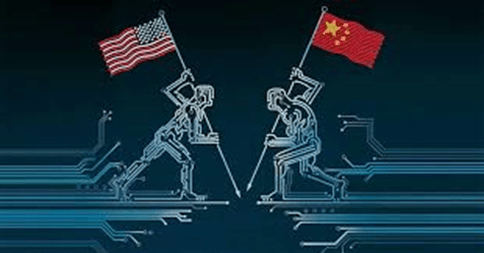
Christopher Nolan’s “Oppenheimer” tells the story of J. Robert Oppenheimer, director of the Manhattan Project, and his efforts to develop the atomic bomb before Nazi Germany. It also sheds light on the US competition with China in quantum technology. National security analyst Sam Howell argues that the first country to operationalize quantum technologies can outsmart its enemies. China argues that it can pose a long-term threat by investing heavily in quantum technologies. Quantum technology involves the interactions of matter and energy at the subatomic level, and these properties enable quantum computers to perform calculations more efficiently than classical computers. While military applications of quantum technology have the potential to increase the detection, sensitivity and computational power of existing technologies, the greatest threat is to US cybersecurity. (The Haritage Foundation, 2023)
In a major breakthrough in quantum computing, China has unveiled Zuchongzhi-3, a 105-qubit next-generation quantum computer. This superconducting quantum processor is capable of computing 1 million times faster than Google’s current quantum computing results, surpassing the world’s most powerful supercomputers. Quantum supremacy means that a quantum computer can perform calculations that classical computers cannot solve, and Google achieved this feat in 2019 with its 53-qubit Sycamore processor.
However, with Zuchongzhi-3, USTC researchers have tipped the balance in favor of Beijing in terms of computational speed. Zuchongzhi-3 can compute 10¹⁵ times faster than today’s most powerful supercomputer. China’s leadership in quantum computing began in 2020 with the Jiuzhang photonic quantum computer, and significant progress has been made. The processing power offered by Zuchongzhi-3 could lead to revolutionary developments in artificial intelligence, data security and scientific research. These developments could be a new element of balance in the ongoing technological competition with the US and accelerate the race for quantum supremacy. (Demirkaya, 2025)
Quantum technologies are at the center of the rivalry between China and the United States. The country that applies these technologies first will gain important capabilities that could catch its enemies off guard. Quantum-enabled countries can break existing encryption methods, create secure communication networks and develop sensitive sensors. The quantum leader can quickly gain an advantage in threatening the enemy’s information infrastructure. Moreover, quantum technologies have huge market potential; for example, quantum computing is expected to reach a market value of $1 trillion by 2035. The country that commercializes quantum will have an advantage in establishing market dominance and developing new management models and applications. Quantum also stands out as an enabling technology that accelerates innovation in other technological fields such as artificial intelligence. The US National Institute of Standards and Technology (NIST) has been proactive in this regard, collaborating with industry leaders such as IBM to create quantum-secure algorithms since 2016. This focus on national security is vital, as advances in quantum computing could significantly alter the potential for cyber warfare and intelligence gathering. It is also worth noting that as both countries continue to make progress, the implications for global power dynamics and technological hegemony will become increasingly apparent, affecting not only bilateral relations but also the strategic calculations of third countries caught in the middle of this high-stakes competition.
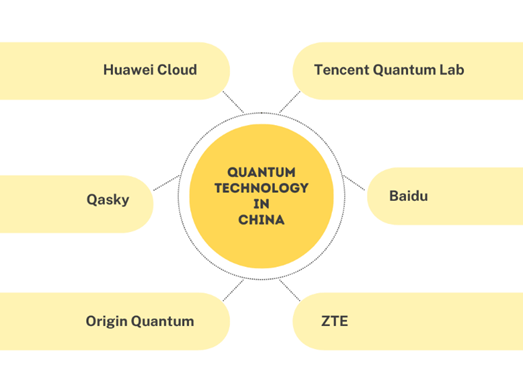
China’s quantum players
What about the European Union?
The EU is implementing various initiatives and programs under the Digital Decade strategy, which aims to be at the forefront of quantum capabilities by 2030. This ranges from supporting quantum research to establishing a quantum secure infrastructure. The EU is the second largest investor in quantum technologies, investing around €7 billion. Due to the strategic importance and dual use nature of quantum technologies (civilian and military), it is recommended to assess the risks in this area.
The EU plans to conduct aggregated risk assessments for quantum technologies, review the screening of foreign investments and list quantum technologies as critical. It is also noted that countries such as France and Germany have their own quantum programs. In March 2024, 21 Member States signed a declaration committing to make Europe the world quantum valley.
In September 2023, Internal Market Commissioner Thierry Breton announced that he was working on a new strategy to make Europe the global quantum leader. However, the EU lags behind the US in terms of private investment. It is therefore proposed to support start-up companies and establish a federated quantum infrastructure. It also emphasizes the need to establish a European quantum chip factory and develop a coordinated action plan for the quantum transition. On the educational side, IBM recommends that organizations deal with potential threats by training in quantum secure cryptography. In this context, it is important to identify vulnerabilities and implement quantum secure cryptography. (Luca, 2024)
So what is a quantum computer?
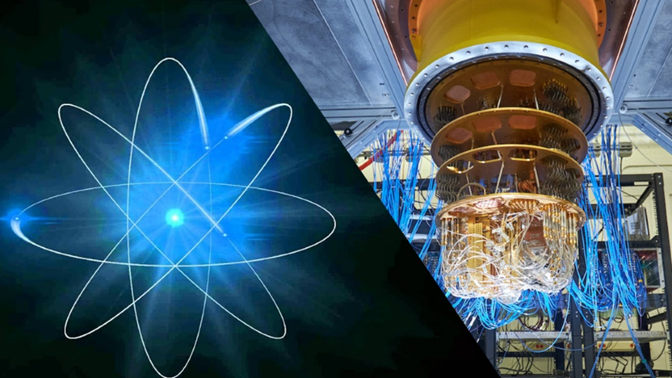
Central to the operation of quantum computers is the concept of quantum superposition, illustrated in the Schrödinger’s cat thought experiment.
Unlike classical bits, which exist in a definite state of 0 or 1, quantum bits, or qubits, can exist in multiple states simultaneously due to superposition. This ability enables quantum computers to perform complex calculations much faster than their classical counterparts because they can process a large number of possibilities simultaneously. For example, while a classical computer needs to evaluate each combination individually, a quantum computer can analyze many combinations simultaneously using superposition, which can significantly improve computational efficiency.
In addition to superposition, the effects of quantum entanglement play an important role in the capabilities of quantum computing. Entanglement occurs when two or more qubits are connected so that the state of one qubit directly affects the state of another, regardless of the distance separating them. This enables quantum computers to perform coordinated operations on entangled qubits, which can lead to faster information processing and improved data security. The interconnection of qubits through entanglement is akin to the amplified histories of Schrödinger’s cat, where the results are interdependent and reveal deeper insights into the nature of reality, thus radically changing how we understand and use information in computational technology.
What is the “cat qubit” that inspired the future of quantum technology and why is it important?
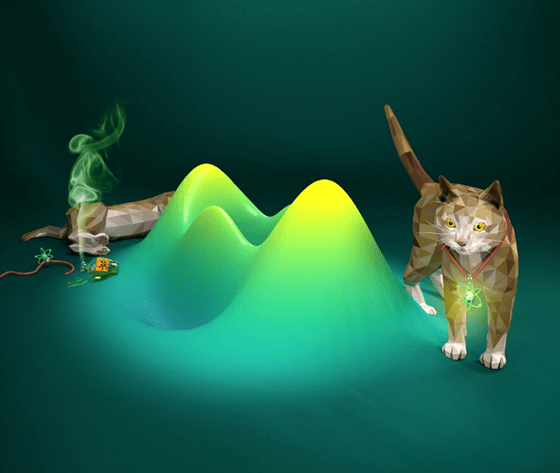
Alice and Bob’s cat qubit technology is being promoted as a method that will revolutionize quantum computing. Cat qubits, however, have the capacity to represent multiple states (e.g. alive and dead) simultaneously, much like Schrödinger’s cat thought experiment. This ability to operate in multiple states allows quantum computing to be performed more efficiently and quickly. Traditional qubits, although they can exist in a superposition of states, are often susceptible to decoherence and environmental noise, which can lead to errors in quantum computations. In contrast, cat qubits utilize a more complex structure that improves their robustness, allowing them to maintain quantum states longer and perform more reliably in quantum computing applications. This improved stability not only makes cat qubits a promising alternative, but also addresses some of the critical challenges faced by traditional qubits in the search for scalable quantum computing solutions.
Cyber Security
Quantum computing has the potential to have significant impacts on current digital encryption methods. Two main types of encryption are currently used: symmetric and asymmetric (public-key) encryption. In symmetric encryption, the sender and receiver use the same key, while in asymmetric encryption, data encrypted with a public key must be decrypted with a private key. However, the development of quantum computers, especially with the Shor algorithm, could jeopardize existing asymmetric encryption methods.
Quantum computers could be capable of quickly factoring large prime numbers, which could lead to the invalidation of many existing encryption standards. However, the development of such computers is still in the early stages and these threats could take decades to materialize. For this reason, work on quantum-resilient cryptography has begun and organizations such as NIST are in the process of standardizing encryption algorithms that are resistant to quantum computers.
Quantum-resilient cryptography may require more computational power than current systems, which could make it difficult to adopt as users prefer faster, but less secure services. Quantum cryptography, on the other hand, aims to increase security by utilizing the properties of quantum mechanics and provides secure communication through methods such as quantum key distribution (QKD). These methods can greatly improve the security of networks with the potential to detect any eavesdropping attempts. (Lee, 2021)
Conclusion and Evaluation
Quantum technologies have become a central element of international competition today, and this is of great importance for both strategic security and economic growth. As Michio Kaku notes, the quantum age is a turning point that will determine our future. This rivalry, especially between the US and China, is exacerbated by advances in quantum computing. China’s superiority with the Zuchongzhi-3 quantum computer has the potential to change the global balance in this field.
The processing power offered by quantum computers could lead to revolutionary advances in areas such as data security, artificial intelligence and scientific research. However, considering the military and cybersecurity applications of these technologies, the competition between the two countries in this field will not only have economic implications, but also critical consequences for national security. The ability of quantum technologies to overcome existing encryption systems and establish secure communication networks could provide an advantage, especially against cyber threats.
Innovative quantum computing methods such as cat qubits have the potential to further advance developments in this field. Such technologies represent an important step in improving the efficiency of quantum computing while at the same time reducing the error rate by providing a more robust structure.
In conclusion, quantum technologies are not only a scientific advance, but also a factor shaping power dynamics in international relations. Competition in this field will affect future strategic calculations and collaborations and will create new opportunities and challenges for the whole world. The progress made by both countries in this field could redefine global power dynamics, and the commercialization of these technologies could pave the way for the emergence of new governance models and practices. Therefore, the steps to be taken in the transition to the quantum era will be critical for international security and economic stability.

- Demirkaya, Y. (2025, March 14). Çin’in Kuantum Hesaplamadaki Yeni Atılımı: Zuchongzhi-3, Google’ı Geride Bıraktı . Türkiye Yapay Zeka İnisiyatifi: Retrived from https://turkiye.ai/cinin-kuantum-hesaplamadaki-yeni-atilimi-zuchongzhi-3-googlei-geride-birakti/
- Lee, M. (2021, July). Quantum Computing and Cybersecurity. HARVARD Kennedy School, Belfer Center for Science and İnternational Affairs: Retrived from https://www-belfercenter-org/publication/quantum-computing-and-cybersecurity?_x_tr_sl=en&_x_tr_tl=tr&_x_tr_hl=tr&_x_tr_pto=tc
- Luca, S. D. (2024, April 10). Quantum: What is it and where does the EU stand? Epthinktank.eu: Retrived from https://epthinktank-eu/2024/04/10/quantum-what-is-it-and-where-does-the-eu-stand/?_x_tr_sl=en&_x_tr_tl=tr&_x_tr_hl=tr&_x_tr_pto=tc
- The Haritage Foundation. (2023, Sep 14). The Urgency of the Quantum Computing Race With China. The Haritage Foundation: Retrived from https://www-heritage-org/big-tech/commentary/the-urgency-the-quantum-computing-race-china?_x_tr_sl=en&_x_tr_tl=tr&_x_tr_hl=tr&_x_tr_pto=tc

Leave a comment