
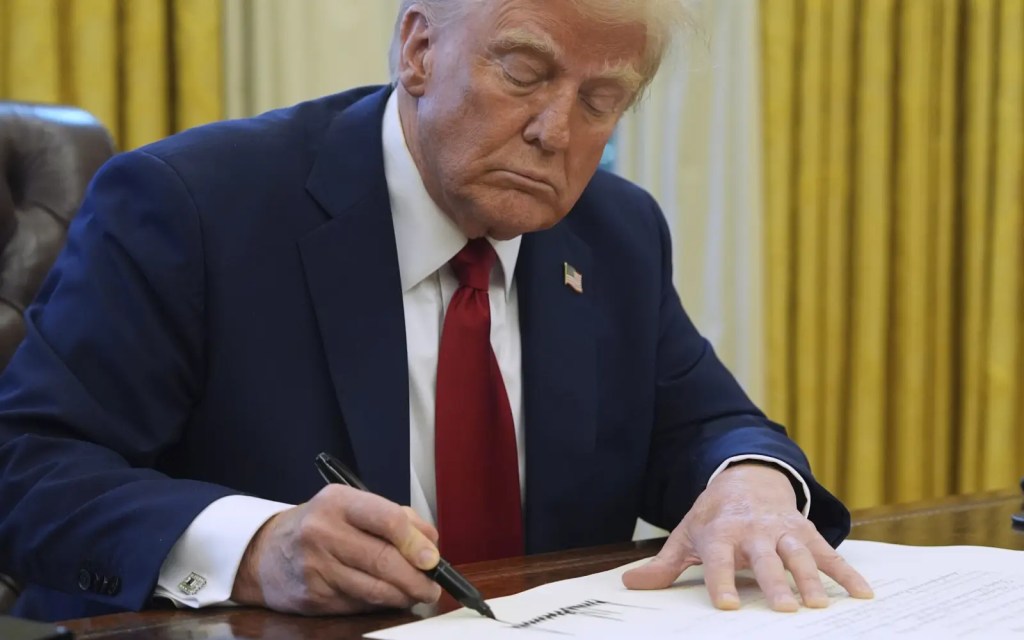
- China and Canada immediately retaliate against Trump’s tariffs. Mexico is next – 04.03.2025
U.S. President Donald Trump imposed a 25% tariff on imports from Mexico and Canada and a 20% tariff on imports from China, aiming to pressure trade partners into stricter measures against drug trafficking, but the move risks harming the North American economy amid inflation and economic uncertainty. Canada, China, and Mexico quickly retaliated with tariffs on various U.S. goods, with Canadian Prime Minister Justin Trudeau and Chinese officials strongly condemning the decision. As consumer spending declines and job growth slows in the U.S., economic concerns mount, while the Trump administration signals further tariff increases that could extend to additional sectors.
- South Africa rejects ‘megaphone diplomacy’ with US – 07.03.2025
The South African government rejected “counterproductive megaphone diplomacy” after US President Donald Trump reiterated claims that Pretoria was confiscating land. Trump offered citizenship to farmers seeking to leave South Africa, citing alleged discrimination against white Afrikaners. South Africa denies this, stating its new land law allows expropriation without compensation only under just and equitable conditions. In response, Trump froze financial aid, halted HIV funding, and withdrew from a climate deal supporting South Africa’s green transition. Despite tensions, Pretoria remains committed to constructive relations with the US.
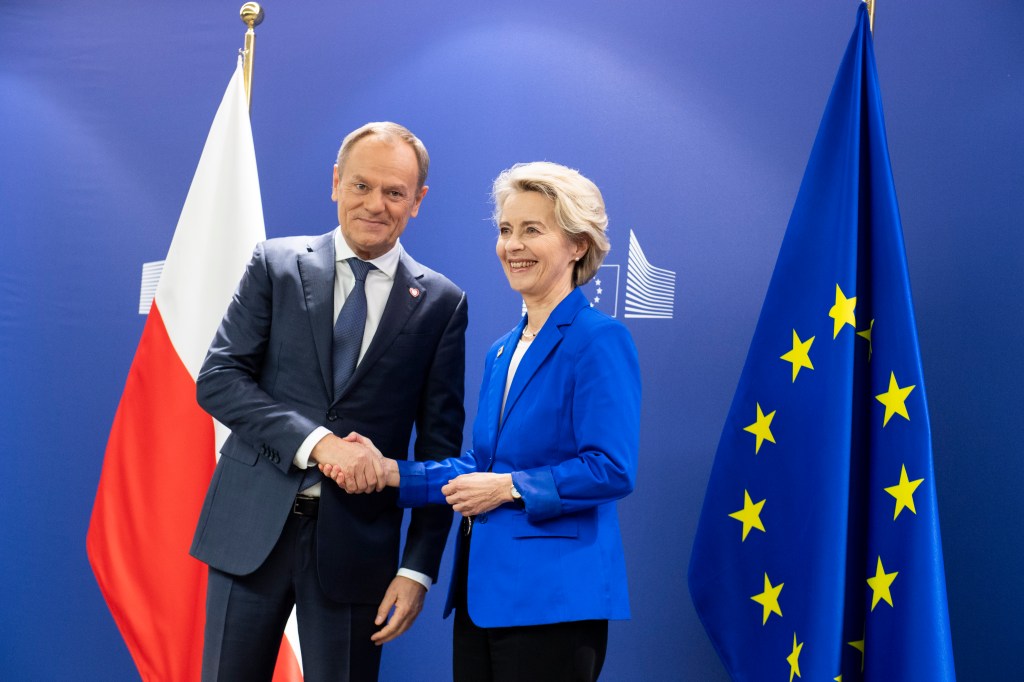
- Poland seeks access to nuclear arms and looks to build half-million-man army – 07.03.2025
Polish Prime Minister Donald Tusk announced plans for a major military expansion, including universal military training for men and potential access to nuclear weapons, amid fears of a weakened U.S. commitment to NATO. Poland is in talks with France about nuclear protection and plans to increase defense spending to 5% of GDP. With 200,000 troops, Poland aims to build a 500,000-strong army, citing threats from Russia. Tusk criticized Europe’s reliance on U.S. security and called for greater self-reliance. He also proposed withdrawing from treaties banning landmines and cluster munitions but ruled out sending Polish troops to Ukraine.
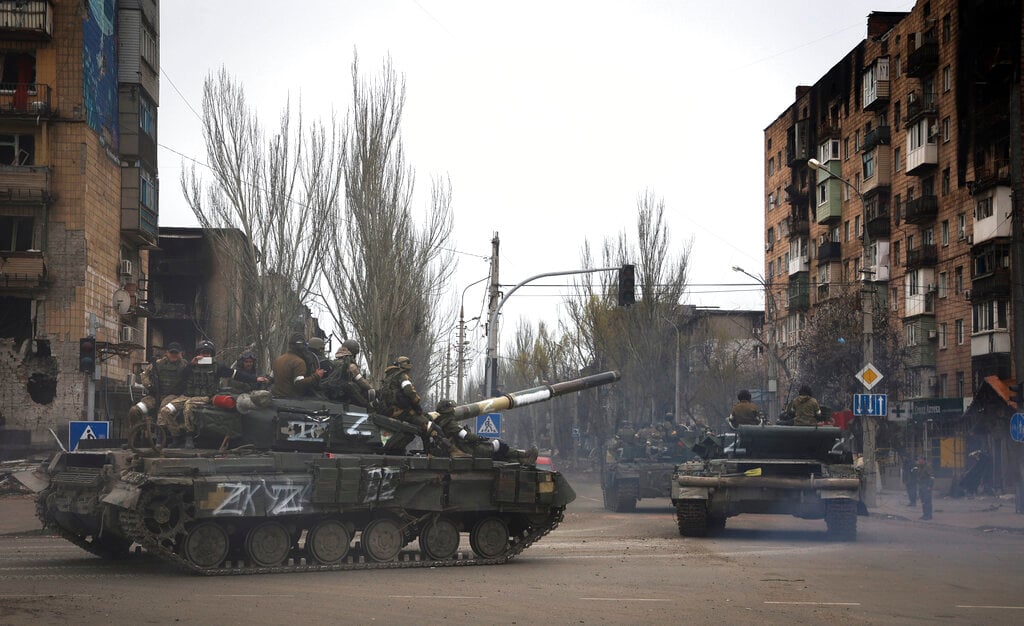
- At least 14 people killed in Russia’s overnight attacks in eastern Ukraine – 08.03.2025
At least 14 people were killed in overnight Russian attacks on eastern Ukraine, as Moscow intensified its assault in the region. Ukraine’s emergency service reported that 11 people died and 30 were injured in Dobropillia, Donetsk, where multiple buildings and vehicles were damaged. In Kharkiv, a drone strike killed three civilians and injured seven, while in Odesa, drone attacks caused fires affecting industrial and agricultural facilities. Meanwhile, a Ukrainian drone attack damaged a refinery tank in Russia’s Leningrad region. The EU and Poland condemned the attacks, calling for increased military support for Ukraine. Amid the escalation, Ukrainian President Volodymyr Zelenskyy emphasized ongoing diplomatic efforts with the U.S. and allies to accelerate peace, as discussions continue on forming a “coalition of the willing” to provide security guarantees for Ukraine.
- EU sends more troops to Bosnia as Russia defends Serb leader – 08.03.2025
The EU is increasing its peacekeeping presence in Bosnia amid separatist fears after convicted Bosnian Serb leader Milorad Dodik banned state institutions in Serb-majority regions. EUFOR will add around 400 troops to its 1,100-strong force to support stability under the 1995 peace agreement. Dodik, sentenced in February for defying the accord, has aligned with Russia, which condemned his conviction. His push for secession echoes the 1990s conflict that led to the Srebrenica genocide. The U.S. and EU have denounced his actions as a threat to Bosnia’s stability, urging regional partners to push back.
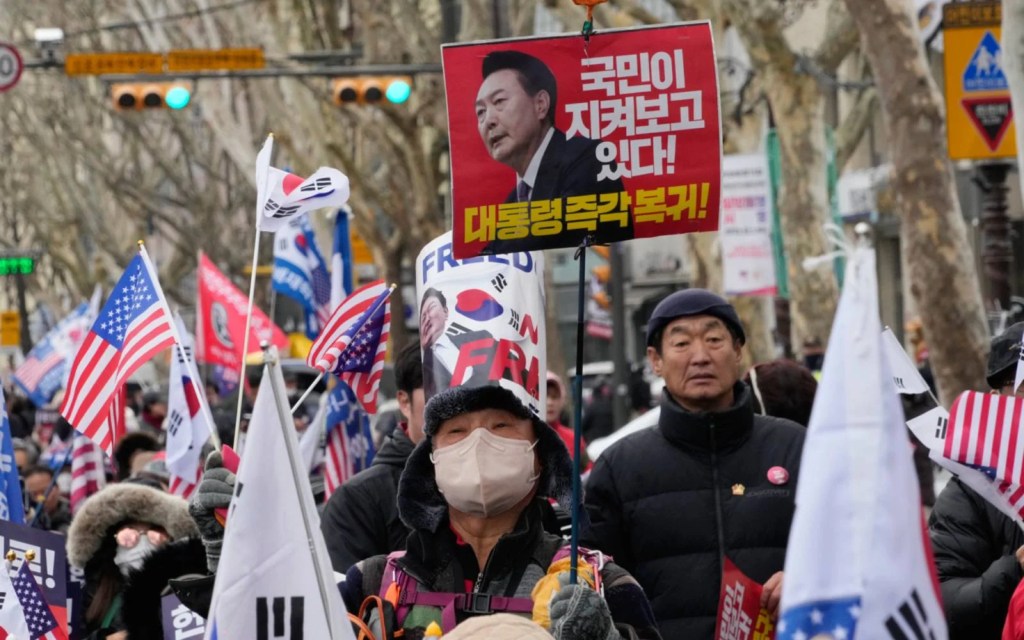
- South Korea’s impeached President Yoon released from prison – 08.03.2025
South Korea’s impeached President Yoon Suk Yeol was released from prison after a court canceled his arrest warrant, though his criminal and impeachment trials remain ongoing. Yoon had been arrested in January on insurrection charges related to his brief imposition of martial law on December 3, which prosecutors argue constituted rebellion—a charge that could lead to life imprisonment or the death penalty if convicted. The Seoul Central District Court ruled that Yoon’s detention raised procedural and substantive concerns, prompting his release, a decision prosecutors did not appeal. His legal team hailed this as a step toward restoring the rule of law, while opposition parties criticized it as deepening the national crisis. Public opinion remains divided, with a recent Gallup Korea poll indicating that 60% of respondents support Yoon’s removal from office. Meanwhile, mass protests both for and against him have erupted in Seoul. The Constitutional Court is expected to rule soon on whether Yoon will be reinstated or permanently removed from office, a decision that could trigger a new presidential election within 60 days.
- Syria clashes have killed more than 300 people since Thursday, monitoring group says – 08.03.2025
Syria has witnessed its deadliest clashes since the ousting of Bashar al-Assad in December, with at least 311 people killed since Thursday, according to the Syrian Network for Human Rights (SNHR). Government forces have killed 164 people, while Assad loyalists have killed 147, including security forces and civilians. The violence is centered in Latakia, Tartous, and Hama, areas with strong Alawite support for Assad. Syria’s transitional president, Ahmad al-Sharaa, vowed to pursue those responsible while urging restraint. The UN and the ICRC have expressed concern over civilian casualties, detainee treatment, and infrastructure damage. Assad, who fled to Russia, has not commented on the situation.
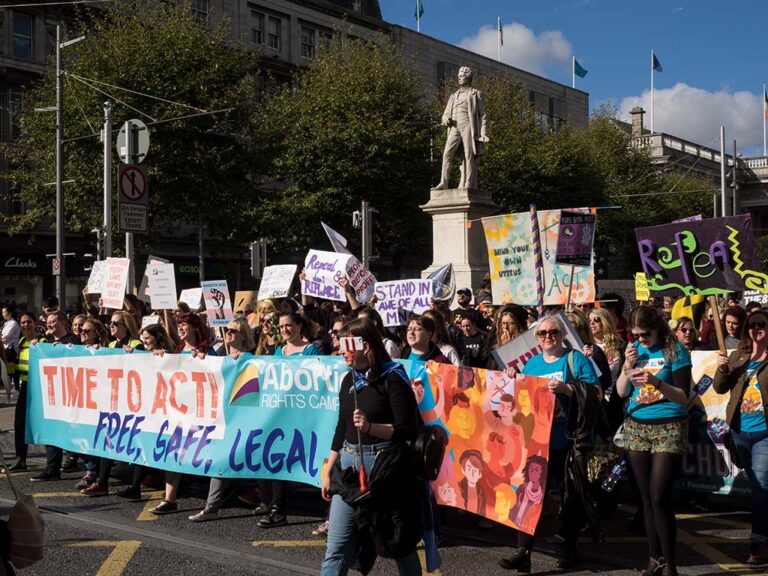
- International Women’s Day protests demand equal rights and an end to discrimination, sexual violence – 09.03.2025
On International Women’s Day 2025, women across Europe, Africa, and South America mobilized in large-scale demonstrations to advocate for gender equality, stronger protections against gender-based violence, and improved access to healthcare, economic opportunities, and legal rights. In Istanbul, protesters opposed the Turkish government’s policies that reinforce traditional gender roles, particularly in response to the declaration of 2025 as the “Year of the Family.” Many carried banners rejecting the notion that women’s roles should be confined to marriage and motherhood. In Poland, activists opened a symbolic abortion support center near the parliament, challenging the country’s strict abortion laws. In Madrid, demonstrators protested against sexual violence, using the case of Gisele Pélicot, a French woman drugged and assaulted by dozens of men, as a powerful symbol of resistance. In Skopje, protesters highlighted economic and property rights disparities, noting that only a small percentage of women, particularly in rural areas, own property. In Lagos, Nigeria, thousands gathered in a stadium, celebrating women’s rights in an atmosphere of solidarity. Meanwhile, in Germany, President Frank-Walter Steinmeier warned against the global backlash against gender equality, citing rising populist rhetoric and corporate shifts that undermine diversity initiatives. In South America, protests were particularly focused on femicide, with demonstrators in Ecuador and Bolivia condemning gender-based violence and the judicial system’s failure to hold perpetrators accountable. These widespread demonstrations reflected an urgent global demand for systemic change and the protection of women’s rights.
- After 80 years of transatlantic ties, Europe forges a new alliance – 09.03.2025
At Prime Minister’s Questions, Keir Starmer paid tribute to British soldiers who died in Afghanistan, a message also directed at the U.S. after Vice President JD Vance’s dismissive remarks about European troops. The Trump administration’s stance has intensified European concerns about security, pushing leaders to rethink defense strategies. Ukrainian President Volodymyr Zelenskyy met EU leaders amid U.S. aid suspensions, as Russia launched attacks exploiting weakened Ukrainian defenses. Germany, France, and the EU are ramping up military spending and cooperation. Meanwhile, Trump’s indifference to Ukraine’s plight raises fears that the transatlantic alliance is fracturing, leaving Europe to take charge of its own security.
- https://edition.cnn.com/2025/03/04/economy/trade-mexico-canada-china-tariffs-trump-hnk-intl/index.html
- https://www.bbc.com/news/articles/c4g9w51pjzpo
- https://www.politico.eu/article/donald-tusk-plan-train-poland-men-military-service-russia/
- https://www.aljazeera.com/news/2025/3/8/14-people-killed-in-russian-attacks-on-eastern-ukraine
- https://www.politico.eu/article/eu-sends-troops-to-bosnia-as-russia-defends-serb-leader/
- https://www.aljazeera.com/news/2025/3/8/south-koreas-impeached-president-yoon-released-from-prison
- https://edition.cnn.com/2025/03/08/middleeast/syria-clashes-alawite-assad-intl-latam/index.html
- https://apnews.com/article/istanbul-diyarbakir-womens-day-protests-violence-e6fcf865346458df620976f43d0c3177
- https://www.theguardian.com/world/2025/mar/09/after-80-years-of-transatlantic-ties-europe-forges-a-new-alliance

Leave a comment