

Written by Oscar Bermudez
Oscar Bermudez was born in El Paso, Texas, and earned a degree in Economics with a minor in International Relations from Saint Louis University Madrid. He is currently pursuing a master’s degree in World Politics and International Relations at the University of Pavia and is set to graduate in April 2025. His thesis, titled; The Impact of the Turkish Language on Syrian Refugee Integration: Perceptions, Lived Experiences, and the Implications for Conflict Management, reflects his strong focus on migration and conflict studies. In 2024, he spent six months in Istanbul, conducting research on Syrian refugees, interning at the Istanbul Policy Center, and actively participating in workshops at Istanbul University on social cohesion and refugee integration. His academic and professional interests center on conflict management and migration in the Middle East. Proficient in Levantine Arabic, he closely follows regional developments.
1.Introduction
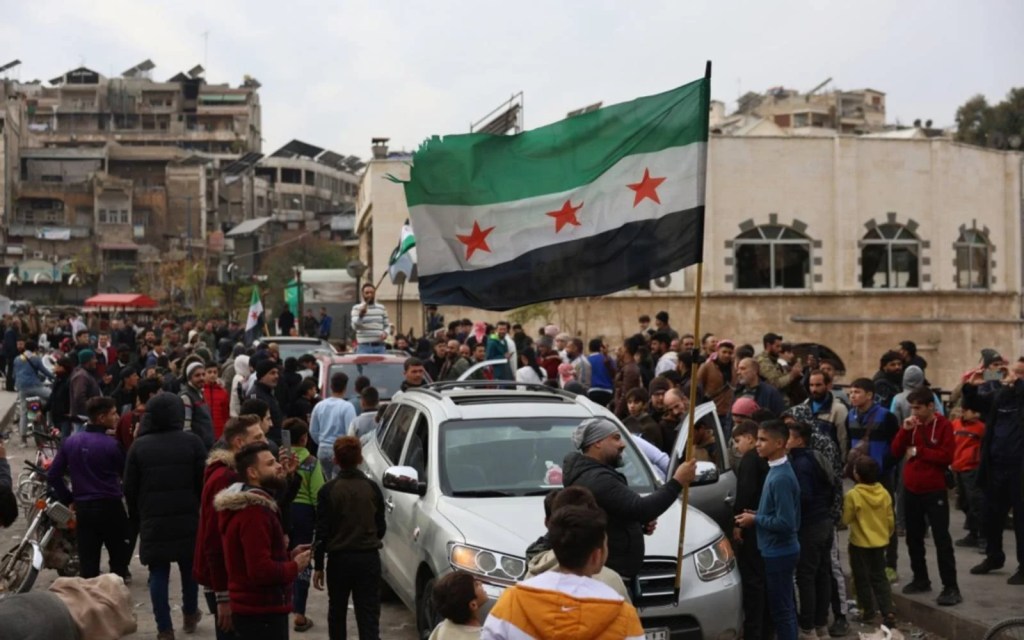
The unexpected collapse of the Assad regime in December 2024, after 53 years of brutality and repression, has come as a shock to the region. (Moubayed, 2025) With the collapse of Bashar al-Assad’s government comes a dramatic shift in Saudi-Syrian-Turkish relations. After nearly a quarter century of strained relations between the two countries, Riyadh is now taking a more active role in boosting ties with the new Sunni-led Syrian government. Türkiye, who had facilitated the establishment of the Syrian National Army, now seeks to capitalize on its years of support for Syrian rebel groups. (Aydıntaşbaş, 2025) With Iran’s expulsion from Syria, Riyadh sees the region moving away from Iranian influence and towards the Gulf countries. The Saudi and Turkish governments have expressed their willingness and commitment to promoting stability and aiding in the economic recovery of Syria. The reconstruction of Syria could be a vital part of Saudi Crown Prince and Prime Minister Mohammed bin Salam’s Saudi 2030 Vision, a government program launched in 2016 to diversify sources of income for the kingdom. (Triche& Hamzawy, 2025) For Türkiye, investing in the reconstruction of Syria could help revive the Turkish economy while also preparing for the return of large numbers of Syrian refugees. While there are strong potential gains to be achieved by investing in the new Syrian government, Riyadh and Ankara will need to navigate a complex and challenging regional landscape while mitigating the potential rise of extremist elements. (Shapira, 2025) The road to recovery and stability for Syria remains long and difficult, but if the country can build strong relations with Saudi Arabia, Türkiye, and its neighbors, there may be hope, as Saudi foreign minister Faisal bin Farhan said “Syria has a great opportunity to go in a positive direction”. (Triche & Hamzawy, 2025)
2. A Brief History of Saudi Arabia and Syria Relations
In 1943 Shukri al-Quwatli was elected as the first president of Syria. Al-Quwatli had been a long-time proponent of Arab independence. During the First World War, he joined Sharif Hussein bin Ali, the leader of the Great Arab Revolt, and became imprisoned by the Ottomans. He later joined the Arab Independence Party and helped establish the Syrian-Palestinian Congress, a political organization formed in opposition to the French mandate. Al-Quwalti during this time, formed strong relations with Saudi Arabia, sending advisors to the country and aiding in the creation of the Kingdom of Saudi Arabia. It was through his ties that he was able to help finance the Great Syrian Revolt of 1925. (Symbols and State Leaders of Syria (1) Shukri Al-Quwatl, 2025)
Almost twenty years after the Great Syrian Revolt, al-Quwatli’s inaugural visit as president of Syria took place in Riyadh.It was in Riyadh that he met his dear friend King Abdul Aziz al-Saud. These two would be fundamental in the establishment of the Arab League in 1944. (Moubayed, 2025)
The Syrian Saudi relationship would see the rest of the twentieth century as a series of ups and downs, enduring the Cold War, the rise of Pan-Arabism and Nasser, the Lebanese Civil War, and the threats from Saddam Hussein. Yet, it was ultimately Bashar al-Assad’s coming to power, following the death of his father in 2000 that led to the deterioration of relations. The assassination of Saudi Arabia ally and Lebanese Prime Minister Rafiq Hariri by Hezbollah under the orders of Bashar al-Assad and Assad’s brutal handling of the Syrian Civil War only assured the cutting of relations between Saudi Arabia and Syria. (Moubayed, 2025)
3. Syria after Assad
Following a brutal fourteen-year civil war, which left over fourteen million Syrians internally or externally displaced, the Assad regime was toppled in December 2024. It has been nearly eighty after Syria first became a country in 1946, and the question of the future of Syria remains unknown. (Saudi Arabia’s cautious embrace of the new Syria, 2025)
On January 29, 2025 Ahmed al-Sharaa, leader of the rebel group led Hayat Tahrir al-Sham (HTS) was declared president for the “transitional period”. Sharaa was given the authority to establish a temporary legislative council for a transitional period, suspending the Syrian constitution. (Gritten, 2025)
Al-Sharaa oversees a much different Syria than the predecessor was inherited. The brutal civil war has left the country in ruins. Over a decade of conflict, crippling international sanctions, and loss of essential industries have left more than 90% of the population living below the poverty line. (What’s happening in Syria? how the Civil War is worsening hunger among civilians, 2024 )
Then there remains the question of what to do with foreign military forces in the country. Syrian Defense Minister Murhaf Abu Qasra has already begun to enter agreements with Türkiye and the US over their military bases. There are around 2,000 US troops based in south and northeast Syria. (Zakaria, 2025) The US Department of Defense is currently drafting plans to withdraw all US troops from Syria. (Souleiman, 2025) Meanwhile, Qasra has expressed the new government’s willingness to allow Russia to keep its air and naval bases along the Mediterranean, stating that “If we get benefits out of this yes”. (Zakaria, 2025)
4. Türkiye and the New Government
While the HTS offensive, which culminated in the collapse of the Assad regime, was not directly organized by Türkiye, it could not have happened without Türkiye’s approval and support. (Aydıntaşbaş, 2025) There is strong evidence to support that Türkiye provided arms and assistance to HTS before their advance on the Assad regime. In an interview with Reuters on December 2, a week before the regime collapsed, Iranian officials mentioned how Assad made complainants to Iranian Foreign Minister Abbas Araghchi over Türkiye’s active support for Syrian rebels. (Ciddi, 2025)
Türkiye now holds a unique advantage with the new Syrian government due to the strong relationship that it created with HTS and other rebel groups over the past several years. During the Assad regime, Türkiye maintained a strong presence in northwest Syria, with over three million Syrians living in Idlib being dependent on Turkish security and aid. This relationship with rebel groups has now placed Türkiye favourably in the eyes of the new government. (Aydıntaşbaş, 2025)
While there were initial fears of Türkiye filling the power vacuum that Iran left in the country, there seems to be genuine concern in Türkiye for the establishment of an “inclusive transitional government. Türkiye appears to understand the importance of stabilizing relations with Syrians minority communities, specifically the Kurds, Druze, and Christians, heeding calls from the international community demanding moderation and representation. (Aydıntaşbaş, 2025)
In his meeting with President Recep Tayyip Erdogan on February 4 in Ankara, al-Sharaa and the president discussed the future of Syria, and the role Türkiye would play, from issues of defence, migrants, and trade. Al-Sharaa said, “We are working on building a strategic partnership with Türkiye to confront the security threats in the region to guarantee permanent security and stability to Syria and Türkiye” (Al Jazeera, 2025)
5. Saudi Arabia’s Vision
Like Syria’s first president eighty years before, al-Sharaa’s first official visit abroad was Saudi Arabia. Al-Sharaa’s trips to Saudi Arabia and Türkiye signal his desire for legitimacy as Syria’s new leader and the need to secure support from the international community. Saudi Arabia sees this as an opportunity to actively reshape Syria’s future in a way that aligns with its regional ambitions. By emerging as the dominant player in Syria’s stabilisation and reconstruction, Saudi Arabia becomes a key regional powerbroker, thwarting Iran’s influence and paving the way for Saudi Arabia’s economic and political goals. (Shapira, 2025)
Saudi Foreign Minister Prince Faisal bin Farhan is currently in talks with the US about lifting sanctions imposed on Syria. (Choker, 2025) Meanwhile, Saudi Arabia is also having talks with Qatar regarding making payments to Syrian public sector employees and finding ways to address chronic electricity shortages, which have crippled Syria’s economic sector. While other Arab countries, such as the UAE and Egypt, are taking a more cautious approach to the new Syrian government, Saudi Arabia is willing to give them the benefit of the doubt. One Saudi commentator close to the royal court has said, “It [Saudi Arabia] has dealt with reformed jihadist before and it sees the value of [the collapse of the Assad regime] having kicked the Iranians and Hezbollah out. As long as they walk the talk, they will get support from Saudi Arabia.” (England, & Omran, 2025)
6. Türkiye and Saudi Arabia
Türkiye and Saudi Arabia have emerged as the two countries best poised to fill the gap Iran has left in Syria. While both have different goals and concerns, it is important that the two work together to ensure a smooth transition for the new Syrian government.
Türkiye has a deep historical and cultural connection with Syria, shares a 900-kilometer border together, and hosts the largest number of Syrians outside of Syria, with over 3.2 million Syrian refugees. The Saudis and Syrians, too, have a deep and historical past, going back to the disintegration of the Ottoman Empire and the creation of their nation-states. They have often worked together in the past to address regional issues, one example being when both countries worked together to help create the Taif Conference during the early 1990s, officially ending the Lebanese Civil War. (Moubayed, 2025)
Yet, Saudi Arabia, with its institutional and economic resources, remains best suited for rebuilding Syria. (Cafiero, 2025) Türkiye, on the other hand, with its strong military and established weapons industries, could help meet the needs of the new Syrian army while helping with Syria’s security concerns. There are already reports of al-Sharaa and Erdogan discussing the possibility of establishing new Turkish bases in Syria. (Shapira, 2025)
Türkiye lacks the finances to rebuild Syria, yet it has a sizable construction industry, consumer goods, and years of economic activity in northern Syria. (Cafiero, 2025) Following the collapse of the Assad regime, stock prices for Türkiye’s construction firms rose strongly amid hopes that they would provide a key role in rebuilding Syria. Erdogan has already instructed his ministers of energy and transport to aid in the early reconstruction efforts in Syria’s energy and infrastructure sectors. Restoring stability in Syria could create several projects focused on transporting gas and oil from the Persian Gulf region to Europe. For instance, there is potential to move oil and gas products from Saudi Arabia through Jordan to Syria, and then onward to Europe via Türkiye or the Mediterranean Sea. This route could also facilitate the movement of goods in both directions. (Aydıntaşbaş, 2025)
With Saudi financial backing, Türkiye would be in a prime position to lead Syria’s reconstruction once the economic sanctions are lifted, at the moment, both countries are pressuring the West to lift the Assad-era sanctions on Syria. (Cafiero) With Mohammed bin Salman’s influence and warm relationship with Donald Trump and the Saudi Lobby in Washington, Erdogan is hopeful that the sanctions can be lifted and HTS taken off the designated terrorist list. (England & Omran, 2025)
7. Conclusion
The sudden collapse of the Assad regime in December 2024 opens a door for Saudi Arabia and Türkiye to redefine Syria’s future. With Iranian influence diminished, both nations have a chance to collaborate on reconstruction efforts and ensure lasting stability and security in the region. While Türkiye’s priorities lie in border security and the repatriation of Syrian refugees, Saudi Arabia is focused on economic growth and enhancing its prestige and influence through economic and diplomatic means. However, both countries must work together to ensure that Syria does not slip back into disorder; both Riyadh and Ankara must have the political appetite to ensure this does not happen. The upcoming months will be crucial in realizing this potential for recovery and unity.

- Al Jazeera. (2025, February 4). Syria’s Al-Sharaa, Turkiye’s Erdogan Talk Kurdish fighters, Defence Pacts. Al Jazeera. https://www.aljazeera.com/news/2025/2/4/syrias-al-sharaa-meets-erdogan-to-talk-kurdish-fighters-defence-pacts
- Aydıntaşbaş, A. (2025, February 6). Topple, tame, trade: How Turkey is rewriting Syria’s future. ECFR. https://ecfr.eu/article/topple-tame-trade-how-turkey-is-rewriting-syrias-future/
- Cafiero, G. (2025, January 31). Why Saudi-Turkish collaboration in Syria is more likely than a clash. Amwaj.media. https://amwaj.media/article/why-saudi-turkish-collaboration-in-syria-is-more-likely-than-a-clash
- Choker, J. (2004, January 24). Saudi Arabia in talks with Europe and us to lift Syrian sanctions, minister says | Reuters. Reuters. https://www.reuters.com/world/saudi-arabia-talks-with-europe-us-lift-syrian-sanctions-minister-says-2025-01-24/
- Ciddi, S. (2025, January 16). Turkey and HTS: A new era of extremism in Syria?. FDD. https://www.fdd.org/analysis/op_eds/2025/01/15/turkey-and-hts-a-new-era-of-extremism-in-syria/
- England, A., & Omran, A. A. (2025, February 2). Syria’s new leader visits Saudi Arabia in sign of Regional Power Shift. Financial Times. https://www.ft.com/content/1b83ed26-0a85-4c87-a5c8-b834b22c3c2d
- Gritten, D. (2025, January 31). Ahmed al-Sharaa named Syria’s transitional president. BBC News. https://www.bbc.com/news/articles/c8d9r0vg6v7o
- Moubayed, S. (2025, February 3). From Quwatli to Sharaa: The history of Syrian-Saudi relations. Al Majalla. https://en.majalla.com/node/324166/documents-memoirs/quwatli-sharaa-history-syrian-saudi-relations
- Saudi Arabia’s cautious embrace of the new Syria. (2025, January 12) المركز العربي للأبحاث ودراسة السياسات. ,. https://www.dohainstitute.org/en/PoliticalStudies/Pages/saudi-arabia-cautious-embrace-of-the-new-syria.aspx
- Shapira, B. (2025, February 5). Ahmed al-Sharaa’s visit to Saudi Arabia and Turkey. Alma Research and Education Center. https://israel-alma.org/ahmed-al-sharaas-visit-to-saudi-arabia-and-turkey/
- Souleiman, D. (2025, February 5). Defense Department drafting plans to withdraw all U.S. troops from Syria after recent Trump comments. NBCNews.com. https://www.nbcnews.com/politics/national-security/dod-drafting-plans-withdraw-us-troops-syria-recent-trump-comments-rcna190726
- Symbols and State Leaders of Syria (1) Shukri Al-Quwatli. Symbols and state leaders of Syria (1) shukri al-quwatli. (2024, April 18). https://sfuturem.org/en/18-04-2024-2/
- Triche, N., & Hamzawy, A. (2025, January, 31). The gulf shifts policies in response to the “new” Syria. Carnegie Endowment for International Peace. https://carnegieendowment.org/research/2025/01/the-gulf-shifts-policies-in-response-to-the-new-syria?lang=en&mkt_tok=ODEzLVhZVS00MjIAAAGYgN0mERIZ1H2CziTGD5Ed38SZdKmZ0hZ8ApdYIVfsLaNdG0dVCUN7hrknGg39JmX55d_QByvBpirMCi6MrUr0wZijTQFe7LgoD2IuEMluvng
- What’s happening in Syria? how the Civil War is worsening hunger among civilians . World Food Program USA. (2024, December 12). https://www.wfpusa.org/articles/whats-happening-syria-civil-war-worsening-hunger-among-civilians/#:~:text=Before%20the%20war%2C%20roughly%20a,over%20the%20past%20three%20years
- Zakaria, Z. Syria could allow Russia to keep its bases, new defense minister says. Washington Post. Syria could allow Russia to keep its bases, new defense minister says. (2025, February 6). https://www.washingtonpost.com/world/2025/02/06/syria-defense-minister-russia-bases/

Leave a comment