
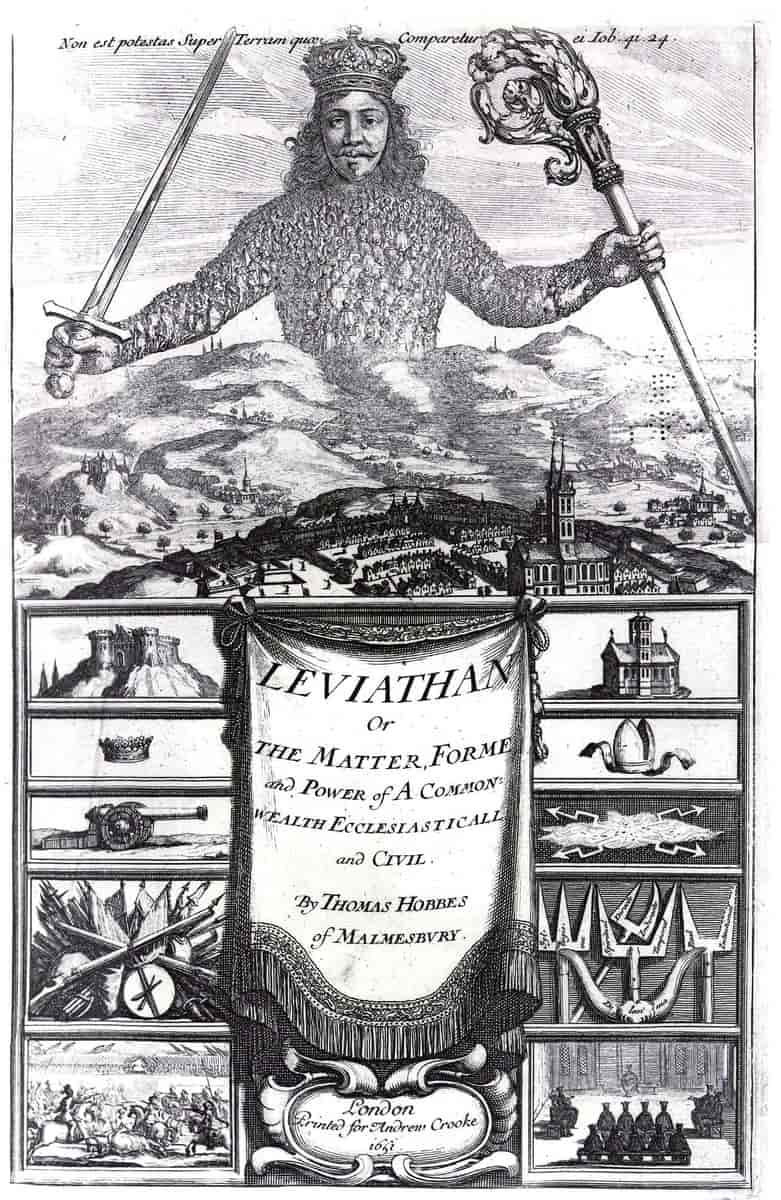
The Foundations of the Narrow Corridor: The Academic Legacy of the Authors and Theoretical Background
The Narrow Corridor: States, Societies, and the Fate of Liberty is a work by Daron Acemoğlu and James A. Robinson that offers an in-depth analysis of freedom, state-society relations, and economic development. The book builds upon the intellectual foundation of the authors’ previous works, such as “Why Nations Fail” and “The Economic Origins of Dictatorship and Democracy”.
Daron Acemoğlu is a professor of economics at the Massachusetts Institute of Technology (MIT) and has made significant contributions in the fields of development, growth, political economy, and institutional economics. James A. Robinson, on the other hand, is a professor at the University of Chicago, conducting research in political science and economics. The duo is particularly known for their work in institutional economics and political economy.
The Main Theme and Purpose of the Book
The Narrow Corridor: States, Societies, and the Future of Freedom is a work that provides an in-depth analysis of the relationship between freedom, state, and society. The main theme of the book is how freedom is achieved, preserved, and lost. The authors argue that freedom is not only related to the presence or absence of the state, but also to the balance of power between the state and society. This balance occurs in an area that the authors call the “narrow corridor.” The narrow corridor refers to a situation where the state is strong but is monitored and controlled by society. In this corridor, the state functions as a structure that both prevents violence and provides public services, while society protects freedom by limiting the power of the state.
The main purpose of the book is to seek an answer to the question of how freedom can flourish and be protected. By addressing this question with historical examples, theoretical frameworks, and comparative analyses, the authors argue that freedom is possible not only with the state or society being strong alone, but with a balance to be established between the two. This approach provides an important theoretical framework, especially for studies in the fields of political science, economics, and international relations.
The authors emphasize that the state must be strong in order to protect freedom, but this power must be controlled and limited by society. This balance creates a state structure that the authors call the “Shackled Leviathan.” The shackled Leviathan is a structure in which the power of the state is limited and controlled by society. This structure is presented as an ideal situation for the protection of freedom.
Another important theme of the book is that society must constantly struggle to protect freedom. The authors explain this struggle with a concept they call the “Red Queen Effect.” This concept states that society must constantly run to catch up with the power of the state. This struggle is necessary for the protection of freedom. The authors emphasize the importance of this effect in the protection of freedom.
The aim of the book is not only to provide a theoretical framework, but also to provide a guide on how freedom can be protected in practice. The authors use historical examples, theoretical frameworks, and comparative analyses to achieve this goal. These examples range from Ancient Greece to modern states, from the Middle East to Africa, from China to India. This diversity demonstrates the breadth of empirical data used to support the authors’ theoretical framework. The authors make an important contribution to future studies on this subject by emphasizing the importance of the balance between the state and society in order to protect freedom. The book has generated great interest both in the academic community and in the general readership by seeking answers to the question of how freedom can be achieved and protected.
Structure and Chapter Overview
The book consists of 15 chapters, and each chapter examines the relationship between freedom, the state, and society through different historical events, geographies, and theoretical frameworks. The chapters of the book are as follows:
- How Does History End?
- The Red Queen
- The Will to Power
- The Economy Outside the Corridor
- Allegory for Good Government
- European Scissors
- Authority from Heaven
- The Corrupted Red Queen
- The Devil in the Details
- What’s Wrong with Ferguson?
- Paper Leviathan
- Children of Wahhab
- When the Red Queen Gets Out of Control
- Entering the Corridor
- Living with Leviathan
Starting with mythological stories (The Epic of Gilgamesh), the book presents examples from a wide range of historical and geographical contexts, including Ancient Greece, Rome, Medieval Europe, China, India, the Middle East, and modern states. These examples are used to support the authors’ theoretical framework.
Methodology and Sources
The authors have adopted an interdisciplinary approach in The Narrow Corridor. The book provides a rich analysis using different methodological tools such as historical analysis, discourse analysis, quantitative and qualitative comparisons. The authors provide examples from a wide historical and geographical range to understand the relationship between freedom, state and society.
The book frequently uses qualitative methods such as narrative of historical events, discourse analysis and image analysis. For example, starting from mythological stories such as the Epic of Gilgamesh, examples from different periods and geographies such as the Roman Empire, Medieval Europe, China’s Great Leap Forward, the caste system of India and the structure of modern states are given. These examples are used to support the authors’ “narrow corridor” theory.
In addition, the authors have also used quantitative data. Statistical data and comparative analyses are presented, especially on issues such as economic growth, welfare level, state capacity and social mobility. These data make the authors’ arguments more concrete and convincing.
The book’s bibliography is quite rich. The authors have conducted an extensive literature review to support historical events and theoretical frameworks. This literature covers both classical political theory (such as Hobbes, Locke) and modern economics and political science studies. In addition, the authors have developed their own theories by critically examining previous studies on freedom and the state-society relationship. This is an important element that increases the academic depth of the book.
Core Arguments and Key Concepts
The main argument of the book is that freedom is possible not only with the state or society being strong alone, but with a balance between the two. The authors call this balance the “narrow corridor.” This corridor refers to a situation where the state is strong but is monitored and controlled by society. In this case, the state functions as a structure that both prevents violence and provides public services, while society protects freedom by limiting the power of the state.
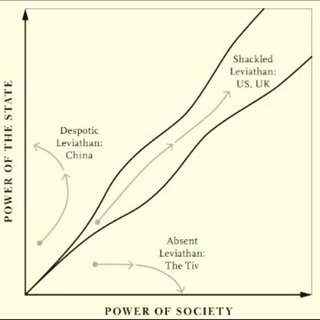
The authors provide historical examples to support this argument and define three basic state structures: the Shackled Leviathan, the Absent Leviathan, and the Despotic Leviathan. These concepts explain different forms of state-society relations and focus on how freedom can be preserved or lost.
The Shackled Leviathan refers to the state structure that the authors see as ideal for the preservation of freedom. In this structure, the state is strong but is monitored and controlled by society. The state functions as a structure that prevents violence, enforces laws, and provides public services, while society protects freedom by limiting the power of the state. The Shackled Leviathan is a structure in which the power of the state is limited and controlled by society. This structure is presented as an ideal situation for the protection of freedom.
The book shows societies such as Ancient Greece and the United States as examples of the Shackled Leviathan. In these societies, the state is powerful but is controlled and monitored by society. This provides the balance necessary for the protection of freedom. The authors argue that the Shackled Leviathan is the most appropriate state structure for the protection of freedom.
The Absent Leviathan refers to a structure in which the state is powerless and society is governed by its own norms. In this structure, the state is powerless and society is governed by its own norms. However, these norms create a strong hierarchy in society and restrict freedom. The Absent Leviathan occurs when the state is absent or inadequate.
The book shows the caste system of India and some African countries as examples of the Absent Leviathan. In these societies, the state is weak and society is governed by its own norms. However, these norms create a strong hierarchy in society and restrict freedom. The authors argue that the Absent Leviathan is not a suitable structure for the protection of freedom.
Despot Leviathan refers to a structure where the state is strong but is not controlled and monitored by society. In this structure, the state is strong but is not monitored by society. This situation creates a structure where the power of the state is unlimited and society cannot control this power. Despot Leviathan prevents the protection of freedom.
The book shows China and the Middle East countries as examples of Despot Leviathan. In these countries, the state is strong but is not monitored by society. This situation prevents the protection of freedom. The authors argue that Despot Leviathan is not a suitable structure for the protection of freedom.
The Red Queen Effect is a concept that the authors use to express that society must constantly struggle to protect freedom. This concept was inspired by the Red Queen character in Lewis Carroll’s Alice in Wonderland. In the novel, the Red Queen tells Alice, “Here, you must run as fast as you can to stay in the same place.” This statement indicates that society must constantly struggle to keep up with the power of the state.
In the book, the Red Queen Effect indicates that society must constantly struggle to maintain freedom. The authors emphasize the importance of this effect in maintaining freedom. Society must constantly struggle to keep up with the power of the state. This struggle is necessary for the preservation of freedom.
The Red Queen Effect is also important for the preservation of the Shackled Leviathan. The authors argue that society must constantly struggle to maintain the Shackled Leviathan. This struggle ensures that the power of the state is monitored and controlled by society. In this way, freedom is protected.
Criticisms and Discussions
Although the book makes an important contribution to freedom and the state-society relationship, it has also been subject to some criticisms. In particular, the authors’ analyses on the Islamic State and the Middle East were found biased or orientalist by some readers. For example, the association of practices during the time of the Prophet Muhammad with problems in today’s Muslim countries was found faulty by some critics. The authors argue that the Islamic State had a despotic structure and that this structure was the root of the instabilities in today’s Middle Eastern countries. However, this analysis was criticized for ignoring the diversity of Islamic history and the understanding of governance in different periods.
In addition, the lack of sufficient reference to the colonial policies of imperialist countries in the book was also seen as a deficiency. In particular, the anti-democratic practices of countries such as the US and the UK in other countries were not sufficiently covered. For example, the US’s interventions in Iraq and Afghanistan or the UK’s colonial policies in India were not sufficiently addressed in the book. This deficiency weakens the book’s overall argument.
Another criticism is that the authors do not provide sufficient guidance on how to apply the “narrow corridor” concept in practice. While the book provides a theoretical framework for how freedom can be protected, it does not provide sufficient detail on how to implement this framework in practice. This has been seen as a shortcoming, especially for policy makers and activists.
Theoretical and Practical Significance of the Book
The Narrow Corridor is one of the most comprehensive studies on the relationship between freedom, state and society. The book has aroused great interest both in the academic community and in the general readership by seeking an answer to the question of how freedom can be achieved and protected.
One of the most important contributions of the book is that it shows that freedom is possible not only with the state or society being strong alone, but also with a balance to be established between the two. This approach provides an important theoretical framework for studies to be conducted in the fields of political science, economics and international relations.
In addition, the book is an important resource for anyone thinking about freedom and the state-society relationship by providing an analysis supported by historical examples and theoretical frameworks. The authors emphasize the importance of the balance to be established between the state and society for the protection of freedom, and make an important contribution to studies to be conducted on this subject.
Conclusion
Narrow Corridor: States, Societies, and the Future of Freedom is an important work that provides an in-depth analysis of the relationship between freedom, state, and society, supported by historical examples and theoretical frameworks. The authors have aroused great interest in both the academic community and the general readership by seeking answers to the question of how freedom can be achieved and protected.
The book provides an important theoretical framework for studies to be conducted in the fields of political science, economics, and international relations, arguing that freedom is possible not only with the strength of the state or society alone, but with a balance to be established between the two. However, the prejudiced approaches in some sections of the book and the shortcomings such as the lack of sufficient reference to the colonial policies of imperialist countries should not be ignored.
In conclusion, Narrow Corridor is a work that should be read by everyone who thinks about the relationship between freedom, state, and society.

- Acemoglu, Daron, and James Robinson. 2020. “The Narrow Corridor: States, Societies, and the Fate of Liberty.” New York: Penguin Press.
- Bilkent University. (25.12.2019). Daron Acemoğlu – Narrow Corridor: States, Societies and the Future of Freedom. https://www.youtube.com/watch?v=oUqthmcRD_k&t=230s
- Yaşar, M. (2020). Book review: The Narrow Corridor, Daron Acemoğlu, James A. Robinson. DSJOURNAL, 1(2), 93-98.
- Gürsoy, O. (2021). Bibliography: Daron Acemoğlu and James A. Robinson, The Narrow Corridor: States, Societies, and the Fate of Liberty, Translated by Yüksel Taşkın, Doğan Kitap, İstanbul, 2020, 629 pages, ISBN: 9786050969009. Alınteri Journal of Social Sciences, 5(2), 255-260.

Leave a comment