
Trump’s Gaza Plan
U.S. President Donald Trump’s statements about “taking over” the Gaza Strip and rebuilding the region have sparked significant debate in the Middle East and global public opinion. His proposal challenges both the regional balance and the boundaries of international law.
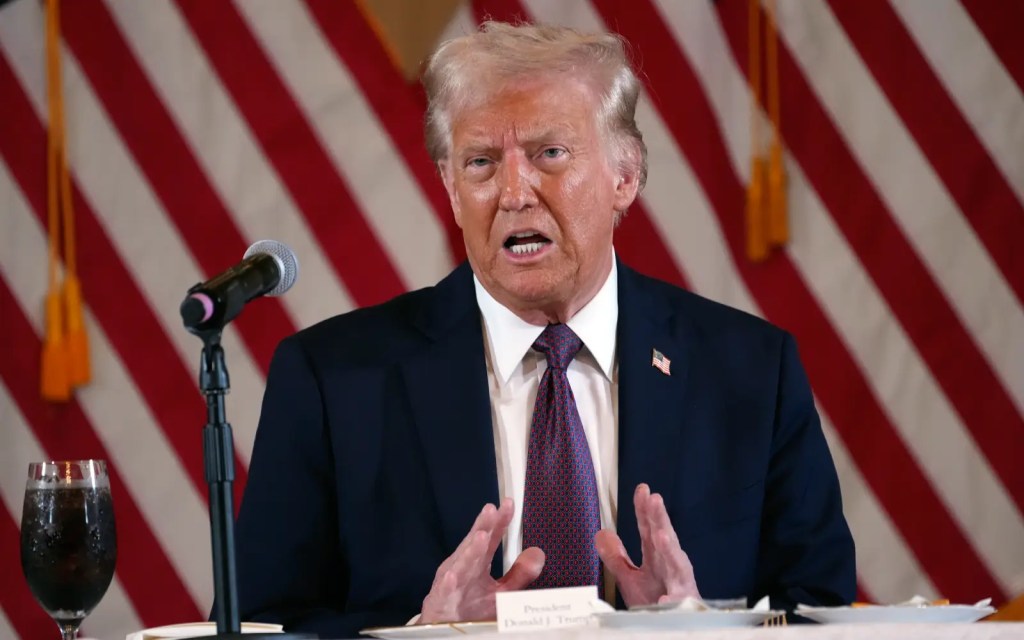
During a joint press conference with Israeli Prime Minister Benjamin Netanyahu, Trump stated that the Gaza Strip would be “taken over” by the U.S. and transformed into the “Riviera of the Middle East.” According to Trump, Palestinians living in Gaza could be permanently relocated elsewhere, and the U.S. could rebuild the region into an economic hub. He even hinted at the possible use of American troops in this process. Although Trump presents this proposal as a solution to the ongoing humanitarian crisis in Gaza, it raises serious concerns under international law. In particular, the idea of forcibly displacing Palestinians and bringing the region under U.S. control has been met with strong opposition from many countries and international organizations.
Current Situation in Gaza
The Gaza Strip suffered massive destruction due to intense clashes between Israel and Hamas from 2023 to 2024. The 15-month-long war led to the widespread destruction of infrastructure, the deaths of thousands, and the displacement of hundreds of thousands. According to UN data, a large portion of Gaza’s population faces severe shortages of clean water, food, and medical supplies. The region has often been described as an “open-air prison.”
Israel’s blockade of Gaza and its frequent military operations have further deepened the humanitarian crisis in the region. Hamas’s rocket attacks on Israel have escalated the violence. This vicious cycle has worsened living conditions for the people of Gaza, and a ceasefire agreement was announced on January 15, 2025. The agreement is structured in three stages:
Stage 1: A 42-day ceasefire
Stage 2: The return of the remaining hostages to Israel
Stage 3: The reconstruction of Gaza
The ceasefire, brokered by Qatar, the US, and Egypt, came into effect on January 19, 2025. (BBC Turkish, 2025)
As of February 7, 2025, the ceasefire agreement in Gaza has largely been maintained. The first stage of the ceasefire, planned for 6 weeks from January 19, continues. The hostage exchange process is ongoing as part of these stages, with Israel reporting that 25 hostages are alive, and Hamas indicating that 8 of the 33 hostages it plans to release have been killed. Overall, the ceasefire in Gaza remains largely intact, but the humanitarian situation continues to present challenges on various fronts.
Reactions to Trump’s Plan
Trump’s Gaza plan was met with strong backlash from the global community, particularly from Middle Eastern countries. Here are some key reactions:
Palestinian Authority: Palestinian officials condemned Trump’s proposal as “unacceptable.” Riyad Mansour, Palestine’s representative at the UN, emphasized that Palestinians in Gaza should return to their “original homes” rather than being relocated to other countries.
Türkiye: Foreign Minister Hakan Fidan rejected Trump’s plan, stating that the displacement of Palestinians is not up for discussion. Speaker of the Grand National Assembly, Numan Kurtulmuş, declared, “Gaza belongs to the Palestinians and will remain a part of Palestine until the end of time.”
Saudi Arabia: The Saudi Foreign Ministry reaffirmed that it would not establish diplomatic relations with Israel until an independent Palestinian state is created with East Jerusalem as its capital. Additionally, Saudi Arabia firmly opposed any initiative to forcibly remove Palestinians from their homeland.
China: The Chinese Foreign Ministry expressed opposition to the forced relocation of Palestinians in Gaza and stressed that the post-war administration of the region must remain under Palestinian sovereignty.
Far-Right in Israel: Trump’s proposal was welcomed by far-right Israeli politicians. Former National Security Minister Itamar Ben Gvir described Trump’s remarks as “the beginning of a great friendship.”
Problems in Terms of International Law
Under international law, any effort to forcibly transfer populations from occupied territories is strictly forbidden. Trump’s Gaza plan raises many issues in terms of international law. First of all, the fact that Gaza is an occupied territory under international law makes the US’s claim to “take over” the region legally debatable. Furthermore, the forced displacement of Palestinians can be considered “ethnic cleansing” under international law, which can lead to serious human rights violations.
The UN’s 1948 Convention Relating to the Status of Refugees and the 1967 Universal Declaration of Human Rights prohibit the forced displacement of people. Trump’s plan may violate these international legal norms.
Trump’s Middle East Policy
Middle East Policies During the Trump Era
Donald Trump’s presidency from 2017 to 2021 was marked by significant deviations from the U.S.’s traditional policies in the Middle East. The Trump administration introduced radical changes, particularly in its relations with Iran, Israel, and the Gulf states, while the influence of Evangelical groups became increasingly evident. Trump’s policies in the region not only diverged from the U.S.’s conventional foreign policy approaches but were also shaped under the influence of Evangelical Christians.
The Abraham Accords and the Normalization Process with Israel
One of the most significant diplomatic moves of the Trump administration was the Abraham Accords, signed on August 13, 2020, between Israel, the United Arab Emirates (UAE), and Bahrain. These agreements accelerated Israel’s normalization process with Arab countries in the region and aimed to establish a counterbalance against Iran. They marked the first major normalization steps between Israel and the Arab world since its peace treaties with Egypt in 1979 and Jordan in 1994. Under the accords, Israel agreed to suspend its annexation plans in the West Bank in exchange for formal recognition by the UAE and Bahrain (Landau, 2020).
A shared perception of threat due to Iran’s growing regional influence was a key factor behind these agreements. Israel and the Gulf states found common ground over concerns regarding Iran’s nuclear program and its support for proxy groups like Hezbollah and Hamas. The Trump administration framed these accords as steps toward a “new era of peace in the Middle East.” However, Palestinians viewed them as a “betrayal”, arguing that they legitimized Israel’s occupation policies.
Bahrain’s participation in the accords was widely seen as a sign of Saudi Arabia’s indirect approval, indicating that this process could expand further. However, the Palestinian issue remained unresolved. While Israel’s annexation plans for the West Bank were put on hold, they were not completely abandoned.
Recognizing Jerusalem as the Capital of Israel
Another striking decision by Trump was his December 2017 recognition of Jerusalem as Israel’s capital and the subsequent relocation of the U.S. Embassy from Tel Aviv to Jerusalem. This move was met with widespread international condemnation. The United Nations General Assembly rejected Trump’s decision with the support of 128 countries, yet the Trump administration refused to back down despite global opposition. Trump openly admitted that he made this decision with the backing of Evangelical Christians, who viewed Jerusalem coming under Israeli control as a step toward fulfilling Biblical prophecies.
This decision was heavily influenced by Evangelical ideology, particularly the belief in the Second Coming of Jesus Christ. Many Evangelicals saw Trump as a leader fulfilling biblical prophecies (Burke, 2017).
The status of Jerusalem has long been one of the most sensitive issues in the Israeli-Palestinian conflict. Israel occupied East Jerusalem in 1967 and later declared the city its “eternal capital.” However, the international community considers East Jerusalem an “occupied territory” and supports Palestinian claims to establish their capital there. Trump’s decision significantly disrupted this international consensus and further escalated tensions in the region.
U.S. Withdrawal from the Nuclear Deal
Another key aspect of Trump’s Middle East policy was his hardline stance toward Iran. In 2018, Trump withdrew the U.S. from the Iran Nuclear Deal (JCPOA), signed during the Obama administration, and reimposed economic sanctions on Iran. Trump argued that the agreement did not sufficiently limit Iran’s nuclear program and that Iran was supporting “terrorism” in the region (Sanger & Kirkpatrick, 2018). Throughout his campaign, he had frequently criticized the deal and described Iran as an existential threat to Israel.
After withdrawing from the deal, the U.S. imposed tough economic sanctions on Iran and intensified its pressure on Tehran, citing Iran’s support for militant groups in the region. This move was welcomed by Israel and Gulf countries, but it faced strong opposition from European countries, who were committed to preserving the agreement.
The Historical Perspective of the US in the Middle East
The U.S. presence in the Middle East began to increase after World War II. During the Cold War, the U.S. supported Israel as a strategic ally to limit communist influence in the region. Since the establishment of Israel in 1948, the U.S. has provided military, economic, and diplomatic support to the country. However, the Palestinian issue has always been a contentious subject in U.S. Middle East policy.
The U.S. presence in the region began with efforts to build relationships with Arab countries against the Soviet Union during the Cold War, but particularly after the 1967 Six-Day War, the U.S. developed a special alliance with Israel.
In terms of the Palestinian-Israeli issue, the U.S. supported the two-state solution idea in the 1990s with the Oslo Accords, but this approach gradually weakened in the 2000s. Under Trump, the U.S. sharply reduced its relations with the Palestinian Authority and took steps to support Israeli settlements in the West Bank. The Palestinian issue became further sidelined with the Abraham Accords, and figures like Jared Kushner argued that Arab countries were “tired of waiting for Palestine” and therefore shifted toward direct relations with Israel.
Trump’s Statements on His Second Presidential Term
In his statements regarding the 2024 presidential election, Trump indicated that his policies in the Middle East would largely continue. He particularly emphasized adopting a tougher stance against Iran, describing the negotiations the Biden administration conducted with Iran as “weakness.” Additionally, he expressed his goal of expanding the Abraham Accords to include other Arab countries, such as Saudi Arabia, in the normalization process with Israel.
Trump’s statements have been shaped under the influence of Evangelical Christians. Evangelicals support Israel having full control over Jerusalem and advocate for a tough stance against Iran. Evangelical figures in Trump’s foreign policy team played a significant role in shaping these policies (Çelik & Okur, 2021).
Conclusion and Evaluation (Updated as of February 7, 2025)
Donald Trump’s plan to “take over” Gaza and transform the region into an economic hub has sparked widespread global controversy. This proposal, which raises significant concerns under international law, has been heavily criticized, particularly for the potential forced displacement of Palestinians. While the ceasefire agreement, implemented on January 19, 2025, remains largely intact, the humanitarian crisis in Gaza persists. The Palestinian Authority, Turkey, Saudi Arabia, China, and many other countries have opposed Trump’s plan, whereas far-right groups in Israel have welcomed it. Trump’s Middle East policies have been shaped by the influence of Evangelical Christians, with key decisions such as the Abraham Accords and the recognition of Jerusalem as Israel’s capital altering the region’s status quo. During his 2024 election campaign, Trump vowed to adopt a tougher stance against Iran and to further expand normalization between Israel and Arab nations. As of February 7, 2025, while the ceasefire in Gaza remains fragile, the long-term impact of U.S. policies in the region remains uncertain.
Written by Uğur Can Özkan & Esma Akçiçek

- Euronews. (2024, February 5). Trump’s plan to ‘take control’ of Gaza sparks international backlash. Retrieved from https://tr.euronews.com/2025/02/05/trumpin-gazzenin-kontrolunu-ele-gecirme-plani-uluslararasi-tepkiye-yol-acti
- The Atlantic. (2024, February 5). Nobody Wants Gaz-a-Lago. Retrieved from https://www.theatlantic.com/international/archive/2025/02/trump-gaza-takeover/681576/
- CNN. (2024, February 4). Trump says US will ‘take over’ Gaza Strip and doesn’t rule out using American troops. Retrieved from https://edition.cnn.com/2025/02/04/politics/netanyahu-trump-white-house-meeting/index.html
- Landau, N. (2020). The Israel-UAE-Bahrain Abraham Accords Peace Agreement. Haaretz.
- Çelik, O. M., & Okur, M. A. (2021). Politics in the Name of God and the Messiah: The Increasing Influence of Evangelism on U.S. Foreign Policy During the Donald Trump Administration. Journal of Academic Studies
- Öztürk, S. (2017, November 8). Trump’s new Middle East strategy and the changing dynamics in the region. Türk Akademisi Siyasi Sosyal Stratejik Araştırmalar Vakfı (Turkish Academy for Political, Social, and Strategic Research Foundation) (TASAV).
- Rosenberg, J. C. (2020). Israel and UAE agree to full normalisation of relations. Flash Traffic Blog. Retrieved from https://flashtrafficblog.epicentermedia.net/2020/08/13/breaking-israel-and-uae-agree-to-full-normalization-of-relations/
- Sanger, D. E., & Kirkpatrick, D. D. (2018). Behind Trump’s Termination of Iran deal is a Risky Bet. The New York Times. Retrived from https://www.nytimes.com/2018/05/08/us/politics/trump-iran-nuclear-deal-news-analysis-.html
- Burke, D. (2017). Why evangelicals are ‘ecstatic’ about Trump’s Jerusalem move. CNN. Retrived from https://edition.cnn.com/2017/12/06/politics/american-evangelicals-jerusalem/index.html
- Yeung, T. (2024, February 7). Trump says Israel will hand over Gaza to US after fighting ends. BBC News.
- BBC News. (2025, February 7). Details of the ceasefire agreement between Israel and Gaza. BBC. Retrived from https://www.bbc.com/turkce/articles/cgly90xr3ryo

Leave a comment