
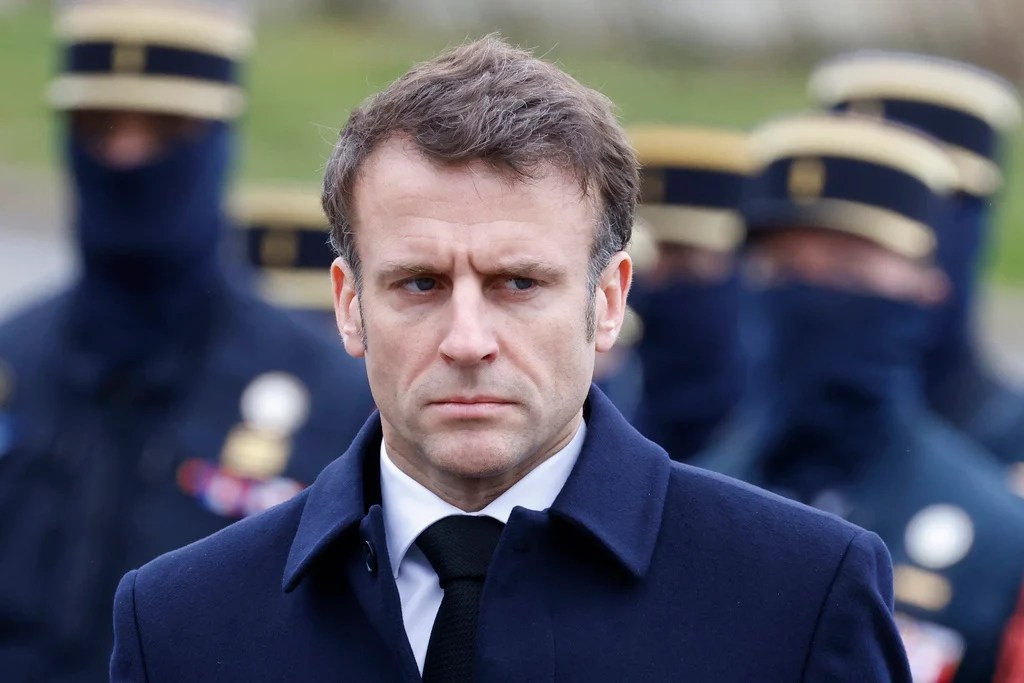
- France’s government just collapsed. What does that actually mean? – 05.12.2024
France’s government collapsed after a no-confidence vote ousted Prime Minister Michel Barnier, plunging the country into political and economic turmoil. Barnier, who lacked a parliamentary majority, angered lawmakers by attempting to pass the 2025 budget without their approval. The far-right National Rally (RN) and the left-wing coalition united to remove him. President Emmanuel Macron now faces the difficult task of appointing a new prime minister amidst a deeply polarized National Assembly. Meanwhile, France’s budget deficit, at 6.1%, and mounting debt exacerbate an economic crisis. Calls for Macron’s resignation have intensified, but he remains defiant, leaving the country in prolonged political uncertainty as it grapples with worsening fiscal challenges ahead of the 2027 presidential election.
- The EU and a South American trade bloc reach a giant trade deal after 25 years of talks – 06.12.2024
The European Union and the Mercosur trade bloc, comprising Brazil, Argentina, Uruguay, Paraguay, and Bolivia, reached a historic free trade agreement after 25 years of negotiations, creating one of the world’s largest free trade zones covering 780 million people and nearly a quarter of global GDP. The pact promises to save businesses billions in tariffs and expand trade opportunities, but faces criticism over its potential environmental impact and threats to European farmers. French President Emmanuel Macron has opposed the deal, citing insufficient safeguards for agriculture and sustainability, while other EU nations like Austria and the Netherlands share similar concerns. The agreement requires ratification by EU member states and the European Parliament, with its future uncertain due to past delays in similar trade agreements. Leaders in Europe and South America hailed the deal as a major economic opportunity, while skeptics warned that its implementation could take years.
- Tokyo government gives workers 4-day workweek to boost fertility, family time – 06.12.2024
Tokyo will introduce a four-day workweek for government employees starting in April to support working mothers and address Japan’s record-low fertility rates. The new policy will allow employees to have three days off each week, while another initiative will enable parents with children in grades one to three to trade part of their salary for the option to leave work early. Japan’s fertility rate, currently at a historic low of 1.2 children per woman (well below the 2.1 needed for population stability), is attributed to the country’s demanding work culture and rising living costs. Tokyo Governor Yuriko Koike emphasized the importance of flexible work arrangements to prevent workers from having to abandon their careers due to life events like childbirth or childcare. While a four-day workweek has gained traction in the West for its benefits to well-being and productivity, it remains a radical idea in Japan, where long working hours are often equated with loyalty. Other Asian nations, such as Singapore, are also adopting family-friendly policies, including flexible work arrangements.
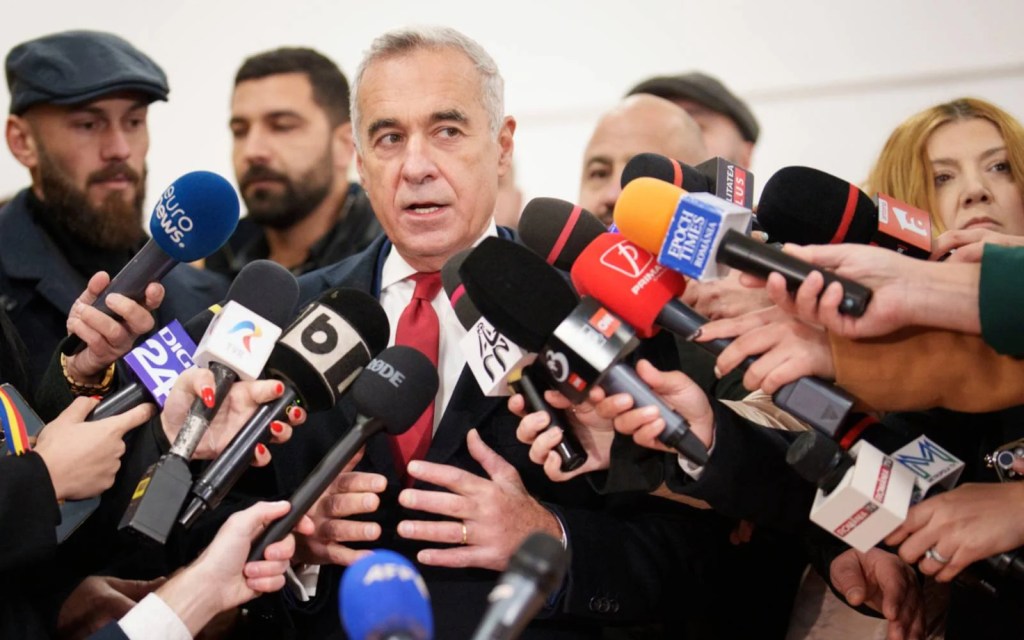
- Prosecutors raid properties of key Georgescu backer in Romania election probe – 07.12.2024
Romanian authorities conducted raids on Saturday amid an investigation into alleged Russian interference in the presidential elections, which have thrown the country into political turmoil. The Constitutional Court annulled the election on Friday after declassified intelligence revealed a large-scale hybrid attack, reportedly orchestrated by Moscow. Among the properties searched was the home of Bogdan Peșchir, identified as a key financial supporter of far-right candidate Călin Georgescu, who unexpectedly surged to the forefront in the first voting round, allegedly aided by Russian influence. Investigations focus on electoral corruption, money laundering, and potential use of fascist or xenophobic symbols. Peșchir is accused of funding Georgescu’s campaign with €1 million, including €360,000 channeled through TikTok. Georgescu, critical of NATO and the EU, vows to prioritize Romanian interests and end support for Ukraine, sparking concerns within the EU and NATO. The crisis has destabilized Romania, a crucial ally bordering Ukraine, and prompted calls from the U.S. to safeguard the country’s democratic processes.
- Trump calls for immediate ceasefire in Ukraine and says a US withdrawal from NATO is possible – 08.12.2024
President-elect Donald Trump called for an immediate ceasefire between Russia and Ukraine, urging Vladimir Putin to act and proposing negotiations to end the nearly three-year war. Trump’s remarks, including openness to reducing U.S. military aid to Ukraine and possibly withdrawing from NATO, sparked concern among Ukraine, NATO allies, and U.S. national security officials. Ukrainian President Volodymyr Zelenskyy emphasized the need for a “just and robust peace” with effective guarantees, while Kremlin spokesman Dmitry Peskov reiterated Russia’s willingness to negotiate. Critics, including Trump’s former national security adviser H.R. McMaster, cautioned against a quick deal favoring Russia. Trump’s comments mark a significant divergence from the Biden administration’s approach, which has avoided pressing for an immediate truce, fearing it could force damaging concessions on Ukraine. Meanwhile, Biden announced additional military aid for Ukraine, as Russian forces made incremental advances in the eastern front. Trump’s statements also revived debate about NATO’s future, with him questioning continued U.S. participation if allies fail to meet defense spending commitments.
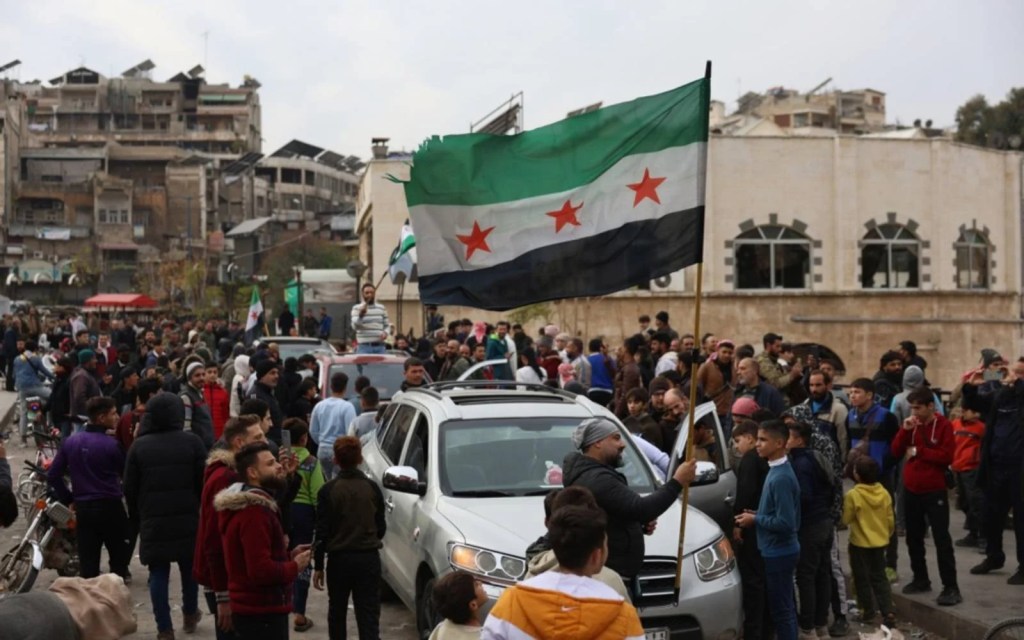
- With Assad ousted, a new era starts in Syria as the world watches – 09.12.2024
On Monday, Syria faced an uncertain future as rebels took control of the capital, Damascus, and President Bashar al-Assad fled to Russia, ending over 50 years of his family’s rule. The militia alliance, led by Hayat al-Tahrir al-Sham (HTS), made significant advances, marking a major shift in the region. Assad’s departure reduced the influence of Russia and Iran in Syria. Russia granted asylum to Assad and his family, while international governments responded to the regime’s collapse. The situation raised concerns about Syria’s reconstruction, as billions of dollars in aid will be needed. HTS leader Abu Mohammed al-Golani expressed hopes of rebuilding Syria, while Assad’s former prime minister indicated a willingness to negotiate. The events have triggered celebrations and reactions worldwide, with some countries expressing concerns over regional stability.
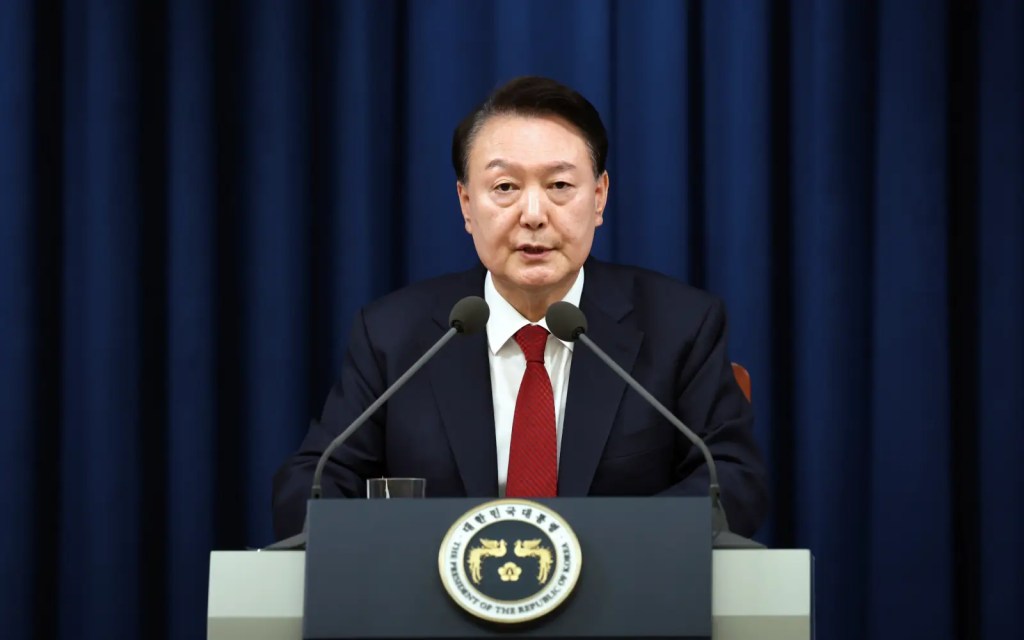
- South Korea president banned from leaving country as ruling party accused of ‘second coup’ – 09.12.2024
South Korean President Yoon Suk Yeol has been banned from leaving the country after his party refused to impeach him over his failed declaration of martial law last week, with opposition politicians accusing his government of staging a “second coup.” Yoon’s attempt to impose martial law lasted only six hours before lawmakers clashed with soldiers, and the order was voted to be lifted in parliament. Opposition leaders described the refusal to impeach Yoon as a constitutional violation, and they plan to introduce another impeachment motion. Yoon apologized for his decision, stating it was made out of desperation, and vowed not to impose martial law again. Meanwhile, some high-ranking PPP officials have suggested Yoon could continue as president while delegating his powers to the prime minister, a move the opposition considers unconstitutional. The situation has created political confusion and raised concerns about regional stability.
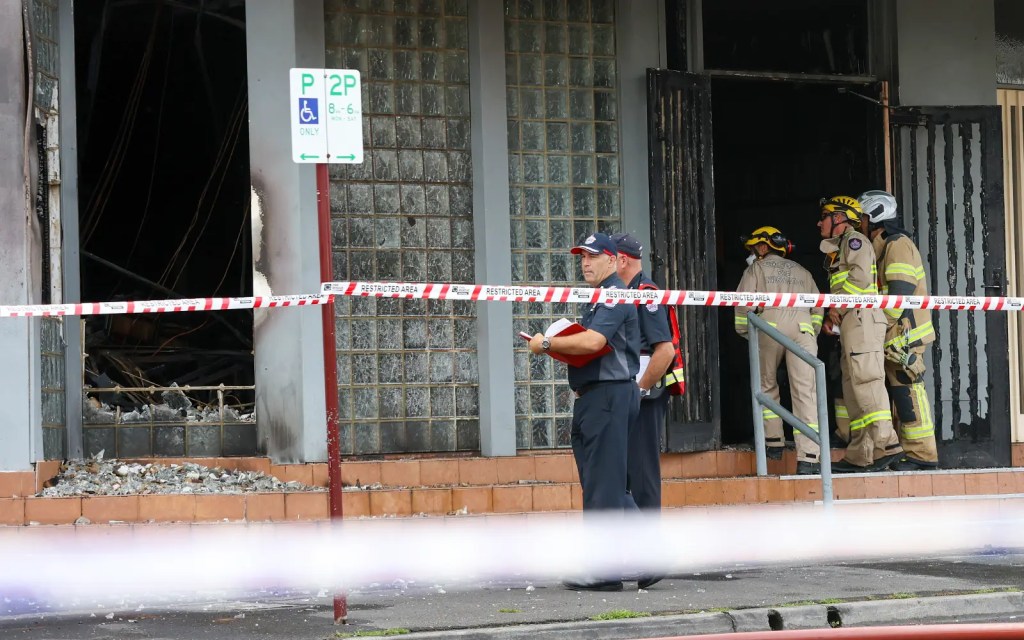
- Melbourne synagogue fire ‘likely’ terror act, police say – 09.12.2024
A fire at Melbourne’s Adass Israel synagogue is being treated as a likely terror attack by Australian police. The blaze, which occurred early Friday morning, left one person with a minor burn and caused significant damage. Witnesses reported seeing masked individuals spreading an accelerant inside the building before setting it on fire. Victoria Police have no evidence of planned further antisemitic attacks but are increasing patrols to reassure the community. After consultations with the Australian Federal Police and the domestic spy agency ASIO, state police said new intelligence led them to treat the incident as a probable terror attack. Prime Minister Anthony Albanese called it “quite clearly terrorism,” while acknowledging that police were still investigating. Jewish community leaders believe the attack reflects a rise in antisemitism in Australia. A few worshippers were present during the fire, describing hearing bangs and seeing a window smash before the building was set alight. In response, additional police forces have been deployed to areas with large Jewish populations. Albanese also announced a federal strikeforce to address the rising threat of antisemitism, citing other recent incidents like the vandalism of a Jewish MP’s office and an attack in Sydney.
- https://www.vox.com/world-politics/389827/france-government-collapse-budget-economic-crisis-bernier-macron-le-pen
- https://www.oregonlive.com/nation/2024/12/trump-calls-for-immediate-ceasefire-in-ukraine-and-says-a-us-withdrawal-from-nato-is-possible.html
- https://edition.cnn.com/2024/12/06/americas/eu-south-america-trading-bloc-intl-latam/index.html
- https://edition.cnn.com/2024/12/06/asia/tokyo-government-4-day-workweek-intl-hnk/index.html
- https://www.politico.eu/article/calin-georgescu-backer-in-romania-election-probe/
- https://www.reuters.com/world/middle-east/with-assad-ousted-new-era-starts-syria-world-watches-2024-12-09/
- https://www.theguardian.com/world/2024/dec/09/south-korea-ruling-party-accused-of-second-coup-as-opposition-pushes-for-new-impeachment-vote
- https://www.bbc.com/news/articles/crmn74m1jkpo

Leave a comment