
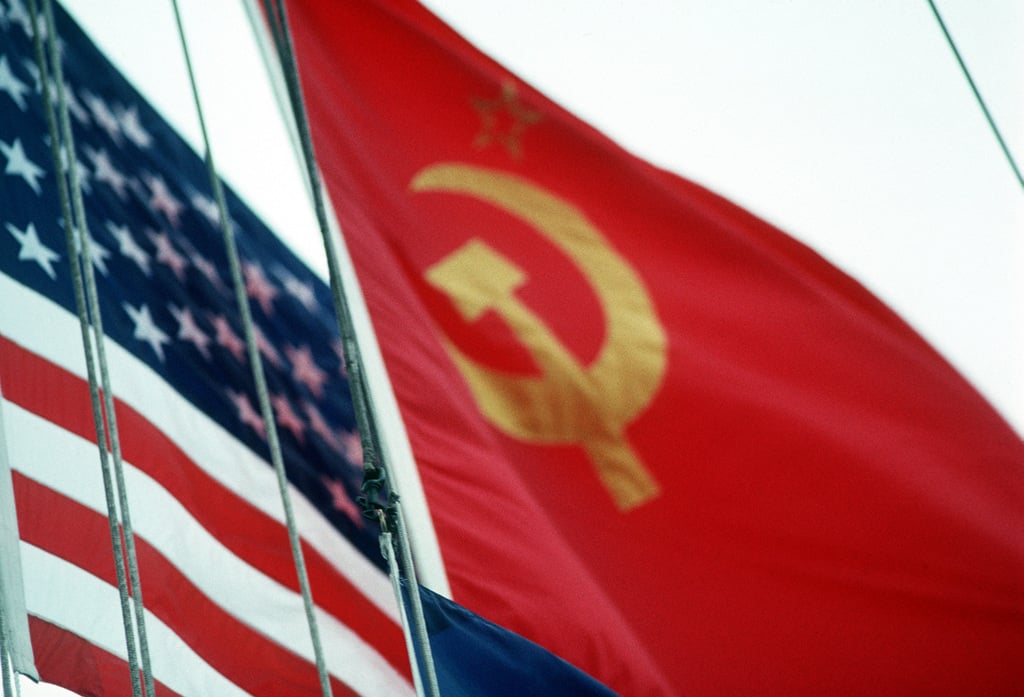
The definition of power has developed in different meanings over many generations and has been divided into several types. According to American political scientist Robert Dahl, power is defined as follows: “Power is the ability to get others to do what they otherwise wouldn’t do.” In addition to Robert Dahl, who gave the natural definition of power, another political scientist is also one of the names that shaped the definition of power. American political scientist Joseph Nye defined power as follows: “The ability to influence the behavior of others to get a desired outcome.” Dahl and Nye, who made important contributions to power and international relations, made their definitions in 1957 and 1990, respectively. When focusing on these years, the 1950s and 1990s witnessed many important events in the world such as; Korean Wars, Communist Revolution in China. This period refers to the Cold War, the race to establish ideological and military superiority that continued from the Second World War in 1945 until the collapse of the Soviets.
With the end of the Second World War, two countries started an ideological war for absolute dominance in the war-torn world, which led to a multipolar world. America, which proved its military power with the atomic bombs it dropped on Nagasaki and Hiroshima and ended the war, was perceived by the Soviets as a threat to them. When Stalin wanted to spread his communist ideology to the countries between him and the West and establish a “Buffer Zone”, and when President Truman started to provide financial and military aid to the countries that were under pressure and fighting against the communist countries with the Truman doctrine in 1947, the ideological war between the two countries was considered to have begun. With the rapid collapse of the Soviets after the invasion of Afghanistan, realism, the dominant view throughout the Cold War, failed to explain this situation. In addition, the post-Cold War paradigm shift has changed the understanding of power in international politics. Since these years, with the rise of soft power, a transition to smart power has been achieved.
The post-Cold War period is a time period that marks many important changes in terms of international relations. In this period, although the perception of power in the traditional sense has changed, there have also been changes in the dynamics of international relations. Although there is no definitive judgment regarding the time period when the cold war began and ended, many sources indicate that the cold war period ended with the collapse of the Soviets. In the years when the Cold War ended, military power was no longer the only determining factor. All these elements in diplomatic, cultural and economic terms have begun to be accepted. The increase in interdependence has been among the important dynamics in this world order. During this period, the concept of “soft power” came to the fore by American political scientist Joseph Nye. According to him, with the post-Cold War period, education, technology and economic growth factors have become much more important in international power. At the same time, he emphasized that the importance of geography, population and raw materials has decreased. (Nye, 2022).
Soft power, in many senses, is based on factors such as a country’s cultural influence, values, and diplomacy. All of these are one of the factors that increase a country’s ability to influence another country and achieve its goals. Joseph Nye pointed out the differences between hard power, which came to the fore in previous years, and soft power, which began to be used in the post-Cold War period. According to Nye, hard power is defined as using military and economic pressure to make others change their positions. When it comes to soft power, he explained that an important difference is the ability of a country to make other countries do what it wants through culture, diplomacy and ideas, without pressure or coercion. By the beginning of the 2000s, the world order had become much more complex. In addition to traditional wars, new challenges have emerged such as global economic crises, cyber attacks, terrorism and environmental threats. With these newly emerging security problems, the change in the perception of power also comes to the fore. New perceptions and approaches also help create a more comprehensive approach. At this point, the concept of “intelligent power” was expressed.
The concept of soft power was first used by Joseph Nye, like the concept of soft power. According to Joseph Nye, this concept expresses the goal of an effective formation by combining the concepts of soft power and hard power. This concept was expressed by Joseph Nye as follows: “Converting resources into realized power in the sense of obtaining desired outcomes by well-designed strategy and skillful leadership.” With the emergence of this concept, the balance of power in international politics has changed. The dynamics of relations between countries have been reshaped. The understanding of power in politics in the post-Cold War period has changed in many senses. Many factors are among the reasons that cause this change. Considering these reasons, the “globalization” element has an important place. With the end of the Cold War period, the globalization process began to gain momentum. In this new world where interdependence increases even more, “cooperation” is underlined as an important concept. Considering another reason, with the end of the cold war in the international world order, the USA emerged as the sole global power. However, in the following periods, with the increasing influence of other great powers, a transition was made to a “multipolar” world order. In this case, the perception of balance and power in international relations has been reshaped. Other reasons are as follows; They can be listed as global challenges and environmental threats, terrorism, the importance of soft power and smart power. It is possible to say that global challenges and environmental threats changed the focus of policy with the end of the cold war. It is necessary to say that human rights, pandemic diseases and environmental problems are all included in this global challenge.
Terrorism, on the other hand, has brought about a more complex and comprehensive understanding of security instead of military power. Finally, considering the importance of soft power and smart power, it can be said that international relations, together with factors such as global interaction, diplomacy, media and education, have radically changed the power dynamic. When these elements come together, it is possible to say that the understanding of power in politics became more complex and comprehensive in the post-Cold War period.
During the Cold War, international relations were generally viewed from a perspective focusing on military power between states. However, with the collapse of the Soviet Union, there was a serious change in the structure and strategic dynamics of the international relations system. The concept of “soft power” played an effective role in this paradigm shift. The concept of soft power refers to a means by which an actor achieves a goal by using his cultural, ideological, political or economic attractiveness rather than imposing his values, interests and desires on another actor. As a step further from soft power, the transition to the concept of Smart Power has been developed by not only combining soft and hard power, but also by including issues such as technological developments and the information revolution. According to the Smart Power concept, states enable them to make an effective policy on the issue by using their knowledge and technological tools, instead of using only their military and economic attractiveness. One of the important points of the reason for the transition to this paradigm is that in the 21st century, with the rapidly increasing uncertainty in international relations and weapons of mass destruction, states have difficulty in using only their military power. More flexible solutions can be found with smart power to situations created by such complexity and uncertainty. As Henry Kissinger stated in a speech: “We are entering a new era. Old international patterns are collapsing. The world has become interdependent in economy, communication and human desires.” (Nye, 2022). The Roman Empire, the Mongol Empire, the Britain Where the Sun Never Sets; Just as the challenges of each are different, the challenges facing 21st century America are different. While the challenges we will face in the next century are a mystery, such paradigm shifts cannot avoid changing shape according to changing international interests and world order. A recent example of smart power is the Cuban Missile crisis during the Cold War. In this incident, where the Soviet Union and America came closest to a nuclear war, this nuclear crisis was successfully avoided by rapid diplomatic negotiations, nuclear deterrence and concessions on certain issues.
As a result, paradigm change is a concept that changes according to international interests in every part of history. While the superiority of military power was emphasized during the Cold War, with the end of the Cold War, the transition to soft power and smart power with the influence of soft power is inevitable. While military power has been a very important element for many centuries, changing technology, communication and the struggle for sovereignty have had significant effects on states changing the path to their interests in international relations.merican political scientists such as Robert Dahl and Joseph Nye have made important contributions to the definition of the concept of power. A paradigm shift has occurred with the collapse of the Soviet Union and the emergence of new elements in many senses along with the soft power, which emphasizes the attractiveness in the ideological, cultural and economic fields. Finally, it should be noted that more comprehensive understandings of the order in the international system have emerged.
- Dahl, R. A. (1957). The concept of power. Behavioral Science, 2(3), 201–215. https://doi.org/10.1002/bs.3830020303
- Kissinger, H. (1994). Diplomacy. Simon & Schuster.
- Nye, J. S. (1990). Bound to lead: The changing nature of American power. Basic Books.
- Nye, J. S. (2004). The paradox of American power: Why the world’s only superpower can’t go it alone. Oxford University Press.
- Nye, J. S. (2009). Smart power in a globalized world. Foreign Affairs.
- Nye, J. S. (2022). Soft power and great-power competition. Springer.
- Nye, J. S. (2022). Soft power: The means to success in world politics. PublicAffairs.
- Pietrzyk-Reeves, D. (n.d.). Soft power, smart power (Part 1) [PowerPoint slides]. Jagiellonian University.
- Truman, H. S. (1947). The Truman Doctrine [Speech]. Retrieved from https://www.trumanlibrary.gov
- United Nations. (1987). Report of the World Commission on Environment and Development: Our Common Future. United Nations.

Leave a comment