
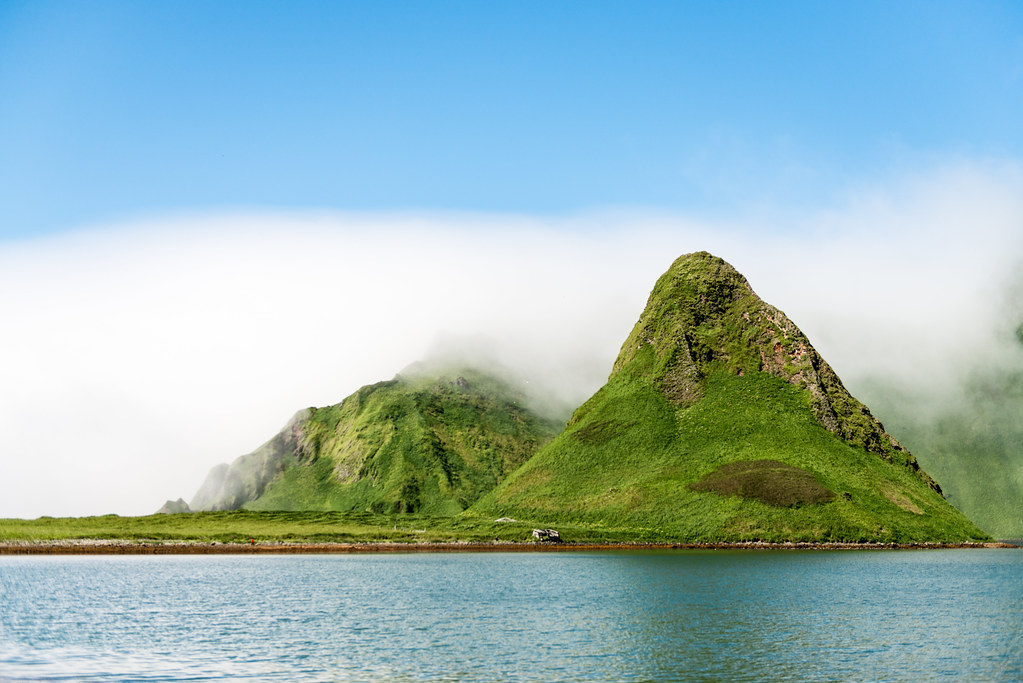
The Kuril Islands are an island chain lying between the Kamchatka Peninsula of Russia and the Hokkaido Island of Japan. The dispute between Japan and Russia covers four islands south of the Kuril Islands (Iturup, Kunashir, Shikotan and the Habomai Islands). The dispute dates back to the 17th century and began when the Ainu, the indigenous people of the region, interacted with Russia and Japan.
The first treaty regarding these islands was the Treaty of Shimoda between Japan and Russia in 1855. According to this treaty, the northern part of the Kuril Islands was given to Russia and the southern part to Japan. However, this border was changed with the Treaty of St. Petersburg in 1875, and Japan took all of the Kuril Islands, while Russia took all of Sakhalin Island. In 1905, after Japan’s victory over Russia, Japan also took possession of the southern part of Sakhalin Island with the Treaty of Portsmouth.
The Cairo Conference in 1943 brought Japan’s post-war territorial losses to the agenda. In this context, the Allies stated that Japan’s sovereignty over the Kuril Islands should be ended. The Soviet Union’s seizure of these islands at the end of the war led to long-lasting territorial disputes between Japan and the Soviet Union. Although the Cairo Treaty was not a document that consolidated the Soviet Union’s sovereignty over the Kuril Islands, it laid the foundations for territorial issues in the region.
After World War II, at the Yalta Conference in 1945, the Allied Powers agreed to cede the Kuril Islands to the Soviet Union in exchange for the Soviet Union’s entry into the war against Japan. After the war, the Soviet Union occupied these islands, and this situation became permanent without a peace treaty between Japan and the Soviet Union.
In the 1951 San Francisco Peace Treaty, Japan renounced all of its rights to the Kuril Islands; however, since the Soviet Union did not sign the treaty, this solution did not have a long-term effect. The Soviets’ reasons for not signing this treaty were that it did not fully meet the Soviets’ interests and that it included provisions that increased the influence of the US and Western allies over Japan. Although Japan renounced its rights to the islands, there was no clear provision that the islands would be left to the Soviets.
An attempt was made to resolve this ongoing dispute with a Peace Declaration in 1956. The Soviet Union agreed to give the islands of Habomai and Shikotan to Japan; however, this declaration could not be implemented due to Japan’s insistence on the islands of Kunashir and Iturup.
Today, this dispute between Japan and Russia continues, preventing the two countries from making a peace agreement. The problem also affects the security balance in Northeast Asia. Vladimir Putin has called for increased economic cooperation and a peace agreement between the two countries. However, a solution has not been reached because Japan claims all four islands and Russia does not open its territory to discussion.
The reasons for this endless conflict are both historical claims and strategic interests:
Strategic Location: The Kuril Islands have an important geographical location that provides access to the Pacific Ocean. For Russia, the islands, especially the naval bases in Kamchatka, are of strategic importance.
Economic Resources: The fishing grounds, minerals and potential energy resources in this region provide economic benefits for both countries.
National Identity and Honor: Japan considers the Kuril Islands as the “Northern Territories” and considers them part of Japan. Russia, on the other hand, maintains its claim to the islands, claiming that they were inherited from the Soviet Union.
The Kuril Islands issue is an example of a complex conflict where geographical and political interests intersect. Japan and Russia have difficulty making concessions in terms of national identity and history. The strategic importance of the islands and their alliance relations prevent negotiations from resolving the issue. Although economic and security cooperation proposals seem beneficial to both sides, it is difficult to achieve a permanent solution unless security concerns are addressed.
- Collins, R. A. (2013). The Russo-Japanese dispute over the ownership of the Southern Kuril Islands. Webster University, Bangkok.
- Demir, F. (2019). İkinci Dünya Savaşı Sonrası Barışın Önündeki Engel: Kuril Adaları.
- Agustin, S. S. (n.d.). South Kuril Islands Dispute Between Japan and Russia. Universitas Muhammadiyah Yogyakarta.
- https://www.japanesestudies.org.uk/ejcjs/vol17/iss3/buntilov.html

Leave a comment