
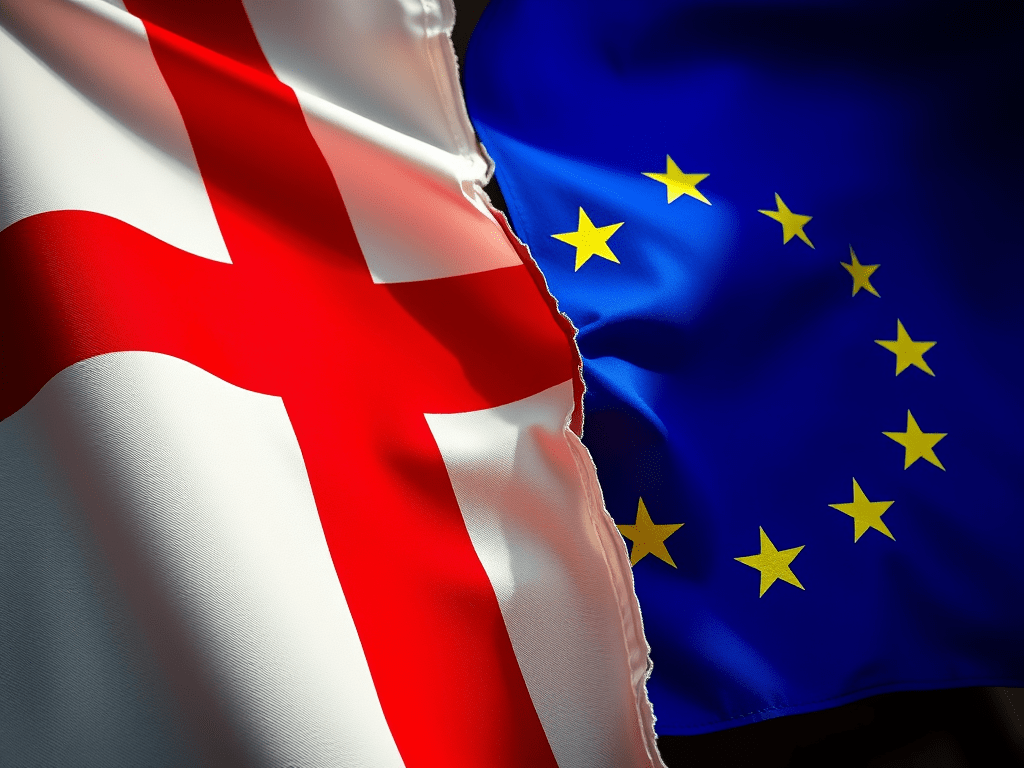
Britain has been the preferred land for immigration from every society in every era of history. However, multiculturalism and immigration policies implemented since the late 20th century have been effective in shaping the social and political landscape of the country. As an obvious consequence of these influences, concepts such as identity, citizenship and nation-building have been questioned, creating complex socio-political dynamics between immigrants and locals. Since the arrival of immigrants it has promoted the acceptance and integration of multiculturalism and socio-political diversity. However, these policies have encountered various difficulties. In this chaos, the Brexit referendum held in 2016 offered a new perspective on Britain’s perspective on immigration policies and multiculturalism. In the post-Brexit period, the increase in anti-immigrant rhetoric and new regulations and policies brought about by leaving the European Union have led to radical changes in the social structure of Britain.
In order to explain and examine in detail the development of multiculturalism and immigration policies in England since the second half of the 20th century, it is necessary to look at the devastating effects and consequences of the Second World War.
1.1 Post-World War II influences
After World War II, England began to experience a serious labor shortage. The economic and social structure of England was deeply shaken by this devastating war. The country’s insufficient workforce could not repair the devastating effects of the Second World War. For this reason, England aimed to close the workforce gap by reshaping its immigration policies. For England, importing labor from Europe was seen as a successful solution both economically and morally, because in the post-war period, Europe turned into a continent where millions of people were displaced from their homes and jobs, and where even basic living needs were difficult to reach. Polish people were first accepted to England in 1946, and this process continued with the European Volunteer Workers (EVW) program in 1947. Within the scope of this program, thousands of workers came to England, especially from Italy, Poland, Yugoslavia, and the Baltic countries. In addition, with the British Nationality Act of 1948, England granted Commonwealth country citizens the right to live and work in England. This law led to a mass wave of immigration from the Caribbean, South Asia and Africa to come to England. The ship “MV Empire Windrush”, which arrived from Jamaica in 1948, became the symbol of this migration. Although migrant workers made a crucial contribution to the rebuilding of England, they faced various challenges such as cultural adaptation problems, language barriers, and racism. Discrimination against immigrants increased in the UK in the 1950s and 1960s, and this sometimes led to social tensions. By the 1970s, it was a period when multiculturalism began to spread, as immigrants tried to integrate into British society while preserving their own cultural identities. Of course, education and local governments played a major role in promoting this understanding. The British government was also taking determined steps to integrate the immigrants who contributed to the construction of the country, by saving them from racial discrimination. One of the first examples of this, the Race Relations Act of 1976, provided protection against racial discrimination and also laid the legal ground for future multiculturalism policies. With this law, racial discrimination was prohibited in workplaces, education, accommodation and public services. However, in the following years, reasons such as economic difficulties, unemployment and social restrictions led to negative and aggressive feelings towards immigrants among some groups. These feelings led to many ethnic tensions, such as the 1981 Brixton riot. In fact, in 2001, after the riot that broke out due to reasons such as ethnic discrimination and in which many people were arrested, the Cantle Report “Community Cohesion: A Report of the Independent Review Team” was prepared to examine similar events in the future.
1.1 Enlargement of the European Union and free movement
In the 1990s, with the enlargement of the European Union and the entry into force of the Schengen Agreement, especially the Maastricht Treaty of 1992, free movement between European Union countries became very easy. As a member of the European Union since 1973, Britain had to accept immigrants from other European Union member countries. Due to the wars and conflicts in the 1990s, there was a significant increase in the number of refugees taking refuge in the UK. New policies were introduced, such as the Asylum and Immigration Appeals Act, passed in 1993, especially for new refugees coming to the UK due to conflicts in the Middle East. Another important wave of migration started in the early 2000s. In 2004, when countries such as Poland, Hungary and the Czech Republic joined the European Union, a serious migration flow from these countries to the UK began. In 2002, the Nationality, Immigration and Asylum Act introduced stricter inspections and controls regarding the entry and exit of immigrants into the country.
1.1.1 September 11 attacks
Of course, the aftermath of the September 11, 2001 attacks provided an important incentive to think about security and immigration policies. After September 11, immigration policies were tightened and security measures were increased in the UK within the scope of the fight against terrorism. This has made it much more difficult for immigrants to enter the country compared to the past. In particular, immigrants from Muslim countries were subjected to increased scrutiny and the process of gaining legal status was made more difficult. Nevertheless, immigrants made a significant contribution to Britain’s economic and social growth. However, many of these immigrants found themselves in a difficult situation when the British government changed its immigration policies in the 2010s, and many immigrants faced many problems such as deportation, job loss, and difficulties in accessing healthcare.
2. Demographic Change
The place and influence of immigrant communities in Britain has long been an important factor shaping the country’s social, economic and cultural dynamics. In the process of integration of immigrants into England, the change in demographic structure did not only increase in the number of population. Significant changes have occurred in demographic structure such as gender, age, fertility and family structures. Immigrant families generally had higher fertility rates than locals, so the aging rate in Britain has fallen rapidly while the young population has increased. At the same time, significant changes have occurred in the social structure of the regions where immigrants are densely settled. While new-style schools and new religious or cultural centers have proliferated, the number of immigrant-owned businesses in the local economy has also increased rapidly. The types of businesses established by immigrants have added dynamism to the local economy and led to diversity in the labor market. At the same time, these demographic changes have had consequences not only economically but also socially and politically. As immigrant communities gradually took shape and became more distinct, they led to a reorganization of sociopolitical services in England. Many regulations have been made to meet the needs of immigrants on basic issues such as education, health or accommodation. In addition, with the increasing representation of immigrant individuals in the political arena, many politicians of immigrant origin have taken part in the parliament and local governments in the coming years, contributing to the increase of ethnic and cultural diversity in making political decisions. In every respect, the transformation of immigrant communities into the demographic structure of England is a long and multidimensional process. And this process cannot be limited only in economic, demographic, cultural or social terms. It has been a process that has had profound effects on every subject in every sense.
2.1 Contribution of immigrants to the economy
During the demographic change process, immigrants’ contributions to the UK’s economy have been equally great. Immigrant labor has played a critical role in Britain’s rapidly growing post-industrial revolution economy. In particular, Windrush immigrants have made tremendous contributions, gaining significant footholds in many key labor markets. Their economic contributions, which started with the workforce, spread to areas such as entrepreneurship as time passed. The contribution of immigrant businesses, especially in big cities such as London, Birmingham and Manchester, to the economy of small ethnic businesses cannot be underestimated. Restaurants and technology businesses, often founded by people of Indian origin, have seen great success both locally and nationally, creating jobs for other peoples. Competition emerged with such businesses and dynamism came to the British economy. At the same time, the increasing immigrant population has become a valuable source of Britain’s tax revenues and public finances, and as a consumer, they have created new markets by creating demand for products and services to meet their own cultural and social needs and added new products to the supply-demand balance. Immigrants have seriously shaped the demographic structure of England in terms of culinary culture, art and literature. For example, when Indian restaurants became famous in England, curry spice became popular. In short, the social and cultural effects of immigrants in England are the dynamics that change and enrich the multicultural structure of the country. All these demographic changes have been factors that have colored British culture and life. Social cohesion, blended through means such as education, employment and political representation, has contributed to social integration. The integration of these different cultures in England also served as a bridge for England to reach other cultures.
3. Rising Populism and Brexit
The Brexit referendum held in 2016 was an important turning point in the rise of anti-immigrant rhetoric. In fact, the decision to leave the European Union was largely motivated by the desire to control the flow of immigrants entering the country. The importance of concerns about immigration and the need for a controlled and selective immigration system that prioritizes individuals who contribute to the UK economy and society are emphasized. At the center of these approaches is the concept of “desired immigrant”. The issue of immigration came to the fore in the opening week of the general election campaign, which officially started in the UK on 30 March 2015. In fact, the IPSOS Mori poll shows immigration is the most important issue facing the UK, according to the latest data from March 2015. During these periods, UKIP, led by Nigel Farage, was at the center of anti-immigrant rhetoric and gained great support by frequently raising the issue of immigration in the Brexit campaign. Likewise, the Conservative Party gained the support of voters by addressing the immigration issue harshly. In fact, in the GE Conservative Manifesto, concerns about immigration were clearly expressed and played a central role in determining post-Brexit immigration policies. In this manifesto, the “desirable immigrant” profile is generally determined as individuals who can make economic, social and cultural contributions. It is emphasized that while immigrants who work in high-skilled professions and contribute to the economy are preferred, immigrants who can work in low-skilled jobs and request social assistance are restricted. In the UK, the media also plays a major role in disseminating anti-immigrant rhetoric. The general arguments are that crime rates are increasing and the job market is negatively affected. Famous newspapers such as Express have also been in favor of leaving the European Union by drawing attention to the immigration problem. Express stated in an article that while the number of immigrants has reached record levels in recent years with 330,000, there are currently hundreds of thousands of European Union citizens waiting to move to the UK. Express even stated that with the expansion of the European Union, many immigrants from new member states will move to England and that the legislature cannot pass rules above the free movement rule, meaning that England has no legal right to stop this immigrant community. With the rise of populism in the UK, populist leaders have gained the support of voters by adopting anti-immigrant and nationalist discourses with the claim of being the “voice of the people”. Following these views, populist views spread rapidly and were adopted by wider audiences with the influence of social media and other digital platforms. With the adoption of populist discourses, incidents of physical violence against immigrants have occurred from time to time. Racist attacks were carried out by individuals or organized groups. In particular, increasing unemployment and economic instability after the 2008 financial crisis turned the working immigrant segment into a clearer target and paved the way for subsequent events.
3.1 Brexit’s impact on multiculturalism and immigration
The issue of immigration has become a very broad and detailed issue in the Brexit campaign. In particular, it was becoming increasingly difficult to control the number of immigrants and this constantly increasing number. Brexit supporters argued that the UK did not have sufficient control over immigrants and that control should be rolled back. At the same time, immigrants had a negative impact on the local workforce, working in the same jobs with lower wages and leaving locals unemployed. So among the first changes made after Brexit was the end of the right to free movement. Immigrants from European Union countries now had to obtain a visa to enter the UK. A new immigration system was created based on the definition of “desirable immigrant” mentioned in the GE Conservative Manifesto, and it was envisaged that visas would only be given to qualified and competent people. Particular emphasis was placed on people who specialize in their professions and workers in the sectors where they are needed. In the post-Brexit period, labor shortages have occurred in many sectors as a result of the tightening of immigration rules. The emergence of a workforce shortage led to increased costs and a decrease in service quality in these business lines. At the same time, immigrants provide significant tax revenue, creating a serious concern about taxes after Brexit. In short, Brexit has made it seriously difficult for immigrants to integrate into society. Legal uncertainties and ever-increasing xenophobia played a key role in hindering this integration.
4. Conclusion
As a result, the waves of immigration that started in the post-World War II period in order to meet Britain’s workforce needs gained momentum with immigrants from Commonwealth countries. It affected the demographic, social and cultural structure of the country much more deeply than expected, and as a result of the expansion of the European Union and anti-terrorism efforts, leading to stricter regulation of immigration policies, this period caused many problems such as cultural adaptation difficulties or discrimination between locals and immigrants. He witnessed a very serious incident. While these events were continuing, the expansion of the European Union and the free movement law made the situation in the UK much more difficult, confused and complicated. The contributions of immigrants to the UK’s economy and their cultural richness have expanded their impact on the demographic structure and led to social debates within the country, and with the tightening of immigration policies after Brexit, the integration of immigrants into society and legal uncertainties have become much more important for the government. In the post-Brexit period, with the termination of the right to free movement and the adoption of new policies, the issue of immigration has evolved to an even more important dimension. In this process, with the rise of anti-immigrant rhetoric and populism, violence and discrimination against immigrants increased. Therefore, the history of Britain’s multiculturalism and immigration policies and their post-Brexit changes will continue to play a critical role in shaping the country’s identity.
- Goodhart, D. (2013). The British dream. Successes and failures of post-war immigration. London: Atlantic Books.
- Dustmann, C., & Frattini, T. (2014). The fiscal effects of immigration to the UK. The Economic Journal.
- Kułakowska, M. (2008). The Concept of Community Cohesion in British Politics. LCC liberal arts studies, 155-168.
- Okólski, M., & Salt, J. (2014). Polish emigration to the UK after 2004: Why did so many come? International Migration.
- https://core.ac.uk/download/pdf/82925429.pdf
- Michael Higgins, Clarissa Smith, John Storey. (2010). The Cambridge companion to modern British culture. Cambridge University Press.
- https://www.youtube.com/watch?v=Vb4DJlZ_emY
- https://www.express.co.uk/comment/expresscomment/681115/Brexit-UK-referendumvote-leave-EU
- Maria Sobolewska, Roberto Ford. (2019). British Culture Wars? Brexit and the Future Politics of Immigration and Ethnic Diversity.
- Glencross, A. (2016). Why the UK voted for Brexit. Palgrave Macmillan.

Leave a comment